Watching the ‘Prime Ministerial Candidates’ debate, it was impossible not to be struck by how little difference there was between all three candidates. Clegg played the outside role dictated to him by his party’s position, but pretty much all the candidates had more or less the same sort. of answers to the carefully vetted questions.
This was only the first of three debates, but what was perhaps most revealing was the questions that weren’t asked. The debate was very much conducted on safe territory for the neo-liberal consensus to which all three candidates subscribe. No questions on climate change or peak oil, where the combination of market and moralising that they all like so much offers little or nothing. No questions on why Britain is involved in two wars in Muslim countries where it has little direct interest – just an easy ball on whether ‘our troops’ have enough kit. Clegg at least had the decency to raise the cost of replacing Trident, but all the candidates seemed to agree that the one thing we can afford was continued participation in whatever wars the Americans need us for.
And not even a question on the banking crisis. There was some verbal joshing on the precise mechanics by which the candidates propose to cut public spending, but nothing about how we got into this mess (bailing out the incompetently-run banks) and why it is so important to cut the deficit (er, to make sure that those same banks will carry on lending to the state at interest rates it can afford). Even this limited engagement with the question of who is going to pay the bill clearly went down like a bucket of cold sick with the minutely-analysed studio panel; so that’s probably the last we’ll hear about that. Until after the election, when you can bet that whoever wins will “discover” that the problems of the public finances were worse than they’d previously thought.
Friday, April 16, 2010

Monday, April 12, 2010
Inequality and New Labour
The Government's own National Equality Panel produced a report called Anatomy of Economic Inequality in the UK.
It shows:
The households in the top tenth of the UK wealth distribution have total wealth 100 times those in the bottom tenth
The share of wealth of the top 0.05% of the population declined from 1937 until the 1970s – but by 2000 this was higher than it had been in 1937
In the 1990s the top tenth increased its share of national wealth – but all of this was due to the increased wealth of the top 0.1%
This is not an inevitable consequence of globalisation or the market economy, or any other such bullshit. In other European countries the share of the top 1% did not increase, as it did in the UK (it declined from 1937 to the 1970s there just the same).
Britain is a more unequal society than our European counterparts. It has become more so during the thirteen years of 'New Labour' government. All the drivel about 'fairness' or 'an aspirational society' cannot hide this. If I needed reminding why I wasn't going to vote Labour, now I don't.
Peter Mandelson's famous dictum that New Labour was "intensely relaxed about people getting filthy rich" is the real face of New Labour; what we are seeing at the moment is the one that they dust off every few years for elections.
Monday, April 05, 2010
Cross-Pynchoning
>“I don't understand! Why can't you help me?” wails the caller. “You're the fourth person I've spoken to. Everyone just puts me through to someone else.”
“It's OK lady,” says the policeman, in tones usually reserved for a disconsolate child. “This stuff is always upsetting – not just for you, for everyone it happens to. We're sort of the experts in these cases.”
He sighs, and leans back from the vidscreen. “I'll try to make is as simple as I can, and don't worry if you need me to explain anything twice. Just ask.”
“Th-thanks,” sobs the young woman. “Tell me again about the pensioning thing.”
“Not pensioning, pynchoning,” corrects the policeman. “Or in your case, cross-pynchoning.”
“It's like this. Imagine a rich guy, or a rich lady. They pay to live in a gated community. They pay to drive on the priority roads, so they don't have to sit in traffic jams behind the likes of you and me. They eat in Old Dollar restaurants, not the Carbon Dollar places we go to. So they don't want to rub shoulders with us on the interwebs either.”
“What has this got to do with my pictures?” asks the woman.
“See, the rich people, they have this thing called Pry Vuh Sea...” The woman looks at him blankly.
The policeman tries again. “You know, like in the old days – when some things about people were sort of secret. Well, not exactly secret, just things you didn't tell everyone.”
“Yeah, I know it's kind of hard to take in. You and all your friends are posting pics and vids of yourself twenty-four seven, and telling each other and everyone else what you are doing and thinking and what you had for breakfast.” He pauses for effect. “And these folk are doing the opposite.”
“Thing is, everybody leaves traces on the interwebs, even if they don't mean to. But the very rich, they don't like this. They don't want to be in the same space as you, even a virtual space. It makes them feel dirty, like you touched them.”
“So they pay for a pynchoning service. Back in the twentieth, there was this writer – sort of a blogger, but on paper things called books – called Pynchon. He went to a lot of trouble to make himself disappear – found all the old paper records of himself and tore them up, stuff like that. So now they call a bot that trawls through the webs, cleaning up those traces – the billing records, the address databases, and the CCTV footage -- they call that a pynchoning service, after the writer guy. The bot just erases everything on the web that's a trace of the rich people.”
“But I'm not rich, and I haven't paid for any service,” whines the caller.
“That's what I've been trying to explain for the last half an hour. You haven't, but you look or sound like someone else who has paid for pynchoning. Enough like them for the bot to be erasing the traces of you. Maybe you've got the same name as a rich lady, or there's something similar about your behavioural footprint – the shape of the traces that you leave. Anyway, the bot has a fix on you now, and any trace you make gets rubbed out. We call it cross-pynchoning because it's like cross-fire. Nobody wanted to wipe you out, you just got caught in the cross-fire.”
“And it won't just be the pictures, I'm afraid. It's going to get worse.”
“Worse? What do you mean, worse?” asks the woman.
“It's going to be everything, I'm afraid. Your high school records. Your medical records. Your accounts. If it's still there now, it'll be gone soon. The bots have a very high level of access on all the major public servers.”
“This must be against the law! Why can't you do something?” She is gasping now, and her voice is shrill and loud.
The policeman looks embarrassed. “It's...it's a very grey area. The identity laws are mainly about theft. Somebody steals your identity to get stuff they aren't supposed to have, it's against the law. You try to use someone else's identity, it's a crime. But the law is about the deception and the thing you use it for. Identity wipe? Did anything get stolen? Did anyone lose any money that was coming to them? Nah...so no crime.”
“So what am I supposed to do?”
The policeman shrugs helplessly. “Live with it. Change your name and start over. I can recommend a counsellor that helps with cases like this. Unless you are really, really rich – then you could try a counter-pynchoner; but you aren't really rich, are you? Because if you were, you wouldn't be calling me, would you?”
For a while the woman caller stares at the image of the policeman on her vidscreen. After a long minute she hangs up, and his screen goes dark. The policeman goes back to his keyboard. He knows that she will call back for the name of the counsellor in a few hours. They usually did.
Wednesday, December 16, 2009
Shut that door!

Muswell Hill has lots of 'health shops' - we have a Planet Organic, a Holland and Barrett, and two vitamin shops. Last week I went in to one of them -- the delightfully named 'Panacea' -- to ask the staff there to shut the door. It was a cold day, and they had the heat full on with the door open.
I politely (really politely) pointed out that wasting heat and energy like that wasn't good for the planet, and that their customers might just possibly be the sort of people who cared about that sort of thing. The staff agreed, and said that they'd like to shut the door if only to keep out the traffic noise, but that the manager insisted that they keep it open so as to signal to customers that the shop wasn't closed.
So I asked for the manager's contact details, and phoned her and had another very polite conversation. She said she understood my view and hoped that I understood hers, but that she'd talk to the owner about it.
Yesterday I went past again. The door is now shut, the staff are even happier and more helpful, and there didn't seem to be fewer people in there. Hats off to Panacea for listening to customers!
And now I feel a campaign coming on...the nice manager in Rymans tells me that he'd like to close the shop door, but it's head office policy to keep it open.
Monday, December 14, 2009
The Invention of the Jewish People by Shlomo Sand
 Most of what you think you know about Jewish history is a myth, from the kingdoms of David and Solomon, through the Romans’ exile of the Jews from Palestine, to the emergence of the Yiddish-speaking milieu of Eastern Europe by German Jews migrating eastwards to escape persecution.
That’s the claim of Shlomo Sand’s book, provocatively titled “The Invention of the Jewish People”. By choosing the word ‘invention’, Sand begins to stake his claim that the account of Jewish history with which we are familiar is not reliable – so ‘invention’ in the sense of inventing the facts – and has been consciously created.
This is a fascinating, dense but patchy work, and one that requires careful reading.
Some of the patchiness comes from the fact that this is really three quite different books locked inside a single cover.
The first book is a scholarly account of developments in the writing of Jewish history – a history of historians and histories. Here we are introduced to pioneers like Isaak Marcus Jost, to Heinrich Graetz, and to the arrival of Zionism in the making of Jewish history (and History Departments). This part of the book is based on a very strong theoretical approach to the relationship between nationalism and emergent national intelligentsias; Sand argues that though we tend to think of nationalism as premised on a pre-existing entity called the nation, in real history nationalism often comes before the nation – with nationalist movements bringing into being the entity that they claim to represent. This is particularly the case in the multi-national empires of Central and Eastern Europe, where intellectuals who couldn’t get their share of state patrimony created their own small ponds in which they could be the big fish. Sand recognises that all nations are to some extent “invented” – not only the later arrivals of Eastern Europe but also the major players like the English and the French.
The second book is a popular account of some key episodes in Jewish history. Sands debunks the widely held belief that the Bible can be relied on as a historical source, marshalling arguments from Biblical criticism and archaeology. (This shouldn’t really be necessary at all in the twenty first century, but a surprising number of intelligent people think that the stories in the Bible of the Exodus, or the United Monarchy of David and Solomon, are grounded in history rather than in myth).
More important, he examines the historical evidence for the Romans’ exile of the Jews from their land, and finds it wanting. And he shows the importance of conversions in the creation of large Jewish populations, both in the ancient world and in the middle ages – there are long treatments of the Jews of Southern Arabia, North Africa and Spain, and of course the Khazars.
The third book is the most polemical, focusing on the way that the specifically Zionist account of Jewish history has been used to construct a sense of Jewish identity that serves particular political ends. It looks at the impact of this process on Palestinian Arabs, Jews in Israel, and Jews elsewhere. It’s hard to find fault with much of this analysis, or with Sand’s conclusion that Israel is a ‘liberal ethnocracy’ – with the word ‘liberal’ used in a technical sense rather than as a term of approbation. One almost wishes that Sand had also taken aim at diasporic constructions of Jewish identity – the recent rows over the admissibility of converts to faith schools in the UK would have been an interesting addition to the story.
However, while this section will certainly be the part that is most interesting to readers of Jewish Socialist, but the latter should be aware that Sand is throwing a lot of secular Jewish identity baby out with the Zionist bathwater. He quotes with approval Rabbi Yeshaiahu Karelitz’s dictum that “the [secular-Jewish] cart is empty”, to bolter his argument that “There has never been secular Jewish culture common to all the Jews in the world”. He puts the boot in Simon Dubnow as a proto-Zionist, even though Dubnow’s thinking on Jewish nationality inspired alternative strands of Jewish nationalism and Dubnow himself was an inconstant Zionist and more often association with Diaspora autonomism.
Sand seems to be a very nice, thoughtful person. Some of the hatchet-job reviews on his book are unfair, if not unsurprising. Although he’s been accused of lack of sensitivity to the Jewish predicament, a prologue to the book full of quite moving personal anecdotes shows the very opposite. On the issue of how Israelis and Palestinians might be reconciled he is a pragmatic post-Zionist rather than an ‘Arab Nationalist of the Jewish Persuasion’, with lots of useful insights – and some wonderful stories about the early Zionist settlers hoped to recruit the Palestinian fellahin to an ethnically-based secular Jewish identity.
But he’s not been too well served by his editors. The book contains at least one howler that I spotted (in which the ‘Marxist Zionist’ Borochov changes his mind as a result of an episode twelve years after his death), and there may be more. There’s a long digression on recent research into Jewish genetics that doesn’t seem particularly well informed or useful. There are some odd omissions in the sources that Sand acknowledges – no mention of Ilan Halevi’s ‘History of the Jews’ which covers much of the same ground, no mention of Abram Leon (though a longish account of Kautsky’s views on the Jewish Question), not even a mention of Hobsbawm on ‘the invention of tradition’. The discussion of Khazar history says much about how it has been ignored by Zionist historians, but nothing about how it has been appropriated by anti-semites (including Henry Ford’s “Dearborn Independent”).
Ultimately, Sand’s book is an important one. It deserves reading, and Sand deserves some support for writing it – though of course, in the great tradition of the left, such support should be critical if unconditional.
Friday, November 20, 2009
Greenwash
I spoke yesterday at the FT World Telecoms Conference. There was a panel on 'Green Issues'. I did the "Bad Fairy" thing - everyone else congratulating themselves on how green they were, and what good business sense it all made. I pointed out that if it made good business sense there would be no need for climate treaties, and that this wouldn't be in Corporate Social Responsibility departments - it would be the CFO's job. Actually, it's talking about it that makes good business sense.
Afterwards, HP sponsored the cocktails. To stay with the green theme, what did they do? Make cocktails from locally sourced, sustainably produced ingredients? No, they dyed them green with food dye. 'Nuff said?
Afterwards, HP sponsored the cocktails. To stay with the green theme, what did they do? Make cocktails from locally sourced, sustainably produced ingredients? No, they dyed them green with food dye. 'Nuff said?
Friday, November 13, 2009
Ministry of Defence Bonuses

Seems very unfair to victimise the civil servants who get bonuses at the MoD. It's an absolute item of management dogma that everyone has to have targets, so that their performance can be measured. And of course to give their managers something to talk about at their annual appraisal, and even more important, to give the HR department something to do - making up a new appraisal system every year or so.
The only way that office workers can be persuaded to participate in the targets game is if there is some incentive, however pitiful, for achieving your targets. So that means that part of their salary is paid as a 'bonus' dependent on performance. We are not talking wheelbarrows of share options here - most of the time we are talking a few hundred quid.
The real enemy here isn't the bonus recipients but the parasitical culture of HR and 'SMART' objectives.
Thursday, November 12, 2009

Sunday, October 25, 2009
The public are fed up with calls to cut their carbon emissions
Already. Before they actually did anything about it. At least according to this research from the Institute of Public Policy Research.
I suspect the research is probably right, and demonstrates the hopelessness of trying to stop climate change one energy-saving light bulb at a time. The main effort has to be focused at policy and technical standards, and at changing the supply-side. Trying to change attitudes and behaviour will deliver too little, too late.
I suspect the research is probably right, and demonstrates the hopelessness of trying to stop climate change one energy-saving light bulb at a time. The main effort has to be focused at policy and technical standards, and at changing the supply-side. Trying to change attitudes and behaviour will deliver too little, too late.
Monday, October 19, 2009
Dogs lost and found

Always wondered whether those 'Lost Dog' notes posted on trees ever resulted in any dogs (or cats, or parrots) being found. Why should the routes taken by the lost dog correspond to those taken by the note-posters? The latter must put them up in what they consider to be their own locale but they probably don't ask the dog if it has a similar mental map. Or they didn't, before it got lost.
Delighted to see that a note posted on the gates of my local park has now been updated with 'Found - Thanks!' written across it. So they must work, at least some of the time.
Sunday, October 11, 2009
Seminar on Climate Change and Violence - 9th October 2009

On Friday 9th October I attended a workshop on Climate Change and Violence organised by Crisis Forum, and held at Senate House in central London. This was the third in the series and was entitled 'Securing the State: Domestic Agendas”. I was attracted by the combination of academic and what can only be described as “practitioner” speakers – a retired Real Admiral speaking on 'what happens to societies and countries after catastrophic shock' and a policeman from the Centre for the Protection of National Infrastructure (who'd heard of that?) speaking on 'Nodes and Networks: The Evolution of Security and Terrorism'.
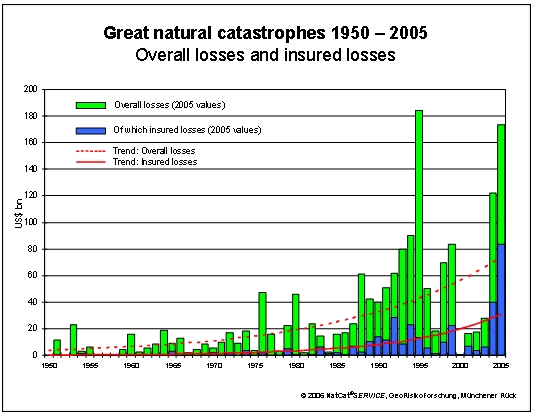
It turned out to be quite a lively day. The morning kicked off with a presentation on risk by Edward Borodzicz for Portsmouth University, followed by one on Flooding in the UK by Tim Randall of the Oxford Disaster Management Group. The latter included some references to an interesting document from Munich Re-Insurance looking at catastrophes over the past 50 years (which seem to have increased in frequency and magnitude). Lots of references to other material, including the UK-CIP impact model for flooding and the Eurobarometer research on perceptions of climate change. There was, though, a slightly unpleasant undertone, especially in the discussion that followed, that seemed to suggest that everything was the fault of the Chinese; this seemed particularly unhelpful to me – it's equally possible to point to lots of positive developments in China, including some of the absolutely enormous wind farms that they are building.
In the afternoon we had the presentations from the practitioners. The Rear Admiral spoke about Iraq at some length, and about the impact of Katrina on New Orleans (which he made some effort to call “N'orlins”). The policeman spoke about how the state took responsibility to safeguard us all from terrorism, how climate change might make terrorism worse or more frequent, and how the bad guys might incorporate responsibility for climate change and resource conflict into their 'single narrative' of conflict with the West which they used for recruitment.
Not all of the liberal academics in the audience liked this very much, and one argued that the two presentations together were more like propaganda – at which the Rear Admiral very theatrically flounced out, claiming that he hadn't come there to be insulted. (Interestingly, he responded rather menacingly to the critic, who happened to be a black woman, that he could say things that would be just as offensive to her, which would cause her to walk out of the room – a new mode of racist insult, in which it's enough to insinuate that you know the appropriate epithet and don't need to use it, perhaps?). And one can't help thinking that if the senior ranks in the Navy can't cope with really quite mild questioning of their perspective, who do they conduct discussions internally?
Funnily enough the policeman, whose presentation was actually much more propagandistic, didn't take offence at all, and happily carried on chatting through the coffee break and the rest of the day. And the Rear Admiral's presentation (apart from a marketing pitch for navies as agencies of emergency relief) actually contained some very acute observations – notably that the agencies which are supposed to prepare for disasters make a very poor job of it because they plan for not-worst cases, and that gangsters almost always seem to make a very good job of responding. One can't help thinking that this deserves some further analysis; what is about these kinds of informal economic organisations that makes them such flexible organisations? After all, they tend to be hierarchical just like formal organisations – perhaps it's just the absence of paperwork...
The seminar ended with some much more acutely academic presentations on urban planning, which were less interesting for me, and a panel session, which was very stimulating.
Key take-aways for me were: a better understanding of how likely extreme events are; a sobering realisation that communities are more likely to collapse than rally round under this kind of pressure (though there are creditable exceptions); and a reluctant acceptance that the state probably doesn't care that much about maintaining my security, but is nevertheless may represent a better bet than organised crime.
Wednesday, September 30, 2009
Why are we in Afghanistan?
It's the drugs. "We" are there to ensure that the flow is uninterrupted. I realise that this sounds like weird conspiracy stuff, but the evidence is there once you start to look. Have a look at this piece by Indian analysts on the link between Pakistan's ISI, the Taliban, the CIA and the heroin business. Sadly there is plenty more where this came from.
Thursday, July 02, 2009
Interesting piece about virtual worlds, gaming...with implications for enterprise UC

Even though the author doesn't say so, I think this article in The Guardian leads to some interesting thoughts about enterprise IT and UC in particular. Watching my teenagers play games and interact with their (sometimes very distant) friends I am aware that they will bring very different expectations to the working environment; I'm surprised that no-one working in enterprise communications seems to have even heard of Ventrilo, for example
Monday, June 29, 2009
Loose and Tight models of Sustainability

For some sustainability optimists, the simultaneous crises of climate change and peak oil (to which we must now add the economic slump and debt crisis) is also a great opportunity. The need to reduce our dependence on fossil fuels and to live within our planet's needs is, they hope, a wake-up call for our civilisation, and the chance to move towards a different way of living.
This new way would be based on a deliberate, conscious decision to reduce the complexity and inter-dependence of our civilisation. It would involve re-localisation, a reduction in consumption of many unnecessary goods and services, a degree of de-industrialisation and re-engagement with more fundamental aspects of life such as food growing. We'd have less stuff, and our 'standard of living' as measured by conventional indices like GDP would reduce, but our quality of life would improve.
This kind of vision is sometimes accompanied with an evocation of the wartime spirit, with fond memories of digging for victory. The Slow Food movement, and even more the Transition Towns movement, are good examples of this kind of thinking. In essence, this view says Loose rather than Tight is the key to resilience, which in turn is the key to sustainability.
But there is another vision of a low-carbon, more sustainable society, which is more or less the polar opposite – even though it is also a plan for sustainability. It argues that we need less Loose – that Tight, and efficiency, are the only route to a sustainable society.
Here, sustainability depends on more technology and more centralisation to deliver efficiency gains; it's these that make it possible to reduce energy consumption and emissions without reducing the quality of life. So energy efficiency based on “smart grids” that link generation more closely to consumption – real-time monitoring of your electricity meter is a must. High-tech communications equipment in our homes substituting for travel – both for work and for leisure. We'd be less likely to have our cars, and we'd be more urbanised and densely packed, not less – especially since high-energy modes of transport would be less affordable.
This second vision is the one implicit in some of the plans for a sustainable future drawn up by business, by the big consulting firms and the technology industries, like the “SMART 2020: Enabling the Low Carbon Economy in the Information Age” drawn up by the “Global e-sustainability Initiative”and The Climate Group.
Most of the time there is little contact between the two different visions. For the most part, the Green movement simply pretends that the high-technology model of sustainability doesn't exist; there are a few exceptions. Simon Fairlie at least confronts the issue head-on in his revisit to 'Can Britian Feed Itself?', in which he attributed to James Lovelock a plan whereby “a third of the land is given over to wilderness, and a third to agribusiness, while the majority of the population is crammed into the remaining third and fed on junk food”.
Mainly, though, Greens prefer to think that when business talks about the transition to a low-carbon economy as an opportunity, they are only interested in a bit of greenwash and marketing spin, and to sell us more stuff with a green label on it. And of course, business doesn't think much about the Loose model either – except to caricature anyone who has doubts about the possibility of growth without end as a know-nothing who wants to return us to the Middle Ages if not to the Stone Age.
As a Green, my heart, and my sympathies, are with the proponents of Loose, but increasingly my head is with a version of Tight. A more sustainable society will de-centralise some things, but it almost certainly will need to centralise others. It's fun to play around with local currencies, but funding social services and health requires a proper tax system. The Transition Town vision of re-localisation is great for Totnes and Lewes, but we need a different vision for the great urban conurbations that have arisen because of the existence of a global economy and don't make sense without it – this is true not only of the City of London, but also for Haringey and Brixton.
Those who invoke the wartime spirit tend to forget that 'dig for victory' was part of a bigger picture that included rationing and the massive bureaucracy that went with it. Running an integrated transport system will need lots of real-time information processing about the whereabouts of vehicles and passengers.
Personal carbon quotas will require massive databases and data collection systems; Enforcing rationing and preventing 'off-ration' carbon consumption will require an extension of state surveillance and powers; anyone who tells you otherwise hasn't thought much about the huge infrastructure that organised crime has built up around the transhipment of narcotic drugs, a commodity with much more minority appeal than energy.
It seems unlikely that carbon rationing will be based on little paper books and cardboard coupons; I am not at all sure that we can simultaneously oppose ID cards on civil liberties grounds while calling for the introduction of any kind of carbon rationing or quotas, and perhaps it's time to stop automatically resisting any initiative like this. Otherwise, we end up sounding like the nutters who oppose speed cameras on civil liberties grounds.
And the later we leave preparing for transition, the bigger the shock is going to be. When the lights start to go out and the food stops arriving in the supermarkets, many people will be grateful for the smack of firm government, and not too fussed about who gets hurt or what gets taken away in the process.
What's important, then, is not to reject Tight versions of sustainability out of hand, but to start a proper political engagement with them. Who is going to be in control? What safeguards will there be on surveillance? Who decides what the ration allocations are going to be? It's fun to brew our own beer and grow our own vegetables, and it helps to rebuild communities and help think about priorities. But it's no substitute for a proper plan to save civilisation that starts from where we are now, not where we'd like to be.
Saturday, June 27, 2009
The sad death of Michael Jackson
The only comment I've found worth reading was this one by Hadley Freeman in The Guardian - about the false dream of celebrity.
My first reaction on hearing of the death of MJ was one of sadness - yet another case of someone who seemed to have it all but found no happiness as a result. One day on and I'm already fed up with all the coverage.
My first reaction on hearing of the death of MJ was one of sadness - yet another case of someone who seemed to have it all but found no happiness as a result. One day on and I'm already fed up with all the coverage.
Monday, June 22, 2009
Is this what they really meant?
From the website of the Edwardian Radisson Hotel at Heathrow:
"We believe in doing business with a clear conscience, so we're careful not to waste either your time or our resources in planning an environmentally responsible conference, meeting or event."
Delightfully honest.
Delightfully honest.
Wednesday, June 17, 2009
Whoopee! Ubuntu now talks to my video camera!
And all thanks to this guy who posted a fix that worked!
Friday, June 12, 2009
Kastner on TV

A couple of weeks ago I watched the Storyville programme about Kastner (entitled “The Jew who talked to the Nazis”), and it stirred me up a lot. Few people who read the broadsheet newspapers (or the Jewish Chronicle) can have missed the row over Joe Allen’s play “Perdition” a few years ago; so the suggestion that some Zionists were involved in some dealings with the Nazis is not exactly news. And though everyone who writes about this feels compelled to act as if they are personally revealing something that has long been hidden, in fact there is a long and detailed account of Kastner and others’ roles in Hannah Arendt’s book on the Eichmann trial.
For years the subject was also used as a stick by the Zionist right to beat Labour Zionists – as represented, for example, in Ben Hecht’s book “Perfidy”; more recently Lenni Brenner has written several books which meticulously document the involvements of the Zionist Right (especially Lehi) with attempts to do a deal with the Nazis. Proper historians, including Jewish and Zionists ones, know all about what happened, and the indignation of the Jewish community about the Allen play was either fake or ignorant. There is a debate to be had about how we should interpret and even judge these episodes, and what we can learn from the; but it shouldn’t be based on denial of the facts.
Nevertheless, the Storyville film not only told the story rather well, but did manage to tell me a lot that I didn’t know. I knew that Kastner had been assassinated after a Pyrhrric victory in his libel action, but had always assumed it was the work of crazed individual. The film not only show that the assassin had been part of an underground rightwing group (which had also attempted to blow up the Soviet embassy in Israel) but also that the group had been penetrated by the Shin Bet, and that there seems good reason to suspect that the Israeli authorities knew about the planned assassination but chose not to prevent it.
Why? Perhaps because Kastner had been giving witness statements on behalf of Nazis at their trials after the war – and that he had been doing this so that they would reveal the whereabouts of money looted from holocaust victims. The money was then transferred to the Israeli state, though not to descendants of the victims or other survivors. Evidence of Kastner’s statements for the various Nazis had emerged at the libel trial and had very much influenced the judge’s attitude towards him, yet Kastner had not given an explanation as to why he appeared to be helping these odious men when there were no longer any Jews to save. The film suggests that the assassins were allowed to go ahead with their plans because Kastner knew too much; it also shows that the murderers served relatively short sentences. Curiously, the actual assassin, who is still alive and was interviewed for the film, is one of the most sympathetic characters in it.
Also interesting in the film is the close collaboration between Uri Avnery and the right-wing lawyer (a Herut leader) for the defendant in the libel trial. We’re used to seeing Avnery as a peacenik, but his political career is much more chequered than that. He started out on the right, and obviously maintained links there in the muck-raking days of Haolam Hazeh.
The film also shows the way that the Jews rescued by Kastner were made to feel like they were the wrong sort of survivor. I suspect many survivors in Israel felt like that. The fact that the Kastner episode happened in Hungary, and that at least some Zionists seem to have had scant regard for the assimilated Hungarian Jews, may also have played a part.
Friday, April 24, 2009
Zionism and the holocaust again
I've written before about the moral sadism implicit in the accusation that Zionists (or Israelis) are the new Nazis. The flip side of this must also be acknowledged; there are lots of Jews and Israelis who really do say that because of the holocaust no-one can criticise Israel, or that Israelis don't need to listen to anyone that does.
Writing in the latest issue of Standpoint, a magazine produced by the right wing Social Affairs Unit, Howard Jacobson says "...those who want to speak in those terms accuse the Jews of employing the Holocaust for pity. I don't know a single Jew who does that..."
Funnily enough, the day before I received an email from a nice Israeli friend, who seems to have civilised opinions, with a link to what she described as a 'terrific video'. I clicked through to the video, and it turns out to be series of images of anti-semitism with a backing track of someone reading a diatribe by "Rabbi" Meir Kahane. The message is that we don't have to care what anyone thinks about us, because they've always hated us anyway.
The vileness of this argument takes some beating; it is precisely a claim that anti-semitism gives Jews a 'get out of jail free' card that means they can do whatever they like to anyone and everyone. This is the most flagrant exploitation of the holocaust for political purposes. How can Howard Jacobson (or anyone else) get all huffy when accusations are leveled against Israel but look the other way when this sort of thing goes on?
More to the point, how can apparently nice Israelis think that this sort of thing is acceptable to send out as a contribution to understanding? Or complain about how cruel Hamas was, to force them to such terrible things in Gaza against their own better judgement? It's hard to avoid the conclusion that there is a different moral universe here.
Writing in the latest issue of Standpoint, a magazine produced by the right wing Social Affairs Unit, Howard Jacobson says "...those who want to speak in those terms accuse the Jews of employing the Holocaust for pity. I don't know a single Jew who does that..."
Funnily enough, the day before I received an email from a nice Israeli friend, who seems to have civilised opinions, with a link to what she described as a 'terrific video'. I clicked through to the video, and it turns out to be series of images of anti-semitism with a backing track of someone reading a diatribe by "Rabbi" Meir Kahane. The message is that we don't have to care what anyone thinks about us, because they've always hated us anyway.
The vileness of this argument takes some beating; it is precisely a claim that anti-semitism gives Jews a 'get out of jail free' card that means they can do whatever they like to anyone and everyone. This is the most flagrant exploitation of the holocaust for political purposes. How can Howard Jacobson (or anyone else) get all huffy when accusations are leveled against Israel but look the other way when this sort of thing goes on?
More to the point, how can apparently nice Israelis think that this sort of thing is acceptable to send out as a contribution to understanding? Or complain about how cruel Hamas was, to force them to such terrible things in Gaza against their own better judgement? It's hard to avoid the conclusion that there is a different moral universe here.
Powerline ethernet...
...is wonderful! It just works! Why have I waited so long? Why have I spent hours sodding about with WiFi?
Subscribe to:
Posts (Atom)