Much better than I'd been led to expect - a nice, taut thriller with plenty of tension and suspense without implausible plotting or ridiculous stunts. Just good characters involved in a plot that could almost happen to anyone (apart from the defrauding big-time gamblers in New York - that couldn't happen to most people).
Wednesday, June 04, 2014
Review of "Two Faces of January"
Much better than I'd been led to expect - a nice, taut thriller with plenty of tension and suspense without implausible plotting or ridiculous stunts. Just good characters involved in a plot that could almost happen to anyone (apart from the defrauding big-time gamblers in New York - that couldn't happen to most people).
Review of "Search for Sugar Man"

A couple of fans wonder what ever happened to him, amid rumours that he committed suicide live on stage. But they track him down and find him live and impoverished in Detroit, where he works as a day-labourer doing demolition for construction firms.
That would be amazing enough. It's made more remarkable because:
- the guy - Sixto Rodriguez - was important to several generations of young white South Africans as part of the process by which they distanced themselves from the prevailing repressive White culture and political system
- and he seems to have been utterly at peace with his lack of musical success - to have become a worker-poet with a degree of engagement in local politics
- and when, at the film's conclusion, they bring him to South Africa to perform a series of concerts to his huge fan base, he is every inch a rock star - not cowed or hesitant at all, and totally on top of his material and his performance.
Tuesday, June 03, 2014
Figs, haemorrhoids and Israelites
 I went to this rather interesting set of talks at the Royal College of Physicians,
 which included a tour round the garden. One of the highlights was an explication of the Doctrine of Signatures - the idea that the Almighty had cleverly signposted what plants might cure particular conditions by making them look like they would. So figs are good for haemorrhoids, and haemorrhoids look like figs. At least they did to people in the C16th - so much so that the word 'fig' meant a haemorrhoid. When Shakespeare makes characters say "I care not a fig" he was being just a bit ruder than I suspected, though this post makes it all a bit more complicated.
It did rather make me wonder about the golden haemorrhoids which the Philistines apparently placed in the Ark of the Covenant when they sent it back to the Israelites via express oxen-post, as described in 1 Samuel 6:4. The King James version gives this as emerods, but it is clearly meant to be haemorrhoids, as the more recent translations indicate. Perhaps the King James translators just mistook the text's figs for haemorrhoids, and the Philistines were putting golden figs in the ark. Any thoughts, anyone? I asked the speaker (Dr Henry Oakley, a Garden Fellow of the Royal College of Physicians) but he didn't even know about the haemorrhoids in the Ark, much less whether they were really figs. Is this an example of the dumbing down of medical education?
Thursday, May 29, 2014
Using a Globastar phone in Wales
 More than fifteen years
ago I worked in the mobile satellite services industry, helping to
develop a handheld satellite phone business. ICO Global
Communications, the company that I worked for never made it to
service launch; but part of my role was competitor intelligence, so I
had the opportunity to use an Iridium phone during a holiday in
Morocco. Then, the phone was huge and vaguely weapon-like, the
service was dreadful even on a beach with a huge sky, and I also
found cellular coverage wherever I went – even in the Atlas
Mountains.
More than fifteen years
ago I worked in the mobile satellite services industry, helping to
develop a handheld satellite phone business. ICO Global
Communications, the company that I worked for never made it to
service launch; but part of my role was competitor intelligence, so I
had the opportunity to use an Iridium phone during a holiday in
Morocco. Then, the phone was huge and vaguely weapon-like, the
service was dreadful even on a beach with a huge sky, and I also
found cellular coverage wherever I went – even in the Atlas
Mountains.
Still, I was a bit
thrilled to have the chance to try out a Globalstar handheld last
week. The Pembrokeshire coastal path turns out to be much less well
covered by cellular signal in 2014 than the Atlas Mountains were in
1998, and I badly needed to keep in touch with my parents because my
father was unwell.
The Globalstar phone, a
GSP-1700, was much cuter. It still had the solid, rotatable aerial,
but extending it no longer looked like I was deploying a
ground-to-air missile. The phone itself was about the size and shape
of a mid-1990s cellular phone with a similar monochrome look and
feel. It was lighter, though, and with a pleasant hand-feel.
It was really easy to
use – I never looked at the manual or documentation – and worked
very well once I'd got used to the fact that it did take a little
longer to acquire a signal. It didn't work in the shadow of buildings
or under wet trees, but other than that it was reliable and
straightforward.
And the voice quality
was great – clear and with no perceptible delay or echo. Much
better than the voice quality that I got when I did occasionally pick
up cellular signal, and actually better than much of my experience
with cellular even in urban areas. The phone really did help me to
'connect with family even when my adventures took me out of
coverage', just like it says in the PR material.
Nice to know that the
mobile satellite service industry came right in the end, even without
the benefit of my contribution.
Sunday, May 11, 2014
Interesting website about multi-generational cooperative housing in Germany

Tuesday, May 06, 2014
Revew of Adaptation

I suspect that there are lots of Hollywood in-jokes in it, and could imagine watching it again with someone more knowledgeable explaining them all to me.
Review of Tracks

This is a surprisingly straightforward narrative. We don't get much insight into what the journey meant to Davidson (there is a bit of exorcising inner demons from her mother's death, but not much). Early on she says she is drawn to the beauty of the desert, but most of the time she just scowls at it and wipes her sweaty brow with the back of her hand.
There aren't many characters, and there isn't much tension. The romantic relationship promised by the poster on this page (not used in the UK, I think) is not delivered; she has the odd shag with the photographer appointed by her sponsor, but it's a bit perfunctory.
We know she's going to make it, and that sense of certainty is never undermined. Quite how she manages this while apparently walking naked, without a hat or even sunscreen, and in the most inappropriate footwear you could imagine, is the only real mystery.
The music is nice but the desert looks horrible for the most part.
Wednesday, April 23, 2014
Review of "Free Men/Les Hommes Libres"

Moving, tense, well shot - though some of the dialogue seems a bit clunky; perhaps it's the subtitles rather than the original script. Interesting that the relationship between Younes and Salim, which is so central to the plot, is so little explored. Salim is gay, and Younes is clearly surprised and upset to discover this, yet there seems to be a dimension to their mutual attraction that goes beyond friendship.
Sunday, April 20, 2014
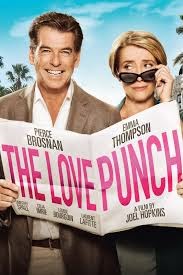
Review of The Love Punch: Worst film I've seen in many a long year
Wednesday, April 16, 2014
IOT 14 in Cambridge
I went to this. I can't remember the last time I found a public event of this kind so interesting and so much fun. Fantastic speakers, great venue (who wants to spend a day in the dreary subterranean basement of another corporate hotel?), superb organisation, and a really nice bouncy spirit in the way the sessions were organised and chaired. Just brilliant. Other conference event organizers should watch, and probably watch out.
I hope to post another piece about what was most interesting, but didn't want to leave it another day.
I hope to post another piece about what was most interesting, but didn't want to leave it another day.
Thursday, April 03, 2014
Another day, another low power wireless company
Six months ago I didn't know any companies pursuing this opportunity, even though some of them have been at it for a while and have successful implementations to point at. Now I fall over them all the time, and suddenly the industry mainstream, including proper grown-equipment vendors and even network operators want to talk about this.
The company du jour is Senaptic, which has just come out of stealth mode, having been incubated within equipment vendor Plextek. The latter is precisely one of those companies that has been ploughing the low-power IoT furrow for years - 25, to be precise. Its technology is deployed in the LoJack vehicle tracking system, in a smart parking system in Moscow, and is also used by Telensa in supporting smarter street lights in British cities.
Unlike fellow low-power wireless provider Sigfox Senaptic aims to be a technology provider, not a network operator. It plans to sell systems to organisations (mainly enterprises, but also local authorities) to use for their own purposes - tracking, monitoring, controlling, whatever. So there is no need for the kind of OSS that a public network would require, to provision devices, manage their subscriptions, bill for usage etc.
But it's not 'merely' a connectivity play - it also offers a platform that does include an OSS, applications, and of course devices.
At the moment Senaptic has only six employees, though the system is still supported by staff within Plextek. In the slightly longer run it aims to have about 100 people.
The company du jour is Senaptic, which has just come out of stealth mode, having been incubated within equipment vendor Plextek. The latter is precisely one of those companies that has been ploughing the low-power IoT furrow for years - 25, to be precise. Its technology is deployed in the LoJack vehicle tracking system, in a smart parking system in Moscow, and is also used by Telensa in supporting smarter street lights in British cities.
Unlike fellow low-power wireless provider Sigfox Senaptic aims to be a technology provider, not a network operator. It plans to sell systems to organisations (mainly enterprises, but also local authorities) to use for their own purposes - tracking, monitoring, controlling, whatever. So there is no need for the kind of OSS that a public network would require, to provision devices, manage their subscriptions, bill for usage etc.
But it's not 'merely' a connectivity play - it also offers a platform that does include an OSS, applications, and of course devices.
At the moment Senaptic has only six employees, though the system is still supported by staff within Plextek. In the slightly longer run it aims to have about 100 people.
Sunday, March 30, 2014
Review of The Past
 Not what you'd call a feelgood film but no less perfect for that. The dynamics of interlocking families in what looks to be a working-class outer suburb of Paris; an Iranian man who has left his wife to return to Iran, but is now returning to France to complete their divorce so that she can marry another immigrant man, even though his wife is still alive, albeit in a coma. The impacts of all of this on the children of the woman (not the Iranian man's, but he clearly loves them and is loved by them) and the second man's son.
Like real life - just as tragic and muddled, only even sadder.
Tuesday, March 25, 2014
Review of Sunshine on Leith

BTW I watched this immediately after Rio, a cartoon film about birds. The cartoon birds were more fully developed characters than the ones in Sunshine on Leith.
Wednesday, March 19, 2014
Review of The Zero Theorem

A shame, because it's not as if he lacks imagination. The situation - an 'analyst' in some vast incomprehensible corporation gets put on to a special project to do with the meaning of life - is not uninteresting. There are lots of nice visual gags - I particularly liked the interactive billboards that greet male characters with "Hello Madam", surely a joke on the interactive signage in Minority Report. It's always better when sophisticated technology screws up in movies, though it rarely does - film-makers obviously don't use the same stuff as the rest of us.
Other stuff is a bit derivative, though. The workstations where employees have to cycle - weren't they in an episode of Charlie Brooker's Black Mirror? The interactive sex site and the virtual reality suits, the mainframe that looks like a Victorian pumping station...even the music was cheesy.
Maybe Gilliam should find some more interesting collaborators.
Sunday, March 16, 2014
Review of Copenhagen performed by students at Kings College London

Who would have thought you could do so much with such a minimal set (though a rather good room for it with appropriate fittings and fixtures) and three actors?
And why isn't Michael Frayn as recognised as he ought to be? The way that this play addresses both the scientific and the moral issues is little short of genius. The fact that the answers to the latter aren't cut and dried, as they would be in Howard Brenton or David Hare, just adds to the brilliance.
It is still on for one more night - tonight (16th March). Go and see it if you can.
Wednesday, March 12, 2014
Review of "The Grand Budapest Hotel"
 A really enjoyable romp of a film, with great sets and scenery, super cast, lots of good verbal and visual
 jokes...what's not to like?
There is a somewhat complex nested narrative structure. It starts with a girl by the grave of a fictional famous writer. She is reading his book. Most of the story is then the story of the book, told by a younger version of the writer; but it's told to him by a now-old man who is himself, as a boy, one of the main characters of the story. From time to time we drop back to the old man telling the story to the young writer, but mainly it stays in the entirely fictional 1930s, in two entirely fictional central European countries. Neither of them are Germany or Poland, oh no, definitely not. Lots of brilliant visual details, in prison scenes, bakery scenes, etc. I loved the decor of the hotel and the writer's apartment in what must be the Communist era - just the right combination of artless cheer and drab.
Curiously the closing credits say it's based on the stories of Stephan Zweig, but if like me you are not a big Zweig fan don't let that put you off - it's much funnier than anything he wrote.
Friday, March 07, 2014
Review of "Dog Hell: Pitbull in Ramraid Horror!"
 I enjoyed this book, but I'm not sure who I would want to know that I had (apart from GCHQ, of course, who know all about what I am reading).
 I was uncomfortable with the dog-human sex, though. And now that I've read it, I see that people who viewed this also viewed...some really ghastly bestiality porn. Who knew that was even on Amazon?
It's a parody of those 'Skinhead' books from the 1970s that were read by boys at school who didn't read much. Lots of violence, some sex, homophobia, racism - you know the sort of thing. And it's a very good parody too, lots of witty dog/human crossover stuff. Sometimes it doesn't quite work, often it does.
I was uncomfortable with the dog-human sex, though. And now that I've read it, I see that people who viewed this also viewed...some really ghastly bestiality porn. Who knew that was even on Amazon?
Tuesday, March 04, 2014
Barcelona February 2014

I went with Ruth to the Sagrada Familia (only the outside - couldn't face the queue) and then on to the even more wonderful Modernista Hospital de la Santa Creu I Sant Pau.
We did Nick Lloyd's brilliant Civil War walking tour, which brought Orwell's Homage to Catalonia to life and almost moved me to tears.
We walked all over Montjuic (yes, Jew Mountain) and visited the Catalan National Art Museum. I particularly liked this picture by Antoni Arissa.
And I met up with Phil Shepherd, and with Jamilla Evans-Evans, neither of whom I have seen for at least fifteen years.
Review of 'Cloud Atlas'
 I loved the book, and this film is only tolerable. The structural complexities were always going to be hard to film. Watching it on a tablet as I did meant that I was going to miss out on the more impressive visual aspects - especially the scenes in Neo-Seoul.
Even taking that into account this is still a disappointment. The complex structure of the book is replaced with a more conventional set of inter-weaving narratives. Using the same actors to play different characters in these might have helped with the budget and the logistics but did nothing for the experience. And the characters make several laboured references to recurrence, and to the other 'themes', which I don't remember from the book.
At nearly three hours this is a long film but it felt longer.
Review of "A Field in England"
 A muddle without form, point or aesthetic value. Five men (I think it's five - it's a bit hard to tell) blunder in to each other in a field while escaping from an unnamed battle in the English Civil War. It is in black and white, so we know that it's arty. There is a sort of narrative. One of the men seems to be a weedy fearful scholar, implausibly sent by his master to apprehend a tough and frightening Irish man who has stolen a manuscript from the master's library.
The manuscript apparently describes how to find treasure in this very field. The Irish man, who turns out to be an alchemist, makes the others his prisoners and forces them to dig for the treasure. At various times some of the men seem to kill each other, but they don't stay dead. Those who are killed re-appear in the film to no particular surprise. Is there a magical or supernatural explanation, or is it all a hallucination brought on by the mushrooms we see them eating. It's hard to know and ever harder to care.
Subscribe to:
Posts (Atom)