Monday, June 21, 2021

Review of 'Almost Famous'

A film from 2000 about a 15-year-old boy (young man?) who blags his way into writing for Rolling Stone magazine (they don't know how old he is, and he fakes a deeper voice over the phone), and ends up on tour with the rock band Stillwater, developing substantive relationships with some members of the band and their hangers-on. One of these is a young woman called "Penny Lane" who is a member of a groupie cohort called the band-aids, and it's here that the film gets problematic. The hero calls out the band because he thinks they aren't kind enough to these girls, but there's no suggestion that he or anyone else thinks that there's anything abusive about sexual relationships between men in their twenties and girls in their mid-teens.

There's surprisingly little tension in the film - the hero is never really in trouble or in danger. The band's manager is supplanted by a cool dude appointed by the record company, but the old manager who has been with them since the beginning still stays on. And so on. Frances McDormand is nice as the boy's mother.

Watched on Amazon Prime.


Tuesday, June 08, 2021

Review of 'The Moneyless Man' by Mark Boyle

I read 'The Way Home', Mark Boyle's book about living without technology, and found it just about interesting enough to want to read another book by him - because though that was mainly annoying, there were occasionally interesting insights or thoughts.

This one is the same. It's mainly annoying too. Sometimes it's smug - he rarely writes about his struggles and his failures, or even about the process whereby he learns to do stuff. I think that's because he's trying to be inspirational, and feels that writing about the process might be too disheartening - but it comes across as smug. Sometimes he writes dismissively about the people who criticize him, but often without much insight or understanding. 

He's annoyingly inconsistent about what the point of the exercise is. Is it OK that he bought stuff in advance so that he could live without money once his challenge had started? Sometimes he implies not, but he's definitely done that...the solar panel, for example. Is it OK to receive gifts that others have paid for? Same inconsistency. Is he living off the slack and waste of industrial civilisation (like scavenging food from dumpsters behind supermarkets) or is he turning his back on industrial civilisation, and only eating what he grows or forages? Sometimes it's one and sometimes it's the other.

So while there are important points to be made about personal relationships with money, and also about consumption and happiness, and the psychological aspects of self-reliance...I don't think he more than scratches the surface. I don't think that what he performs here is scalable - we couldn't all live like that, even if there are a few things that it might be worth paying attention to. If I were a single parent trying to feed and clothe kids in a way that would help my family keep its head above water I'd want to throw this book across the room, and then maybe rip it up and burn it. There would be very little in it that would help me at all.


Monday, May 31, 2021

Review of The Sound of Metal

A moving, effective film about deafness - a heavy metal drummer becomes profoundly deaf, and he has to reflect on how he's going to live his life now. He's given hope that cochlear implants will fix him, but they are very expensive and he is forced to sell the RV that is his home (I checked, in the UK they are available on the NHS, but this is America where being sick is traumatically expensive)...and also to deal with the rejection from the deaf community that he's found, who don't accept that deafness is a handicap or that it should be fixed.

Really good in the way that the film manages to represent his experience of deafness.

Watched on Amazon Prime - best film there for a long time.

Friday, May 28, 2021

Review of "The Way Home: Tales from Life Without Technology" by Mark Boyle

Mixed feelings about this. Sometimes I can't help being engaged by his honesty, and by the single-mindedness with which he really does renounce the damaging, corrosive ways of the world as it is...and sometimes I'm a bit appalled. Rejection of technology doesn't seem to make for a simpler life, just a different set of dilemmas, and there isn't all that much consistency in the way that he deals with them. 

And there's something just a tiny bit fascist in the way that he seems to celebrate traditional life - I don't buy that people in C19th rural life had happier, healthier lives at all. Yeah, there were some aspects of that life that might have been worth preserving, but maybe they couldn't even exist without the life as a whole, and that was miserable, painful, priest-ridden, abusive, poor...

Sometimes when he's talking about the practicalities it's fascinating - I love the detail. And sometimes I can't but admire either his agonising over choices, or the choices that he ends up making. But I'm not sure that he and I would end up on the same side of the barricades, were there ever to be barricades.

Thursday, May 27, 2021

Review of 'Nae Pasaran'

This was an unexpectedly moving film - what made it special was seeing the Scottish engineering workers who had 'blacked' (well, we wouldn't call it that now, would we?) the Chilean fighter plane engines, later in life, when they still had no idea of the impact of their action - and then being shown how much they'd affected other people's lives. It was a beautiful paean to solidarity, and a memory of an earlier time when international solidarity was not just something that happened on demonstrations, and when Labour ministers were prepared to intervene on behalf of refugees and asylum seekers.

Watched on BBC iPlayer.

Friday, May 21, 2021

Review of "The Disconnect: a personal journey through the internet' by Roisin Kiberd

I started this book with zero expectation - I hadn't heard ot the writer, or anything about the book. I've really enjoyed it - though as is often the case, that doesn't seem like quite the right word. It's very much a personal journey, and Kiberd lays out all the different ways in which she is messed up...she calls it mental illness, and she's right really, but she's mainly (very) high functioning, so perhaps calling it that gives the wrong impression. 

It starts out as relatively conventional - if acutely observed - journalism about the world of tech companies, by which she mainly means companies involved in the latter incarnations of the web. IBM and Microsoft get mentions every so often, but you won't hear much about say Cisco or Nokia or the telcos who build and operate the infrastructure on which the whole edifice of the internet rests. Lots about Facebook and Twitter and Google, and their surveillance/data-mining business models; she mainly reiterates the same stuff as Shoshana Zuboff (who's in the bibliography), and she doesn't engage with the rather more sceptical perspective of Cory Doctorow. Thankfully she writes much much better than Zuboff.

Then she moves on to energy drinks - which I've never used or even thought much about - and it's like a curtain has been drawn back and there's a bit of the world that I'd not known was there. And gradually she takes in the key aspects of human life - food, shelter, sleep, sex...and discusses how the internet has "disrupted" them. And she does it very well, shifting between personal experience and references to research. Some of it is very heartfelt, and some of that is hard to read; she really does lay her life bare.

I am not entirely convinced that it's the internet that has messed her up (which I think is what she might want us to conclude), but it's certainly determined the form her messed-up-ness has taken, and there's such a lot to learn from this strange and wonderful, and sad and painful, book.

Thursday, May 20, 2021

Review of 'Sword of Trust'

A strange, understated film about...well, what, exactly? A pawnshop in a town in the Southern USA, to which two women - lovers, though that's not immediately apparent at first - bring a sword that one of them has just inherited from her recently-deceased grandfather. The sword has an apparent provenance (with supporting documentation) as the one which US General McClelland surrendered at an unknown battle in the Civil War, and is therefore "proof" that the South won the war.

This is obviously nuts, but the pawnshop owner soons sees that there are lots of people who believe in this, and in a conspiracy to hide the truth about the Civil War; it helps that his shop assistant is a conspiracytheorist and flat earther, so he can easily key into this stuff. Soon believers are turning up and offering serious  money for the sword, which is referred to as a 'prover' item. 

This looks like it's going to be a film about a con - the storyline is a bit like the violin scam, which I think forms the basis of a short story that I can't find at the moment. But it isn't exactly - we've seen the two women receiving the sword, and if it's a con they're not in on it. There are some good scenes, and lots of odd ones that seem to full of menace but nothing happens. 

Worth watching, but in a very odd way.

Watched on All4 via smartphone and Chromecast.

Monday, May 17, 2021

Review of 'Long Shot'


A really silly comedy that turned out to be quite enjoyable. Seth Rogan (and that's generally a bad sign) is an investigative journalist whose independent newspaper is taken over by a nasty media tycoon so he quits, and then gets given a job by the US Secretary of State who's just about to run for president and needs a speechwriter - and he'd fancied her years ago when she was the cool older girl next door. And she gives him the job, and then they start a romantic relationship, all of which is completely implausible but sort of works within the film. Some good drug jokes, some dodgy politics, but all better fun than it ought to have been.

Watched on BBC iPlayer via smartphone and chromecast. 

Monday, May 10, 2021

Review of 'The Ministry for the Future'

Kim Stanley Robinson is not a great writer, and this book is not great literature. Nevertheless, I'm still thinking about several days after I finished it, and I'm recommending it widely - because it's a positive utopian work about climate change and how 'we' - loosely defined - save our planet and our civilisation. It's a plausible vision, with little reliance on technologies not yet invented or - except for the eponymous Ministry, which is created by the COP to represent future generations - actors that don't exist. The political and technological narratives are possible, even if from the perspective of now they don't seem very likely. Along the way 'we' also solve the problems of inequality and ecocide/biodiversity loss.

Among the things I liked were the positive vision of India as an agent of change, the relaxed attitude to geoengineering, the nuanced view of China and its Communist Party, and the rich depiction of Switzerland, where KSR lived in his younger days when his wife worked there as an academic. An extra bonus is that quite a few of the initiatives and organisations that he describes are actually real - like the 2000 Watt Society, which I hadn't previously heard of. 

So I'll be reading more of Kim Stanley Robinson, even though his prose is not the best and his characters are sometimes a bit wooden. His politics and his reportage more than make up.

Sunday, May 09, 2021

Review of 'Promised Land'

 A film about fracking, and the way that gas companies turn up in small towns and bribe/beat them into selling the mineral rights. There were bits I didn't understand - why were the company people trying to persuade the town (via a town hall meeting) to give them permission to drill, but also buying up leases and rights from individual farmers? Surely they didn't need to do both?

But a good film with insights into corporate morality, and into the morality of the people involved in corporations, who are sometimes able to convince themselves that "it's just a job", and sometimes - as in the case of Matt Damon's conflicted character - actually think they are doing something good. That makes them more useful to the corporation because they're more convincing.

This is much better than the whiny reviews suggest, and worth watching, even if Frances McDormand is not at her best here.

Watched via informal distribution, Chromecast and VLC renderer.

Saturday, May 08, 2021

Review of 'The Rider'

A beautiful, haunting film without much of a plot or development. It's about a young man who has been a rising star in the local rodeo scene, but has had a head injury and is now recovering. He's kind to his learning-difficulties sister, has a complex and unhappy relationship with his tough-guy insolvent dad, and spends a lot of time with another young man who is in an institution following another rodeo accident - he'd also been a rising star, and he's now very badly damaged. The main character is not well, and he's warned to not ride any more, but he knows nothing except horses and rodeo.

It's Chloe Zhan, and the young man is a non-actor playing a character with a story like his own, with supporting roles mainly played by non-actors too. Painful and beautiful at the same time. I loved the depiction of his relationships with the friend, the sister, and especially the dad.

Watched via VLC renderer and informal distribution.


Review of 'Headhunter'

Danish thriller about a high-profile headhunter brought in to find a replacement CEO for a family business who finds himself caught up in internal company struggles - sounds sort of dull, but it's not. It's really tense, and well-acted, with several plot twists that I didn't see coming. There's a bit of a gaslighting dimension too, as the audience is really confused about what's happening, as is the main character. And I rather liked the depictions of corporate morality (fitted well with my experience) and the way it makes Denmark looks so moody and interesting. 

Tuesday, April 20, 2021

Review of 'Collectively Yours" by David Merron

I've had this on my shelf since forever and never quite got round to reading it...until the pandemic and lockdown. I expected something that was more about Zionism, and more comedic...partly because the text is broken up by cartoons from kibbutz newsletters. Actually it's pretty honest, and pretty grim reading much of the time. The author seems to have been a Hashomer Hatzair member who made aliyah shortly after the establishment of Israel, and lived through some of the bleaker and harder times there. Life was precarious not only politically but also economically, and he illustrates this well with accounts of the business of trying to run the kibbutz as a farm -  while its residents were ideologically committed to all sorts of practices that didn't make much business sense, but also had expectations about their current and future living standards that couldn't really be satisfied with agricultural wages, in whatever form they were taken.

He doesn't engage all that much with the politics of Zionism, but he's a decent sort, and aware mostly that Palestinians got a raw deal...though he rather subscribes to the idea that the refugees fled under instructions from the Arab armies, with no blame at all attaching to the Israelis. When there would be peace 'some of them' could return, he writes.

On the other hand he's good on the miserable factional disputes within the left Zionist parties, and the odd sentimental attachment that so many seemed to have retained towards the USSR.

For me, living now in cohousing, the bitter little disputes about the minutiae of daily life seem more relevant that the distant struggels over whether to celebrate the October Revolution, and he's really good on those.

Monday, April 19, 2021

Review of 'Into the Beat'

Sweet teen movie about a young ballet dancer who comes from a famous ballet family, and is about to have the chance to audition for the New York Ballet, but somehow then falls in with a group of hip-hop street dancers and wants to do that instead. It's not a very clever film but it's kind. The multiracial group of street dancers are all honest, decent, friendly, and not at all threatening. There's no drugs, abuse, violence, even though the main street dancer character with which the girl develops a deepening relationship is an orpan living in a home for foundling children.

One could point out that the film does depict a privileged white person coming to an aspect of urban black culture, and then doing it better than the people that it belongs to because she's had the benefit of a lifetime of dance education. That's not the sort of film it's meant to be, though.

I wondered where it was shot, and it seems that some of it was Berlin (uber-cool) and some of it was Hamburg (gritty port). And some of it was Salzburg, which I've visited and is full of horrid kitsch Mozart shops.

Watched on Netflix via smartphone and Chromecast.

Review of Children of the Snow Land


Sad, painful, beautiful film about Nepalese children from remote villages who are sent to school in the capital, where they are educated for free by a charitable foundation, but the consequence is that they leave their parents and may never see them again. Many of them are sent away from home when they're very young and barely remember the village or the parents. Some don't understand why they've been sent away - were they not wanted or not loved? 

The film depicts the children making a one-off journey back to their home villages, and even though it can't be as unstaged and unscripted as it wants to appear, it's clear that this is a shocking experience for them, as they come to terms with the difficulty of the journey...that's why they don't go back for the holidays, or ever, and why no-one ever comes from the village to visit them. And they realise too the difference between the culture and the context of the village and the city; it's stunningly beautiful back in the mountains, but life is fragile and precarious and very poor. While the film is being made and the children are on their journeys there is an earthquake in Katmandu, which is very destructive and serves to underline how precarious their existence is.

Watched via a special online subscribed showing through Stroud Film Festival - alas we were too late to also subscribe to the Q+A, for which numbers were limited. At the time that didn't seem too terrible, but afterwards we were sorry not to see the children themselves taking part.


Tuesday, April 13, 2021

Review of 'Waiting for the Barbarians'

Based on the J M Coetzee novel of the same name, and no relation at all to the Cavafy poem which I was actually looking for when I came across this film. It's slow, beautifully filmed, and hard to watch because of the cruelty that it depicts. It's about empires and colonialism - the empire is fictionalised, so not any one particular empire. It's shot in Morocco, and some of the artefacts and settings are obviously Arabic; the colonial soldiers look a bit French (kepis and so on) but the imperial flags and emblems look Habsburg, and the epoymous barbarians look like Mongols on their shaggy little ponies. The people of the town look much more like Moroccans though.

Mark Rylance is great as the magistrate of the frontier fort, and he brings all the legacy he's got with his expressions, at once knowing and anxious and sort of powerless. There's a small homage to the movie of Beau Geste towards the end. 

The magistrate's character is trying to be a good colonialist, with aspirations to not impact or trouble the town under his regime too much, but the film says that this is an illusion, and that you won't be allowed to do this.

Watched via VLC renderer, Chromecast and informal distribution...perfect quality, no buffering or any trouble.

Monday, April 12, 2021

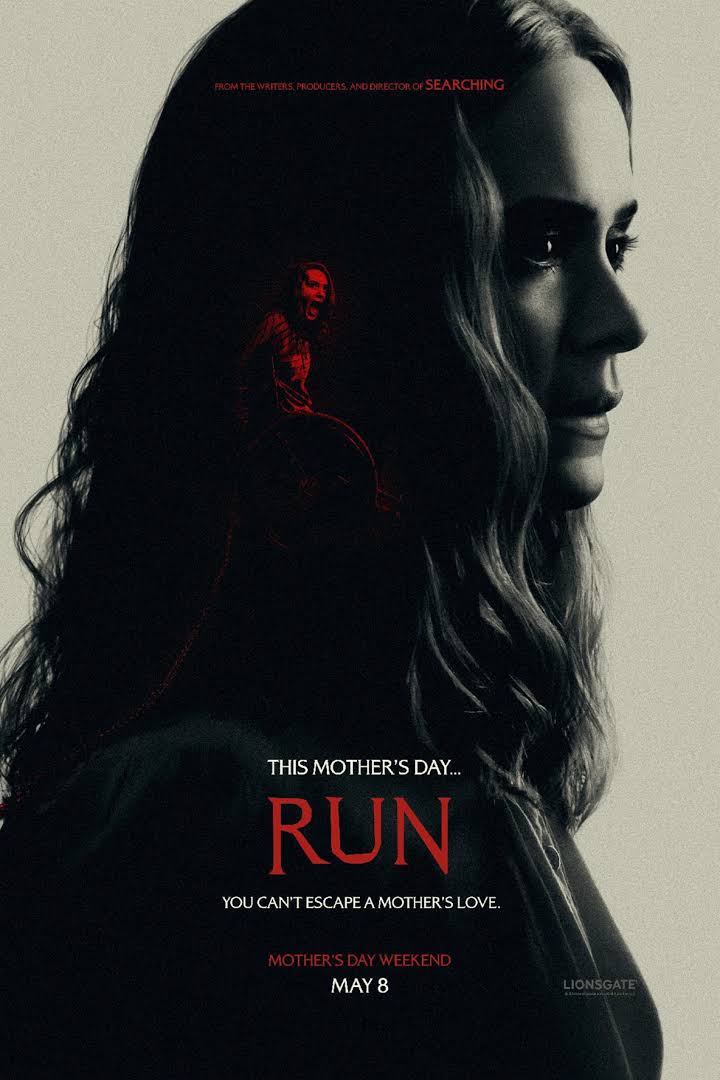
Review of Run

A pretty terrifying drama in which we see a bright young woman with a series of debilitating diseases being looked after by her kind and caring mother, only we learn gradually - along with the young woman herself - that none of these things are true. Hard to say more without spoiling, but this is tense and frightening, with some themese that pretty much everyone will find disturbing - medical abuse, gaslighting, abduction and imprisonment, injections...just everything really.

Watched on Netflix

Review of Concrete Cowboy

This is a film about a Black young man in Detroit who's in trouble - with teachers, with the law, and so on - so his mother despairs of him and sends him to leave with his moved-away father who lives in Philadelphia. She drives and dumps him there because he really really doesn't want to go. His dad's not very pleased to see him; he seems to live in a near-derelict house which has a horse in the living the room, where the young man is expected to sleep on the couch.

This is a film about how poor downtrodden people can recover their self-esteem through their relationship with horses - in this case it's Black Americans in North Philadelphia, and along the way we learn about how lots of the original cowboys were Black but that's been erased from history and Hollywood. The poor people and their horses are just about clinging on in the face of encroaching property development, and the authorities (including a Black cop) are trying to move them out. The young man gets back in with a bad crowd of drug dealers, but he's increasingly drawn to the horse world too, especially as there's a young woman who is beautiful and likes him and is a fantastic trick rider.

I expected that this would be a redemption/feelgood sort of film in which a young man recovers his relationship with his dad, hard work, the community and so on...and it is, but it's really not trite, though the poster and the description make it sound like it is. 

The acting is good, the filming and plot are pretty good too. I was moved to think about the status of horse ownership; in America it's convincing for it to be a redemption and recovery of status for poor people. In Britain, and perhaps in most of the rest of the world, horse ownership has always been a high-caste thing, with only a few very specific groups of people who are low-status having a relationship with horses - Romanis and Travellers. The film did remind me of the tough Irish kids in some estates in Dublin who were keeping horses on their balconies.


Watched on Netflix.

Monday, April 05, 2021

Review of "House of Orphans" by Helen Dunmore

Another near-perfect book by Helen Dunmore. Set in Finland in the early C20th, and capturing expertly the tension between Finns, Swedish-Finns and Russians in the Grand Duchy. Great characters, beautiful descriptions of food, nature, and inner life - and the expansion of Helsinki, and the life of underground revolutionaries. Some plot elements left unresolved at the end, and there's nothing wrong with that. 

Sunday, April 04, 2021

Review of 'Military Wives'

Perhaps unsurprisingly I didn't much like this. I think it harnessed the sympathy and warmth that people feel towards community choirs and then donated that to the military. The film shows a group of women on an army base in Yorkshire whose men have just been sent of on a tour of Afghanistan, and who are organised - by the too-posh colonel's wife - so as to keep them busy, and they form a choir which starts off badly but eventually triumphs and...you know.

Hard not to like the two lead characters because they are played by Kirsten Scott Thomas and Sharon Horgan, both of whom are great, even in this. But the plot is thin, and the sympathy to the army just wore me out...the military doesn't do anything wrong in the film at all, not even a bit of unsympathetic obstructive bureaucracy. There's a moment with a 'Stop the War' stall in the town where the woman go to do their first public performance, but if anyone ever considered using this as an opportunity to reflect on war, or this war, they just let it go.

Watched on Amazon Prime.