Thursday, March 18, 2021

Review of 'After the Party' by Cressida Connolly

A surprisingly enjoyable book about posh English fascists in the 1930s, in the run-up to the war and then during the war. The main character and sometime narrator (alternating sections are told by her in the late 1970s) is called Phyliss (when did you last meet someone called Phyliss?) and she's upper-upper middle class. Her husband was a Commander in the Navy during WW1, and they've been living abroad while he works for a rubber company. Now they've come back, and they have to get their children sorted out with prep schools and so on.

And they fall among Fascists. The BUF, and then the British Union when it renames itself, is a congenial home to people like them, with a certain kind of energy and mildly nationalist and pro-Imperialist views. They might have been Tories, but it doesn't feel like a big jump for them to be Fascists instead. They're not rabid Jew-haters, though they are aware that there are such people in their movement, and that doesn't bother them much. When their daughter goes on a jape in a nearby south coast town and paints the Union Movement symbol, and the letters 'PJ' - for 'Perish Judah', a Fascist slogan - on a theatre wall, it's the social stigma attached to vandalism and damage to property that upsets them, not the slogan.

It's also a book about manners and mores, and social codes among that class and its social-class neighbours. There's a certain amount of marital infidelity, some drug-taking, and lots of awareness of class markers - social snobbery, even within the Fascist movement, is a bigger thing than racism.

I was a little worried before I read it to learn from the inside cover that Cressida Connolly has 'written for Vogue, the Telegraph, the Spectator..." but her observations and her instincts are faultless. 


Wednesday, March 17, 2021

Review of 'Margot'


Surprisingly interesting and enjoyable biopic about Margot Fonteyn, someone I'd never really thought about much at all. I didn't know about her marriage to the Panamian politico scumbag whose family seem to have supplied several presidents to the country, despite there being not much evidence that they believed in or cared about any kind of politics at all. 

There's a great moment in the film when Fonteyn takes delivery of a box of hand grenades, glances inside and then orders them to be put in the cellar. It's good on the miseries of life that dancers go through, especially the injuries and the treatments. Fonteyn danced into her sixties so that she could pay for the medical treatment that her faithless scumbag husband needed after his injuries in a drunken brawl over someone else's wife, and he maintained his relationship with his lover who moved in as his wife whenever Fonteyn was away. 

Review of 'Agency' by William Gibson

I quite enjoyed this, but I can't say for sure that I understood it properly. There were bits of the narrative that I sort of skimmed over. I enjoyed the descriptions, especially the ones that are supposed to be of the present - somehow Gibson manages to make the current world seem just as weird and distant as the far future. I liked the descriptions of the parallel universe in which Hillary wins the US election and Brexit doesn't happen, and not only because that's the account I would have preferred, but also because he illustrates well how that alternative present isn't a happy ending but just a different set of problems. 

I can't say for sure if all the stuff about branching stubs - alternative versions of the past, seen from the perspective of the future - actually makes sense or not. I suspect Gibson has it all very clear in his mind or on his storyboard, but it wasn't so to me. 

Thursday, March 11, 2021

Review of 'Rocks'


Good but mainly grim film about a young Black schoolgirl of Nigerian origin, growing up on what seems to be a South London council estate, whose mother has some sort of mental health issue and disappears (not for the first time) leaving her to care for her much-younger little brother.

The poster and the description make it look as if it's a feel-good upbeat movie about friendship between girls, and there are moments like that. But it's also bleak and depressing much of the time. Rocks's life is quite grim, and she doesn't cope very well at all once her mother goes away - there are no other adults she can turn to for help, the kindly neighbour calls social services and Rocks takes her brother away to hide, fearing (rightly) that if they are taken into 'care' they'll be split up. She makes lots of bad calls, including stealing cash from the backpack of her friend who has tired (intermittently, admittedly) to help her. 

I note in passing that the estate looks a lot like the one featured in Chewing Gum, and that Shola Aduwesi (who played Tracey's mum) appears in the photographs as Rocks's grandmother, who has moved back to Nigeria for her health.

Watched on Netflix.

Review of "Datsche"


This a German comedy, and I am beginning to suspect (a) that this is a real thing and (b) that I am never going to understand anything in that genre. Bits of fall into the 'screwball' category - the young people who are the characters are mainly pretty stupid and do stupid things that don't serve their own interests very well. There's a refugee character who provides the serious dimension and sometimes punctures the silliness, but he and they are all lovable. Even the neo-Nazi next door is more a figure of fun than a serious threat (described in the film's blurb as a 'nosy neighbour' rather than a right-wing psychopath who tries to burn the other characters and himself to death). There's partying, silly games, overcrowding in a tiny allotment summerhouse, and that sort of thing. One of the characters is a Bavarian, and I think there are some dialect and regionalist jokes that are completely inaccessible - one of the Prussian characters keeps substituting another word for his name, for example.

In the end I quite liked it, but Ruth had given up watching by then.

Watched on Amazon Prime via Chromecast and smartphone.

Monday, March 08, 2021

Review of 'Judas and The Black Messiah'


Rather good film about Fred Hampton, Chairman of the Illiniois (Chicago) Black Panthers, murdered at 21 with the help of a police infiltrator. The story is mainly that of the infiltrator, how he was recruited (he was a petty criminal and blackmailed by the FBI) and rose through the ranks of the Panthers to become Hampton's bodyguard and 'captain of security'. 

Avoiding spoilers, it's a good depiction of the period and the struggle, and in particular is very good on how the Panthers were not Black nationalists or separatists but socialists (even if some of the Maoism is occasionaly a bit cringe-y). The FBI were most worried about them because they were making common cause with Latino groups like the Young Lords and even white racist immigrants from the south like the Young Patriots. The film is really good about this, not hiding from the fact that these people identified as racists and 'confederates', but showing the way that the Panthers actually saw struggle in terms of class not race.

Watched via laptop, informal distribution and VLC-renderer...which hasn't been working for a while but now it is!

Saturday, March 06, 2021

Review of "Under the Riccione Sun"

Cheesy Italian teen movie, set in the beach resort of Riccione - just up the road from Rimini, and from Cattolica where I spent some childhood holidays. It's all about kids getting off with each other, and supporting each other nicely through their romantic difficulties. Apart from the usual misunderstandings and unrequitedness nothing at all nasty happens...there are beach volleyball competitions, everyone is beautiful (even the blind young man who is on holiday with his over-protective mum), and it all ends happily. 

Watched on Netflix.

Thursday, March 04, 2021

Review of "Loco Por Ella"

A rather unusual Spanish romcom with a mental illness theme. Adrian is a cynical journalist who works on a clickbait website; he's good at it but seems to despise what he does, even though he also despises (and is despised by) his colleagues who want to proper journalism about serious subjects. There's a great performance by his cynical and despicable boss, who doesn't even know that what they are after is "clicks" - he keeps calling it "clips".

But while on a bet to pick up a woman in a bar, Adrian is picked up by a different woman, and has the night of his life and then falls in love, only she doesn't want to have any kind of  long term relationship. He seeks her out, finds she's an inmate in a mental institution, and then gets himself admitted so he can pursue her.

There's lots of interesting stuff going on, not least in the serious and sensible discussion of what mental illness is like and how the sufferers deserve to be treated. The psychologist who runs the place is an interesting and imperfect character but the film treats her as an intelligent and sensible professional with good expertise and insight - and treats expertise as superior to the 'knowledge' of family and friends...exactly the opposite of what a British or American film would do.

Plenty of humour and romance but also a serious and thoughtful film. And an opportunity to practice Spanish -- the people speaking on this film were much easier to understand than on some Spanish films I've tried recently.

Fun fact: as I thought, it's shot in Barcelona and Argentona, but it's entirely Spanish - no sign at all that it's Catalunya. Is that making a political point?

Watched on Netflix.


Tuesday, March 02, 2021

Review of 'Kinamand'

Odd Danish film about a (not-very-good) plumber who separates from his wife...well, she separates from him really, because he's not very rewarding as a partners, and then spends his evenings eating in a cheap Chinese restaurant, where he ends up fixing the plumbing, befriending the owner, and the going through a marriage of convenience with the man's sister. 

The title means 'Chinaman', because that's what one of the other white customers of the Chinese restaurant - another isolated and bitter older man - calls him when he discovers that the plumber eats there every night. I don't know if it has the same racist connotations in Danish as it does in English...from the character I'd say it does, but I'm not sure.

I'd say it's not quite sure what gender it belongs in, but it was quite engaging and moving.

Watched on Netflix.

Review of "Such a Small World!: My Years in Shanghai" by Georgia Noy

 At one point in her life Georgia Noy was looking at a career change - she was thinking of becoming an event planner - and instead of endorsing her plan, the career psychologist that she went to see suggested that she become an anthropologist. Reading this book it's not hard to see why; she's such a good observer of the little details that define a culture, and the way that such details can be markers and boundaries between one group's experience and anothers.

There's lots to enjoy here. It's partly a historical document, because she tells what it was like to be away from home, and in a very specific place, in the years just before the internet and the web made the experience of being anywhere in particular much less specific. Now she'd be able to order stuff online, consume media from her country of origin, keep in touch with friends and family back home with Zoom and Skype and social media...in some ways there's a big divide that runs through the life of our generation (well, I'm a bit older than her) - the time before all that, and now. If you moved away before, you wrote letters - maybe you typed them, perhaps even on a computer, but you still posted them afterwards.

Some of the narrative is about what it's like to be an expat, living as part of a relatively small and enclosed community that is separate from the life of the host country. She writes about the lack of curiousity of the Americans in her compound, and I can testify to the same thing in the group of Americans that I worked with in the early 1990s in Hong Kong...I learned more about the place in three weeks than they had wanted to do in three months.

But she's not just an expat, she's an expat Israeli, and she's exploring what she has in common with - and in what ways she in different from - other Jewish expats in the community. There are lots of things that she never had to think about before...do the kids take Yom Kippur off from school, even though she's not religious? Which seder to attend, the Jewish community one or the Israeli consulate one.

This is a really enjoyable read, with some bonus chapters about the quest to find tombstones from the now-destroyed Jewish cemetry in Shanghai, and her husband's reflections on how it was to set up a subsidiary of a foreign company, and work with local staff and clients, in early C21st China.


Sunday, February 28, 2021

Review of "Modern/Love in Seven Short Films"


Quite enjoyable collection of short films about relationships...billed as from America, the UK and Australia, though five were American. Actually the British one was the least enjoyable...just went on and on, and the intentional discomfort wasn't as enjoyable as the film makers must have imagined. But quite fun. Might have been more enjoyable watched separately rather than all together.

Watched on Amazon Prime.

Wednesday, February 24, 2021

Review of "Matter" by Iain M Banks


Third one in the series, and the best so far, even if the Ruritanian comic opera dimension is sometimes a bit annoying. Nice the way that we have an outsider to guide us into experiencing The Culture, so that things can be explained without the need for an omniscient narrator, and nice the way that she's related to the story of what's going on in the main Sursamen-based narrative. We also get a better explanation of the hierarchy of civilisations (and species) and how they fit together. I'll read the others. I don't love them, but I like them.

Tuesday, February 23, 2021

Review of "Twilight of Democracy : The Failure of Politics and the Parting of Friends" by Anne Applebaum

 I hate this book so much it's hard to know where to start. It's ignorant - full of little factual errors like the suggestion - partly withdrawn, but still left hanging - that apartheid South Africa was a 'one-party state', or that Bolshevik Russia invented the one-party state (it didn't, that honour falls to Fascist Italy, which barely gets a mention in the book).  It's uninterested in any of the intellectual history or political theory with which anyone else has ever reflected on the issues she is touching on - Benda's Traison des Clercs gets mentioned all of the time, but there's no mention of Talmon's Origins of Totalitarian Democracy - not that I particularly like it, but it's a serious attempt to deal with the tension between democracy and liberty. This isn't. It's an annoying partisan rant, a whine that her kind of conservative is losing out to another kind.

She never finds it possible to talk about the excesses or crimes of the far right without talking about the far left, sometimes suggesting that the right have simply copied their bad practices and ideas from the left...as if two hundred years of lynchings and Jim Crow and massacres of Blacks by Whites is balanced by the pitiful armed struggle of the Weather Underground. She idealises Thatcher and Reagan, as if their regimes were characterised by a wise, balanced and generous liberalism. One of the things she doesn't like about the Law and Justice Party in Poland is its use of anti-gay prejudice to mobilise its base...conveniently forgetting who put the anti-gay Section 28 on the statute book in the UK. And Thatcher's description of the striking miners as The Enemy Within. And her abolition of the Greater London Council when it elected the wrong people. And her jailing of local councillors who stood up to her restriction of local authority budgets to make municipalities introduce service cuts. 

And the idea that Reagan was a generous, honest, optimistic conservative? Oliver North anyone? and Iran-Contra? And the CIA aid to Bin Laden in Afghanistan? 

There is, of course, no attempt to understand the way in globalisation has failed the people who are now turning to alternatives...I'm sorry that they are mainly turning to nationalist ones, but she doesn't have anything to say about what wasn't working before. The race to the bottom for wages and workers' rights, which has been a big part of why European businesses relocated to Poland. China doesn't even get a mention in the whole book, though Trump's opposition to trade deals with China is a big part of his appeal. 

Worst of all is that the book doesn't actually deal with the most important aspect of the people that she's talking about - how they've managed to create a 'democratic' version of authoritarianism. Law and Justice, and Orban in Poland, and Putin in Russia, have not created a classic fascist state with other parties banned and uniformed militias in the street. Instead they've got better at doing capitalist democracy than their centrist, soft-left and traditional Christian Democrat opponents. They tweak the rules of democracy to favour their parties, without needing to ban or even right elections. They take control of the media in their countries, but they mainly leave it in private hands rather than take it all under state control. Which means that it doesn't look all that different from say Tory Britain, or Berlusconi's Italy. In fact a proper analysis of the decline of democracy would spend a lot more time in Italy, looking at how private and state control of media interact, and 'reforms' of electoral law to favour the ruling party, have played out.

I'd like to mention in parting the Swiss-based Democracy Barometer, which has a much more sophisticated understanding of democracy than she does...it looks at the different aspects of how political democracies function, including the representativeness of their electoral systems, the funding of political parties and controls on election spending, the access to media...


Sunday, February 21, 2021

Review of "Dogs Don't Wear Pants"

Billed by All4 as a romantic drama, this was a stark and occasionally horrifying film about the world of BDSM. Juha is a successful surgeon whose wife dies tragically and unexpectedly in a swimming accident at their summer house by a lake, and he's unable to deal with his grief or move on. Then he stumbles into an S&M dungeon underneath the tatoo parlour where he takes his young teen daughter for her tongue piercing (he's a very permissive dad) and finds himself drawn to the activities there. He goes back for a session, and then another - the main appeal is sexual asphyxiation, during which he finds himself reconnected with the dead wife.

There is a lot of depiction of the mechanics of the scenes. The rubber-wearing dominatrix, Mona, is not simply working at this - she has a day job as kind and caring physiotherapist, and she is herself fascinated and engaged by BDSM. And there's something about the connection with Juha that seems to affect her deeply...at one point they kiss after she's finished strangling him, something that appears to be proscribed in the BDSM practioners' handbook.

And the scenes get darker and darker...this is no 'Escape to Eden' or 'Maitresse', where the fascination with BDSM often has a light, even comic touch. There's lots of extreme pain, disfiguration and sometimes brushes with near-death. I found bits of really hard to watch, even though it has an apparently happy ending in a BDSM club.

Watche on All4.

Monday, February 15, 2021

Review of 'News of the World'


Nice enough archly liberal western yarn with Tom Hanks as a bloke that goes from town to town reading the highlights from newspapers to assembled audiences in 1870s Texas, who finds a young girl child and is lumbered with returning her to her only living relatives. She's been abducted from her German settler family by Kiowa native Americans and seems to speak only Kiowa, and the home she wants to get back to is the Kiowa. But he's taking her to a German uncle and aunt who live near Castroville.

It's set against a background of the South during Reconstruction, though that's not really dwelt upon. Indeed, given how little most contemporary Americans know about that period there might have been a little more, especially now when the Confederate re-enactors seem to be such a powerful political force. There are some nods in that direction - early on the protagonist finds the body of a Black man who has been lynched by white supremacists, but after that Black characters mainly appear in a few crowd scenes. And there are few references to the relations between native Americans and settlers, but again that's not really the point of the story.

Still, it was a properly made film with nice acting and cinematography.

Watched on Netflix.

Review of 'Hamnet' by Maggie O'Farrell

Loved this so much...not read Maggie O'Farrell before, but saw her talking about this book at last year's Hay Festival, which was of course online like everything at that point. She seemed really interesting but also sympathetic and reflective. Then I forgot about it until a friend lent it to me.

It's so beautifully written, with an interesting narrative structure (different time periods) and it feels really contemporary, with a plague background and so much uncertainty about the way that the infection process and the disease works. And the love, and the longing, and the characters who are so different from each other but so well depicted, and the descriptions of the interior settings...both kinds of interior actually, the ones inside the characters and the ones that the characters are inside of. Just beautiful. I don't often have a cry with a book, but I did with this.

Saturday, February 13, 2021

Slow Cooker Vegan Moussaka recipe

 Slow cooker vegan moussaka

Make the 'meat' layer as follows: 

Saute (that's "fry") onions and garlic in a pan, slowly. Add a can of chopped tomatoes, some salt and pepper, and some cooked kidney beans (can use a can). I added six sprigs of thyme because we had it. Simmer for a while until it's not runny. I mashed it a bit.

Make the white sauce as follows:

Cooked butter beans (can use a can, I used two cups dry, soaked overnight, cooked in pressure cooker for forty minutes), half a cup of cashews soaked overnight, blended with hand blender. I added some water to make it a bit runnier and three cloves of garlic, fried. Note that this is better than dairy white sauce, and with some herbs and chillies is great for macaroni cheese or spaghetti. This makes too much for the moussaka so I froze half.

In the slow cooker put a layer of potato slices (about 1cm thick, I didn't peel). I sprinkled with oil.

Then a layer of the kidney bean mush - about 4cm.

Then a layer of sliced aubergine - again about 1cm thick, rounds.

Then another layer of kidney bean mush.

Then a layer of white sauce - I recommend about 2cm deep.

Put the slow cooker on high and leave for seven hours or a bit more.


Thursday, February 11, 2021

Review of "L'ultimo Paradiso"

Unsatisfactory Italian film about Puglian villagers in the 1950s - beautifully filmed, slow, but confusing and a bit vaccuous. Lots of adultery, revenge and honour killings, and so on, but the story barely makes sense. The poster makes it look like it's a lush romance, but actually it's grim and dark.

Watched on Netflix. 

Monday, February 08, 2021

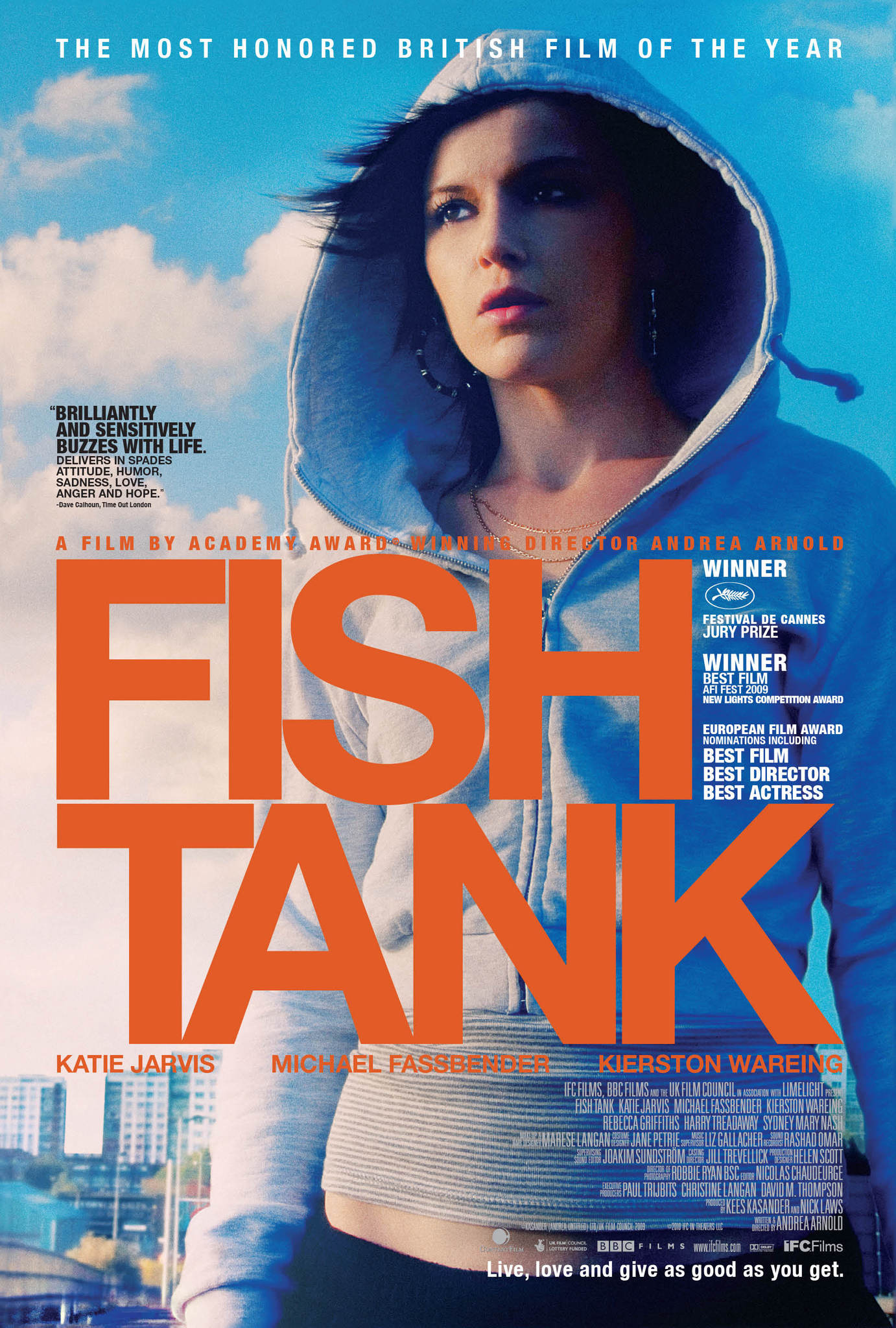
Review of Fish Tank


Hard-to-watch but worthwhile coming of age film about a young woman growing up in mainly-white and poor Barking. She lives with her feckless, hostile Mum and younger sister in a council flat, where there's lots of booze, and occasional partying, but not much food or comfort. She aspires to be a dance of the break-dancing kind, and sometimes practices in an abandoned empty flat on the estate. Her Mum gets a new boyfriend who is nicer to her, and the family, than anyone else, but her growing teenage sexuality means that she's attracted to the boyfriend, with disastrous results.

Lots more to say but I don't want to add any spoilers. I note in passing the fact that it's probably about 2010 but there are several bits of technology (personal CD players, for example) that look really dated.

This film deservedly won awards and is very much worth watching. Amazing that some of the places in it were only a few miles from where I grew up, but I never ever visited them. Tilbury in particular looks like it belongs in another universe, with a mixture of industrial, post-industrial, agricultural and scrubland landscapes, with scattered pockets of shiny new housing estates.

Watched on Netflix - the best film I've seen there for a while.

Review of 'Rose Island'


 Gentle, amusing Italian film about a quirky and awkward young engineer who builds a platform off the Adriatic coast near the resort town of Rimini, declares an island and independent, and then runs it a bit like a beach club. We're sort of in the Italian version of 'Passport to Pimlico' here, with a sort of Tory anarchism that celebrates escaping from the control of the state, but appears not to want to do anything particularly out-of-control apart from circumventing what are seen as petty regulations. 

Because it's the Italian version, the state is both more ridiculous and more sinister, but it's the same sort of territory. And whereas the British version was set against a background of post-war austerity and rationing (which don't happen in the independent state of Pimlico), the Italian version takes place in 1968, with the somewhat spurious suggestion that the independence of Rose Island is somehow linked to the wave of protests sweeping Europe at the time.

There are nice Italian settings and food, some nice music, and some pretty people dancing on the 'island', which looks a lot like an offshore oil platform.

Fun fact...I was probably only a few miles away at the time. We had a few family holidays in the late 1960s in the resorts of Cattolica and Lido di Jesolo, just down the road from Rimini.

Watched on Netflix.

Wednesday, February 03, 2021

Review of 'I am Greta'


Fly on the wall documentary about Greta Thunberg and her one-child campaign against climate change. I felt sometimes awed by the strength and purity of her commitment...the sailing to New York thing was a thing of genius, and puts to shame all those celebs who fly across the Atlantic to attend a climate change conference. And sometimes bitter and toxic and powerless, especially at all the abuse hurled at her by right-wing politicians and commentators (the Australians were particuarly vile), and the sincere but vaccuous admiration of others (like Macron) who want a selfie with her before getting back to business as usual. I thought about how the story of the Emperor's new clothes would have gone if it was happening today, and the heaps of shit that would have been tipped on to the little boy until he'd gone away and everyone could get back to admiring the wonderful robes. And I couldn't help but feel despair, because despite lovely kids nothing has changed, and emissions keep on rising.

Watched on BBC iPlayer, which didn't work very well.


Monday, February 01, 2021

Review of 'Philophobia'


Not so good high school movie about a boy infatuated with the beautiful but unavailable girl that used to be his next-door friend, and is now the girlfriend of the school bully. Hard to watch - literally, because it was streamed from some independent platform that didn't work so well - but also because the boy and his friends are so stupid in the way that 17-year old boys can be. The girls - and the women, mainly the boys' mums who seem implausibly young and glamorous - don't seem like real people at all, but maybe that's because they are girl/women as imagined by 17-year old boys. The film did rather remind me of what it felt like to be that age, and it wasn't a good feeling for the most part.

Watched on some weird streaming platform called something like Eventbridge, that didn't work very well.

Review of 'The Dig'


Quite good period drama about the excavation of the Sutton Hoo ship, set (as was the real excavation) in the last days before the outbreak of WW2. Lots of class prejudice - Ralph Fiennes plays Basil Brown, the 'excavator' (not a proper archaeologist, see) who begins the dig, finds the ship, and is then more or less pushed out by posher chaps from the British Museum who hear about the find and take it over. There's a love story - one of the archaeologists is a woman whose archaeologist husband is obviously not interested in her or women in general, and she falls for the young handsome cousin of the lady on whose land the ship is found. Lots of unhappiness, and the sense that the find is something to do with the English identity that is about to be tested in the war.

Watched on Netflix.

Friday, January 29, 2021

Review of 'One Night in Miami'


Really powerful film about a the night in 1964 when the then Cassius Clay defeated Sonny Liston, and the time spent together by Clay, Malcolm X, Sam Cook and Jim Brown (an NFL footballer that I hadn't heard of). It's based on a play, and it shows - sometimes it feels very stagey rather than cinematic - but it's still very good. All of the characters get their turn to be thoughtful, intense, and smart. It's more about Black responses to racism than the racism itself, though that's featured too.

One small criticism...it isn't clear from the end titles that Malcolm X was assassinated by members of the Nation of Islam, rather than by white racists.

Watched on Amazon Prime - it's an Amazon original, though they bought the rights rather than made it.

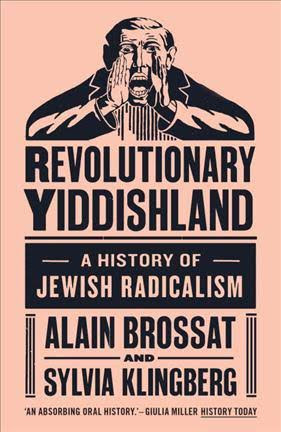
Review of 'Revolutionary Yiddishland; A history of Jewish Radicalism' by Alain Brossat and Sylvia Klingberg


I got so much more out of this book than I was expecting...to tell you the truth (and it's my blog, why shouldn't I?) I was prepared for a nostalgic wallow in how great the Bund was, and the tragedy of its eclipse by Zionism. But actually it's much more nuanced and clever than that. It started out as an oral history based on interviews with old lefties in Israel, and in the days when I used to go to Israel I met and enjoyed the company of many people like that...quite a few of them not Zionists, but more or less flushed into Israel or Palestine at the end of WW2. Kibbutz Yad Hannah, aligned with the Israeli Communist Party after some nasty factional splits in the Zionist movement to which it was tied, was a good place to meet people like that, and there was even an old Trotskyist there (and another bloke who had heard Trotsky speak at a rally in Russia).

The authors are fond of the Bund, but not blind to its deficits. Reading this I had a sense that the Bund's glory days were in the early C20th, and that its alignment with the Mensheviks in the post-revolutionary period put it on the wrong side of some important arguments...and as a result lots of its members abandoned it in favour of the Bolsheviks. And in inter-war Poland it seems to have been a regular Second International party, with a modicum of revolutionary rhetoric and iconography but also a bureaucratic form and a reformist agenda. My great-grandfather had been a Bundist, but he returned from Russia in 1923 as a devout Communist, and loved Stalin the rest of his days.

There's an honest recognition that Jews who were drawn to Left Poalei Tzion were, in Russia and Poland, genuine and sincere socialists with a revolutionary orientation, even though the role that Poalei Tzion played in Palestine - in the context of British colonialism, was anything but. Poalei Tzion's position on the national question as it related to Jews was of course Zionist and emigrationist, whereas the Bund was a belated convert to National Personal Autonomy. The Bolshevik/Communist position on this flip-flopped around, from opposing the nationalism of the Bund (and other Jewish socialists groups who wanted to organise Jewish workers) as reactionary, to supporting Jewish nationalism and the establishment of Jewish territorial colonies in the USSR, to eventually supporting the establishment of a Jewish state in Palestine, with the weird reservation that this was 'too important a task to be left to Zionists'. Sometimes the Communists thought that Jewish workers would be absorbed into the working classes in the countries where they lived (and that this was a good thing) and sometimes they didn't. Getting caught out believing the wrong thing when the line changed - as it did, often - could be fatal.

There's great material on Jews in the Spanish Civil War (my dad had a cousin who died in the Battle of the Ebro, and his father organised collections for 'Arms for Spain', and somehow ended up with a CNT-FAI scarf which is now sadly lost), and on Jewish resistance in the Holocaust. There's a really good chapter on the way that Stalinism screwed its devoted Jewish followers over, again and again, and they kept coming back for more. 

It's a shame there wasn't more about the fourth pillar of the Jewish left, the Fareynikte...the United Jewish Socialist Workers' Party. I know least about this, though reading around the book (Wikipedia articles mainly) you get a feeling for some of the comic opera qualities of factions and splits and mergers, and the way in which all of these groups - including Poalei Tzion, and the Kombund split-off from the Bund, wanted to claim the Third International franchise and demanded that the other groups all be banned. I think the Fareynikte was actually the first group to take up the idea of National Personal Autonomy, which the Bund later adopted. It seems to have left very little trace.

A few things I didn't like...some of the language is impenetrable, particularly at the beginning when they seem to be establishing their academic credentials. Sometimes it might be the translation, though why the translator feels the need to use English words that I have never, ever encountered is a mystery to me. But I'll forgive it, because it's so good overall. A few curious things; one of the writers, Syliva Klingberg, is the daughter of one of the interviewees (his name has been changed) who has spent years in prison in Israel because he spied for the USSR - he was an epidemiologist who ended up working in the Israeli chemical and biological warfare program - and then her husband, like her a member of Matzpen, ended up in prison for allegedly spying for Syria. For a weird contrast, one of the interviewees in the film Madrid Before Hadita, about Jewish volunteers from Palestine in the Spanish Civil War, returns to his kibbutz, is welcomed as a hero (though they had forbidden him to go) and end up deputy head of the Mossad. 

Wednesday, January 27, 2021

Review of "The Reader on the 6.27" by Jean-Paul Didierlaurent

Slightly annoying 'quirky' French novel, about an awkward and introverted man who works in a plant that pulps unsold books to make recycled paper (on which other books are then printed). He lives alone, he has a succession of pet goldfish, he reads aloud on the train from random pages snatched from the pulping machine...get the picture?

It might have made a quirky film like Amelie, only some of the humour is very toilet - he eventually falls in love with an unknown woman toilet attendant in a shopping centre, who he knows only from her writings, via a USB drive that he finds on the train...cue lots of shit jokes about toilet users, which will probably prevent it from being made into that film.

There's an unpleasant air of menace throughout, that ultimately doesn't deliver - the anticipated bad things don't happen, which is at once a relief and a disappointment, as if a trick has been played on the reader. 

Monday, January 25, 2021

The contradictions of Zionism

This post is (yet another one) about Zionism...

...and therefore inevitably fraught.

Some of that comes from the fact that supporters of the Israeli government try to deflect all criticism of Israel and solidarity with the Palestinians by saying that it’s motivated - consciously or otherwise - by hatred of Jews. Some of them actually believe this, and sometimes they say it in bad faith because it’s effective.

And there are people who really are Jew-haters, who don’t care much about Palestinians or what Israel does to them, but use “Zionist” as a code-word for Jew. There’s more of this about than there used to be...you don’t have to go far in to many conspiracy theory websites before you find it...David Icke goes on about “Rothschild-Zionists”, Sandi Adams who spoke at the anti-lockdown rally in Stratford Park hosted material like this on her website.

And some people conclude from this that “it’s better not to talk about Zionism at all, because everyone means different things by it”. But we need to, because understanding the different meanings that are attached to it, and where these have come from, is a first step towards developing a decent politics that can address both Palestine and anti-semitism.

The central contradiction of Zionism

There is a distinction that is often made between the ‘nationalism of the oppressed’ and the ‘nationalism of the oppressor’. Zionism is both, and that makes talking about it more difficult. 

In Israel now Zionism underlies and provides the justification for the oppression of Palestinians, inside Israel ‘proper’ - the internationally recognised borders of Israel from 1967 - and in the territories that Israel has occupied since 1967. (For an in-depth illustration see the  website of B’tselem - an Israeli organisation that describes the situation as ‘a regime of Jewish supremacy from the Jordan River to the Mediterranean Sea').

It’s considered an extreme left-wing view in Israel to say that Israel should be “a state for all its citizens”. Two years ago the Israeli parliament narrowly passed a law saying that Israel is ‘the nation-state of the Jewish people’...that is, it belongs to all the Jews of the world, whatever their citizenship status. And not to all of its citizens.

Now to most people around the world who believe in democracy this seems weird, but the debate in Israel is about whether it should be a law or not, not whether it’s right. Stuff like this is part of the intellectual and ideological and legal apparatus that enables oppression.

Nationalism of the oppressed: a response to antisemitism

To have productive conversations about Zionism, we need to go back further - and understand the ideology and movement as something that started out as a response to the predicament of the millions of East European Jews, particularly those in the Russian Empire. 

Antisemitism has a very long history in European civilisation - the blood libels (the often-repeated fiction that Jews murder Christian children for their blood), the massacres during the crusades, sinister Jews in art and literature. Jews were expelled from England in 1290 (and other countries in Western Europe at other times). The first immigration act in Britain, the 1905 Aliens Act, was introduced to keep out Jewish refugees from Russia.

The modern version of antisemitism was a mass political movement with its own parties and newspapers, and an explicit ideology that explained what was wrong with the world in terms of the involvement of evil Jews. 

Jewish life in Russia (Russian-governed Poland was the largest population of Jews in the world) was characterized by legal restrictions, state persecution, and organised street violence - the Black Hundreds was a popular Russian antisemitic organisation involved in organising pogroms (state-sponsored anti-Jewish riots that turned into massacres). 

In 1902-3 the Russian secret service forged a document, ‘The Protocols of the Learned Elders of Zion’, which claimed to be a secret plan for Jews to take over the world and it’s still in circulation today… this is the sort of stuff that Icke and Sandi Adams promote, and is promoted, via Qanon, in the US Republican Party..  

The catalyst for the founding of the political Zionist movement was the 1894 Dreyfus trial in France, which demonstrated to some that Jews would never be accepted as equal citizens by their non-Jewish counterparts.

From the foundation of the Zionist movement in 1897 the mainstream ‘Political Zionism’ sought to get backing from one or more major European powers to help them get a state. Political Zionism argued that the ‘Jewish Problem’ could be resolved by creating a state for the Jewish people and organising the mass migration of Jews to that state. This was referred to as the ‘Normalization of the Jewish People’. From early on the place chosen for that state was to be Palestine, seen as the site of the last time there had been an independent Jewish state. A key slogan was “A land without a people for a people without a land”, which ignored the fact that Palestine was inhabited.

Zionism wasn’t the only kind of Jewish nationalism- there were others like the Sejmists and Jewish Autonomists, and Territorialists; there was the Bund, a Jewish socialist movement that was big in Russia and Poland. In some ways Zionism was similar to the other movements of oppressed nationalities in Europe - the Polish, Czech, Finnish, etc. If history had unfolded differently Zionism might have turned into an interesting footnote in history, like some of the other European settlements in Palestine, or like Marcus Garvey’s  ‘Back to Africa’ movement in the US. And there were other responses to the oppression of Jews - the individual response of migrating to America or somewhere else, for example. Others placed their hopes in the international Communist movement, hoping that the overthrow of capitalism would also put an end to antisemitism.

Nationalism of the oppressor: a colonial movement in Palestine

“Practical Zionism” sought to encourage Jews to migrate to Palestine without waiting for a state, and to establish the nucleus of a new society there. 

This included the creation of communities - sometimes utopian communes with socialist or anarchist characteristics, as well as more conventional businesses, farms and towns. It wasn’t a big success - many more Jews migrated to America than to Palestine; between 1907 and 1914 the comparable figures were 20,000 vs. 1.5 million. 

But Practical Zionism had one important consequence; the Zionists discovered that Palestine was after all inhabited. There were a variety of responses. In general it wasn’t seen as a big problem, partly because they thought there were only a few hundreds of thousands of Palestinian Arabs at most, and millions of Jews would be migrating to Palestine. Some Zionists convinced themselves that the Palestinian Arabs would be pleased once they understood how the creation of a Jewish state would benefit them. 

“Labour Zionists'' thought that it was necessary to create a segregated labour market, with protection for Jewish workers who would otherwise be undercut by low-waged Arab workers - otherwise they wouldn’t be able to persuade Jewish workers to immigrate. They organised unions that called for Jewish-owned businesses to boycott Arab workers, at the same as they tried to persuade those Arab workers to join special Arab-only unions to fight for higher wages. There was a wide spread of opinion, and some socialist-Zionists like the ‘Left Poale Tzion’ and Hashomer Hatzair took the socialism part seriously and tried to make common cause with the Arab workers in Palestine, with very limited success.

After WW1 the British Empire took Palestine away from the Turkish Empire, and the British began to sometimes tolerate and sometimes encourage Jewish immigration into Palestine. 

With the rise of fascism and Nazism in Europe, and other countries closing their doors to Jewish refugees, the pressure to allow Jews into Palestine increased, and the Palestinian Arabs  - who knew that the Zionists were intending to turn their country into a Jewish state - became ever more hostile.
So from early on Zionism had two different aspects, and this is still important now. 

In Europe it was a movement of an oppressed minority, offering national pride and cultural identity. 
In Palestine it acted as a movement and an ideology of colonists, seeking to take over a territory and dominate the local inhabitants. It wasn’t interested in immediate self-government or independence for Palestine because it needed the British Empire to enforce the right of Jews to immigrate - an independent Arab-controlled Palestine would have stopped that. 

The impact of the Holocaust

The Holocaust changed the way that Jewish communities around the world responded to Zionism.

A majority of Europe’s Jews died in the Nazi genocide - two out of three, and many of those who survived were dispossessed, displaced and devastated by the loss of everything and everyone they had known. Before the Holocaust lots of Jews were anti-Zionist or at least not Zionist. Orthodoxy was opposed on the grounds that returning to Erez Yisrael before the coming of the Messiah was sacrilegious. Reform Jews, who were keen to present Jews as a denomination rather than a nationality, were also opposed - as were some successfully assimilated and prosperous Jews, the other kinds of Jewish nationalist, and most Jewish socialists. 

After the Holocaust, the Zionist view that the Jews would never be accepted in the countries in which they lived seemed to have been vindicated. Jews who had never been Zionists, and never became ideological Zionists, nevertheless found themselves supporting the nascent Israeli state in its ‘War of Independence’.  The creation of a state that - unlike the British administration in Palestine - would permit the mass immigration of the displaced Holocaust survivors seemed to have become a matter of urgency.

The brief honeymoon between Zionism one the one hand and the USSR and the international Communist movement on the other made this much easier. The state of Israel was fought for with Soviet and Czechoslovak weapons, Communists across Europe helped Jews breach the British blockade against emigration to Palestine, and Communist-sympathising young Jews volunteered to fight for the newly established state. Isaac Deutscher, the anti-Zionist biographer of Trotsky, regretted that he had opposed Zionism and not tried to persuade more European Jews to migrate to Palestine.

That was then, and Deutscher and his heirs avoided becoming belated converts to Zionism. Every so often the remnants of left Zionism appear to be making a last-ditch stand against what they would like to think of as the ‘betrayal’ of their ideals, but these become progressively intellectually less convincing, and less politically significant and the organisations loyal to these ideas diminish numerically. Some of the opposition to the occupation comes from people who characterise themselves as left or liberal Zionists, but this opposition seems to be forever compromised by ideological acrobatics to distinguish between the nasty things that go on in the Occupied Territories and the ‘democratic’ character of Israel proper.

For most Jews outside Israel, even those who aren’t ideologically or organisationally involved with Zionism, identification with Israel and with the word ‘Zionism’ is part of their personal identity
Most Jews in Britain identify as Zionists, even those who don’t like the Israeli government, oppose settlements and the occupation. People like me, who don’t consider themselves Zionists, are comparatively rare. We don’t know how rare, but we aren’t represented in the Jewish community, and when you start to get embroiled in the arguments between Jews about who represents what, and say things like “not all Jews are Zionists” you are opening up some complex stuff with a long history.

This identification is bound up with a memory of fear and precariousness. The extermination of most of Europe’s Jews happened in my parents’ lifetime, to their cousins. It might seem odd to POC that British Jews, who are mostly white and seem to be safe and privileged, don’t feel themselves to be so...but when I look at the people in rubber boats trying to make it across the Meditterranean or the English Channel, or the columns of refugees trying to cross borders in Southern and Central Europe, I think about my parents’ generation and those who tried and failed to cross borders or seas to escape to safety. 

I grew up Zionist. I went to a state-funded Jewish primary school that was run by a Zionist organisation. The Hebrew that I learned there was the Israeli kind - I didn’t even understand why older people pronounced Hebrew in a completely different way. The songs we sang were Israeli songs, in Hebrew. We celebrated Jewish holidays the way they did in Israel. There were maps of Israel and Israeli flags all over the school...I don’t think there was one British flag or map of Britain. Later on as a teenager I joined a Zionist youth movement, where we went camping, and got off with each other, and sung more Israeli songs and practiced living like a utopian community.

I don’t consider myself a Zionist now… I know too much about the role that Zionism plays in Israel and Palestine, and I don’t think it makes sense for Jews in this country to consider themselves as members of a “Jewish Nation”, even though I can’t think of myself as English either. But I don’t call myself an anti-Zionist either, because of all the stuff that I’ve just been talking about, and because I want to be able to have a conversation with other Jews who have an attachment to the word, and even to Israel, without falling at the first fence.