Well written historical novel, set in the eleventh century, about a young Norman aristocratic girl who meets a young Jewish man studying at the yeshivah in Rouen, falls in love and runs away with him to convert to Judaism and marry. It's well told, so that this almost inconceivable event - which is, as explained, based on a true story - feels plausible. There's lots of great detail, especially of the settings in southern France, and later in Egypt.
Monday, October 31, 2022
Review of "The Convert" by Stefan Hertmans
Wednesday, October 26, 2022
Review of Skandal: Bringing Down Wirecard
A Netflix-made documentary about a financial fraud centred on the German e-payments company Wirecard, this was quite gripping because of the style, and because of the constant hints we are about to find out what all this was really about - was the Russian FSB involved?
Really this is a straightforward fraud in which a company inflates its revenues, pretending that it is earning more than it is, in order to push up its share price. Quite a few people notice that there's something dodgy about its accounts, and the short sellers take notice, and so does the Financial Times in London - but the German government and financial regulators continue to defend their hi-tech darling, and the management takes various actions against the FT journalists, some legal, some much less so.
Eventually the auditors EY - under lots of pressure from the FT and others - announce that there is indeed a EUR19bn hole in the accounts, that amount of declared revenue that can't be found. But no-one from EY appears in the film or explains why it took them so long...what is the point of an audit if it doesn't find things like that? What were the company's bankers doing?
The film has to make financial fraud look interesting, so it resorts to some KABOOM style graphic novel frames, and lots of shots of exotic or scary locations. The main point of financial fraud, though, is that there really isn't much to see, which makes a film sort of tricky. Hence the hints that the FSB were involved, and shots of migrant trafficking in Libya and so on - if that's really relevant it's hard to see how.
Saturday, October 22, 2022
Review of "Living My Life" by Emma Goldman
I got a lot out of it. EG lived through a huge part of the history of the left, in Europe, Russia and America, and she's a great witness - she picks up on little details that other left authors might ignore, like the tea that Kropotkin and his wife served when they visited him in 1920.
The most interesting part for me was the very long chapter about her time in Russia in the early 1920s, which I think has been published as a separate book. It's very painful to read in some places, because contrary to my vague Trotskyish legacy, it's clear that there were some major things wrong with the revolution as early as 1920 - particularly the already-crushing bureaucracy, and the extent of privileges for Communist Party members - extra rations, better accomodation, and so on.
She's very good at conveying the pain of someone who doesn't want to line up with the enemies of the revolution, but is finding it increasingly hard to be part of. There's a little bit when she meets up with some Jews in the Ukraine, including a Zionist, a Bundist, some rabbis, and the Zionist poet Bialik. She's interested in what they have to say, and doesn't treat it as an opportunity for a polemic. Inspired by this I went and found something that she'd written about Zionism in 1938, which struck me as much more nuanced than I might have expected.
I note in passing that when she's in the Ukraine and southern Russia she is covering much the same territory that my great-grandfather did, and at about the same time.
Tuesday, October 18, 2022
Review of "The Island of Missing Trees" by Elif Shahak
Ruth read this in her book club, and I needed something that wasn't too heavy, so I gave this a go. It's a sort of magical realist novel with a Cyprus context, a pair of lovers across the Greek-Turkish divide, with a split narrative across different time periods. It was quite enjoyable, and it motivated me to read up a bit on the Cyprus conflict, which I thought I knew about.
Review of The Boat That Rocked
Informal distribution and VLC.
Review of The Sea Beast
Watched on Netflix via smartphone and Chromecast.
Thursday, October 13, 2022
Review of "A Modest Proposal...to solve the Palestine-Israel Conflict" by Karl Sabbagh
So I was predisposed to like the book. But the more I read, the less I liked it. Sabbagh comes from a Palestinian nationalist perspective. He admits that there might once have been antisemitism, and that the Holocaust was a bad thing, but moves swiftly on from that to how it wasn't the Palestinians fault and why should they have to suffer for it? So he is great at recognising the extent to which Zionism was a colonialist program which could not have been realised without the support of British imperialism, but he is wilfully blind as to where the impetus for it came. Without antisemitism there would have been no Zionism, or it would have been a weird little footnote in history.
He talks about the countries that the Jewish immigrants to Palestine came from, but only in the abstract. There is no sense that these were countries that practised increasingly severe discrimination against Jews, or that there was any reason why long-established Jewish communities no longer felt at home in them. He writes about the unwillingness of the Jewish immigrants to Palestine to give up the citizenship of the countries from which they had come and accept Palestine citizenship, as if this proves something about their colonialist and exclusionary intention. Well, maybe it does - but it was happening in a context in which the possession of the right piece of paper might mean the difference between life and death for many uprooted Jews. Perhaps it wasn't so unreasonable to not trust to the bureaucratic kindness of British colonial administration, or to the welcome of an Arab community that had made it very clear that it didn't want any Jewish immigrants.
There's lots more partial history. Like I said, I know that the Zionists really did intend to take over the whole of Palestine, and that they really did plan for there to be fewer Arabs there - perhaps no Arabs at all, despite what they said for outside consumption. But it's not necessary to pretend that this was the realisation of an American-British imperial plot. The British did not support the Partition resolution at the UN and abstained on the final vote. And he doesn't mention at all the extent to which the USSR, and its satellites in Eastern Europe, and the Communist parties in Europe, the middle east and elsewhere all supported partition and the creation of Israel.
He suggests that the Jews all left the Arab countries in the early 1950s because they were tricked into it by Zionists. It's true and well documented there were Israeli false flag operations in some Arab countries. It's not true or even plausible that Jews in Iraq led happy integrated lives until this happened - the antisemitism in Iraq is well documented too. You have to be deeply embedded in an Arab nationalist viewpoint to find this sort of thing convincing.
The emigration of Moroccan Jews to Israel is a much more complex and nuanced business, with efforts by the Moroccan government to persuade Jews to stay and to return - nothing similar in Iraq or other countries, and limited success despite the miserable racist experience that the Moroccan Jews had when they arrived in Israel and for years afterward.
There's a lot in the book about how the principles of Palestinian return would be applied and paid for, but very little about how a one-state solution would work. What languages would be used in schools and in the civil service, for example? Would there be any institutions in place to ensure that one community did not dominate another? It would have been really good to have had some examples of where such things have worked out well - the way that the Swedish minority is treated in Finland comes to mind. It's not hard to think of examples where it hasn't worked out well, which I think places a special duty on those who do advocate a one-state solution.
I suppose I think, in a not very well worked out way, that it's possible that Israel - racist as it is - could evolve into a democratic state. This would be uneven. Some things would be harder to change than others...some of those things - the name of the country, the flag, etc, have enormous symbolic significance, to Jews and to Palestinians. Maybe there are other things to focus on in the medium term, as a part of a struggle to bring democracy and maybe even socialism to the region. It's taken us a hundred years to get to here, with nationalism and counter-nationalism. Perhaps with a perspective of where we want to get to in the next hundred years we could start to see some positive change in our lifetimes, rather than the poisonous waiting game that both Zionism and Palestinian nationalism play in the belief that time is on their side.
Wednesday, October 12, 2022
Review of The Last Black Man in San Francisco
It's depressing, but worth sitting through.
Watched on BBC iPlayer.
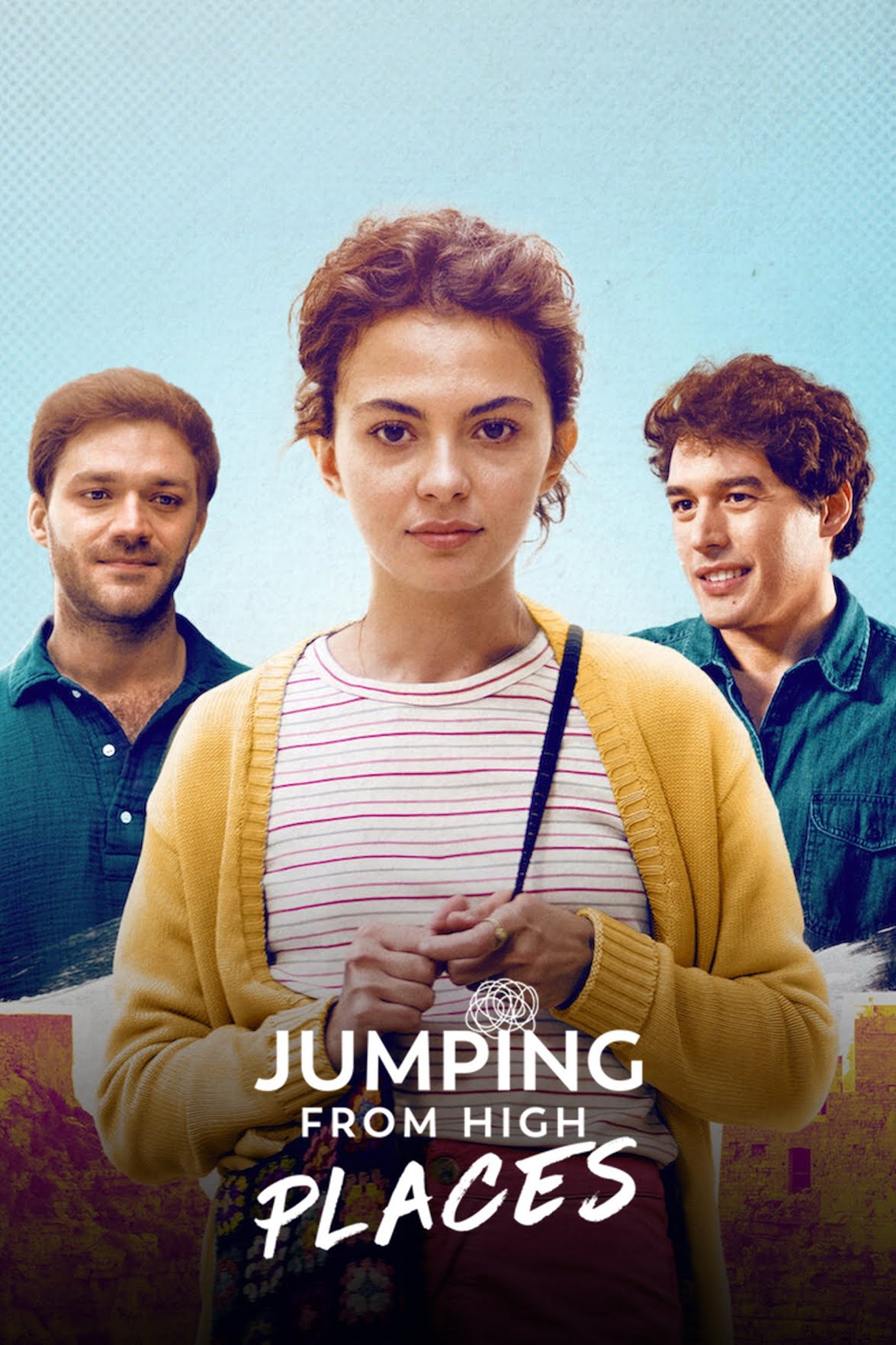
Review of Jumping From High Places
It's not very taxing or tense to watch, and there are beautiful people and locations to look at.
Watched on Netflix.
Review of Harriet
Watched on BBC iPlayer in two tranches, because though it's not gory, it's not feelgood watching either.
Review of La Famille Bélier
But they are pretty similar, and you don't need to watch both.
Watched on the big screen at Lansdown Film Societ.
Tuesday, September 27, 2022
Review of "Them: Adventures with Extremists" by Jon Ronson
There's a lot to be said about organisations like that - how they attempt to impose some sort of coordination on the chaos that is international capitalism, and how useless they mainly are at it, for example. There's a lot to be said about conspiracy theories, and why they are becoming so widespread and what role they play politically, but you won't find it here.
Review of "Rivers of London" by Ben Aaronovitch
Friday, September 23, 2022
Review of Bacurau
It's tense, and for a while there's an air of mystery as we try to work out what's going on, but ultimately it's horrible and pointless. It's resolved with all the murderers getting blown away by the townsfolk who arm themselves with ancient firearms from the town's museum. Yeah, it's a metaphor for colonialism and stuff, but it's also two hours I won't get back.
Review of "The Descent of Man" by Grayson Perry
But after the first whiny chapter the book looked up a lot, and he's really astute and clever about gender and masculinity. It's definitely worth reading, and I'm going to watch the associated TV series. I was particularly taken with the way he talks about how men perform their gender, and also about his references to Lori Gottleib's work on gender equality in housework and sex - the research appears to suggest that men who do more of the housework get less sex, and less enjoyable sex, from their female partners. This deserves further consideration, and for once by women as much as by men.
I would really like see what he's got to say about the trans wars. Uncomfortably I have friends...mainly women...on both sides of an argument that I don't entirely understand.
Friday, September 16, 2022
Review of "The Ghetto Fights" by Marek Edelman
The book was published in English in the immediate post war period by the Bund, in the US, but it was only published relatively recently in the UK, and by Bookmarks, the SWP's publishing house. So there is a foreword by John Rose, an SWP member who has also written some decent history books. I was pleasantly surprised by this. Rose goes over the story of how the author, Marek Edelman, has been largely ignored by mainstream Jewish and Israeli audiences, because he remained true to his Bundist principles and continued to oppose Zionism. But I'd say he does this in a surprisingly generous way. He doesn't at all play down the contribution of Zionist fighters from the various Socialist-Zionist groups, or repeat any of the allegations about Zionist collaboration with the Nazis. And he includes in afterwords the bad responses he's received from Zionist commentators, as well as his responses (which seem to me to be be scrupulously fair) to those when they were published.
It might have been interesting to have seen some discussion as to what the history means for the argument between Socialist-Zionists and Bundists. Zionists have generally acted as if the Holocaust proved that they were right all along. Bundists have often suggested that the way Israel has turned out proved that they were right all along. Still, this book probably isn't the place for that.
Thursday, September 15, 2022
Review of "The Ragged Trousered Philanthropists: A Graphic Novel by Scarlett and Sophie Rickard"
That said, I still didn't really enjoy it. Much of the detail about grinding poverty in the Edwardian era seems all too contemporary, with working poor having to decide how to pay their rent to private landlords, while keeping enough back to both heat and eat. I'm sure there must have been times when the book just felt like a period piece, but it doesn't now.
I didn't enjoy the politics all that much. I don't Tresell was ever a Marxist really, and his cod version of the Labour Theory of Value doesn't feel very convincing. It's even less so given that the workers in the book are all painters and decorators, so they really don't fit with the narrative of surplus value that it tries to illustrate. When the book's socialist intellectual tells the workers that they ought to stop voting for Liberals or Tories, and instead "elect revolutionary socialists to the House of Commons" I couldn't help wishing that he'd actually spent a bit more time learning socialist theory.
The old socialist who tells the hero that he's given up, and the toiling masses deserve what's coming to them because they are so stupid...? Hard not to give in to that, particularly in the week of King Charles III's coronation.
And the fairy-tale ending in which one of the painters, George Barrington, turns out to be a socialist rich man temporarily playing at poverty so that he can develop his socialist understanding, and then gives out some big presents for Xmas before he leaves? Well, finger heading for throat.
I read the Wikipedia article about Tressell afterwards, and he's quite a nuanced character, with a bit of a background in the SDF who apparently never joined a union, and may have supported segregated labour markets in South Africa (like much of the rest of the white labour movement there).
Wednesday, September 14, 2022
Review of La Belle Epoque
And it's brilliantly done - the bar they met in (the eponymous Belle Epoque) is lovingly recreated and populated, a woman plays the younger version of his wife-to-be, and he falls in love with her. And then this plays out, with all of its contradictions and difficulties.
That's not a plot summary - it's actually much more sophisticated and more interesting. It probably bears watching twice, which I almost never say.
Watched on BBC iPlayer via smartphone and Chromecast.
Review of Rango
Watched in the Middle Floor at Springhill from a USB drive, new DVD player and informal distribution.
Review of "Now we shall be entirely free" by Andrew Miller
Thursday, September 08, 2022
Review of Behind The Curve
There are interviews with the flat earthers, some of whom are bitter foes with each other...one of them argues on his YouTube channel that his rival is a Hollywood actor, hired by Warner Brothers but working for the CIA. And this hints at the main weakness in the film; although it does show that flat-earthism is more of a socio-political belief than a cosmological one, and it does show that the devotees are conspiracy theorists, it plays that down and makes them look mostly harmless. There's a hint that some of them blame the Jews (along with the Freemasons or the Vatican) for the 400-year hoax, but the nasty side is not emphasised.
Which leads rather nicely into my second criticism - the suggestion that the best thing to do it to treat them as genuinely intellectually engaged and to try to draw them towards an evidence-based approach to the rotundity of the earth, without ever shaming them. Lots of talking heads of scientists saying this, but they are for the most part natural scientists - physicists and astronomers. They are interviewed as experts, but they are talking about a subject in which they have no expertise. It might very well be that shaming is exactly the best way to deal with them - not enjoyable for them, or even for the people doing it, but it might be more effective than treating them as folk-scientists. That's a question for social science.
The film makes it clear that however they became flat earthers, they now have emotional, and social, and even financial reasons for not abandoning their "theory" (as they point out credentialed scientists also do). So maybe emotion-based and social-based approaches will work better - if not at rescuing these heavily committed individuals, then at least in helping to prevent others from coming under their influence. If this was only a cosmological belief there might be an argument for letting them continue to think whatever they wanted (as long as they weren't involved in say aviation planning) but it's not. They need to believe that there is a hoax, and that there are dark powers behind it, and that's a political theory with bad consequences.
I note in passing that the scientists in the film know a lot about their subject matter, but they have a very unsophisticated understanding of Science as a social phenomenon. They spout a lot of warmed-over Popperian falsificationism, as if that's how Science really worked; fifty years of social studies of science, and empirical research on the functioning of scientific institutions and communities, might as well never have happened. No-one seems to have an understanding of science that's more nuanced than "Science is True" or "Science is all made up". This is a pity, especially in the face of the present conversations about the pandemic and climate change.
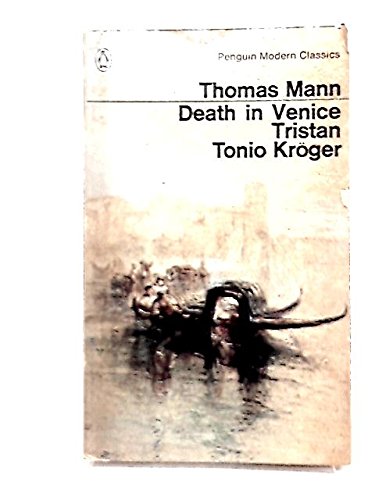
Review of "Death in Venice" by Thomas Mann
Thursday, September 01, 2022
Review of That's Amor
Watched on Netflix.
Review of "In My Grandfather's Shadow: A Story of War, Trauma and the Legacy of Silence" by Angela Findlay
Thursday, August 25, 2022
Review of "Post-Internet Far Right" by 12 Rules for What
But despite the differences, there are some common themes, all present to varying degrees. These include:
- Racism and ethno-nationalism
- Misognyny, homophobia and a sense of aggrieved and beleagured masculinity
- Antisemitism - not just as one more "flavour" of racism, but as an organising theory of the world, entwined with conspiracist fantasies.
The book has a lot of description of things that are utterly unfamiliar to me, about internet platforms and tools that I hadn't heard of, memes and symbols and codes that suddenly appear...Pepe the Frog as a far right identifier, and triple brackets around the names of (((Jews))). This is part of the way that the far right can signal to each other that an apparently innoccuous bit of content has a deeper significance.
As the authors explain, this is not something that's entirely of the far right - it's part of the way that lots of online life is lived now, including the life of the far right.
The book distinguishes between a far right "swarm" of online participants ("activist" seems too strong a word and implies a level of consistent focus that may not be warranted), and "influencers" who direct and are amplified by the swarm - some of whom are deriving both social and financial capital from their online presence. There are the would-be intellectuals of the far right, and the conventional street and electoral organisations.
The book is mainly concerned with the US and UK, so there's not much discussion of the successful "mainstream" parties of the far right...like Fidesz in Hungary, or Law and Justice in Poland, or even the National Front in France. I think that these parties, like Ukip and Brexit in the UK and United Australia in Oz, have successfully driven the centre-right conservative parties further rightwards, and this deserves to be situated in the overall anatomy of the far right.
On the other hand, it does explain well that the organised fascist parties, and even their militarized wings like National Action and Combat-18, are not the far end of the right spectrum. Beyond lies what they call the Blackpilled, the lone wolves of anomised rightist terrorism like Anders Brevik and the Christchurch shooter, and all the shooters in the US. These aren't part of organised groups but do aim to inspire followers, and have had the effect of getting more "moderate" far rightists considerable airtime.
There are two more important aspects to the book. Firstly, the far right is situated in the context of "ecofascism" - the multifarious ways in which it is going to respond to climate breakdown and the turmoil that will create. As yet it's mainly concentrated on being anti-green, promoting climate change denial and crying crocodile tears for the poor people that will be affected by the cost of mitigation and adaption measures. I think there was a strong dimension of this in the Yellow Vest protests in France, and even more so in their imitators elsewhere. But it's perfectly possible for the far right to switch tracks, and to organise in favour of strong militarised measures needed to protect "our people" from climate change, especially in terms of calling on the state to be even harder on refugees. Or even to do both tracks at once.
Second, there's a critique of anti-fascist "culture", which sometimes becomes an identity in itself, abstracted from where the important developments are happening on the far right, and concentrating on street fights and/or re-enactment activities like Spanish Civil War commemoration. Not that those things aren't important, but they're not sufficient.
This is a great book. Sometimes I found the language a bit impenetrable, and I am a one-time social science academic. Sometimes the references are a bit obscure and unexplained - I had to read the book with my phone constantly to hand, to look things up. But these are quibbles. This book will inform and motivate those of us who struggle against the far right for years to come.
Review of "How I Grew" by Mary McCarthy
I picked this up for something to read at night, when I couldn't face reading "Post-Internet Far Right" as a I fell asleep. The idea was to find something interesting but not emotionally demanding, and it mainly did not disappoint in that respect. I'm not a fan of Mary McCarthy - so far I have not read any of her other books, though I may now. It's written from the perspective of an old person reflecting on childhood and youth, and the most interesting parts are where she engages with the fragmentary and unreliable nature of memories...where she admits that her memories can't possibly be right, because of other things that she knows or remembers.
Some other aspects of the book are dull...her descriptions of her teachers at Vassar, who all seem old and dessicated (they were probably much younger than I am now), the books she read, how bad she was in the various am-dram things she did. But some depictions are really gripping - her accounts of 1920s sexuality, and her relationship to her own Jewish heritage and that of some friends. She's mildly antisemitic - it's a bit like the song in Cabaret, as she worries as to whether her grandmother really is unmistakeably Jewish in her looks, or is surprised that some of her pretty friends turn out to be Jewish even though they don't look it.
Strange afternote...I saved a picture of the cover design, but every time I touched it my laptop crashed. So this review is posted without a picture.
Wednesday, August 24, 2022
Review of "A Call to Spy"
It feels mean to be negative about this film, which is after all a tribute to some very brave women. But despite some graphic violence and some scenes of wartime courage, it has - as Rotten Tomatoes says "a surprising lack of tension". It's a bit dull. I checked my phone quite often as it went on.
Watched on Amazon Prime - we don't have it any more, but Louis does and he was visiting, so he cast it to our Chromecast.
Sunday, August 21, 2022
Review of "The Fall of Roman Britain: and Why We Speak English" by John Lambshead
Review of "Ergot. The fungi that ate medieval Europe" by Theophrastus von Oberstockstall
One small concern though - the author appears to have no online existence apart from this pamphlet, which makes me a little cautious.
Monday, August 15, 2022
Review of "Fall, or Dodge in Hell" by Neal Stephenson
The virtual world here is more or less created, ex nihilo, by the eponymous Dodge (Richard Forthrast from the first book) after his mind is uploaded, and he then loses control over it as other minds join him there. Somehow the minds end up recapitulating the myths of ancient Mesopotamia (more or less) - remember that Stephenson was keen on that as far back as Snow Crash - and sometimes that just drags a bit. I lost track of some of the too-many characters at this point, and the way in which the virtual world was and was not constrained by the principles of physics started to get on my nerves. Glad I read it, and worth reading, but I do wish an editor had cut it by at least a third.
Wednesday, July 13, 2022
Review of "The Black Panther Party: A Graphic Novel History" by David F Walker and Marcus Kwame Anderson
Monday, July 11, 2022
Review of "Regenesis" by George Monbiot
One of those rare occasions where I came to scoff and ended up being convinced. I went to hear him speak in Stroud as part of a promo tour for the book and wasn't so impressed, but I read the book anyway, and was simply overwhelmed by the quality and detail of the analysis. I wish I could still believe in regenerative grazing and low-impact animal agriculture, but I can't. I'm not a dogmatic vegan...not really a vegan at all. I could live without meat - I did for about twenty years, but I am really fond of dairy and quite like eggs. But sadly Monbiot has convinced me that animal agriculture is an ecological and planetary disaster, so I am going to have live without them.
Review of "The Woman Who Smashed Codes: A True Story of Love, Spies, and the Unlikely Heroine Who Outwitted America's Enemies" by Jason Fagone
Sunday, July 03, 2022
Review of Drumline
Watching this was very much part of my covid experience - when I couldn't be bothered to do much else I could watch lots of American college marching band videos, which were sort of inspiring but also very very weird.
This is as much a sport movie as a music film...will the main character make the team? How will the rivalries between competing band be resolved, and who will win the title?
Watched via informal distribution.
Review of Drumline: A New Beat
Surely enough with the American college marching bands now. This is a sequel to Drumline, set years later, but surprisingly little has changed in the world of the A and T marching band, or in the plot. Again someone (this time a young woman) joins the band's drummers, and there's a lot of will-she/won't-she be picked for the all important P1 grade that gets her to play at public perfomances. And the rivalries within and between bands, and so on. I liked the actual perfomance scenes, the rest of it was a bit dull for me.
Review of "The Donation of Constantine" by Simon LeVay
There is quite a lot about miracles, saints and relics, and it reminded me firstly of Gibbon, who is absolutely scathing about this; and secondly, in a weird way, of the novel "Unquenchable Fire" (recently read), which is set in a future America after the advent of a new-age pagan religion...because it was obvious to me how awful and loathsome the superstitions of that religion were, though not to the characters in the book or perhaps even to the author - and because it's only the longevity of Christianity that makes its doctrines and narrative seem less absurd.
Wednesday, June 29, 2022
Review of Reamde by Neal Stephenson
It's set against a background of cod-medieval MMPRGs like World of Warcraft, Russian cybercriminals, Chinese game farmers, smugglers, American gun nuts, jihadis...really, lots. And it's done so deftly, so that the characters don't feel like caricatures but are easy to keep track of - there are really lots, so that's important. I particularly like the wisecracking Afro-Welsh jihadi bad guy Abdallah Jones.
No need to elaborate more. There's a lot of guns and violence, and by the end it was all getting a bit much for me, but it's a very enjoyable read. I've just discovered there's a sequel, with some of the same characters and others crossing over from his other book Cryptonomicon, and I know that it's inevitable that I'll read it.
Review of One Halal of a Story by Sam Dastryadi
But suddenly he emerges as a fully-formed Austalian Labor Party right-wing backroom fixer. There's no intervening story, no account of how he went from the awkward foreign kid to the machine-politics operator. He doesn't seem to have any particular political passions, other than a vague desire that things not be quite so unfair for 'the little people'. He doesn't like backwoods racists like Pauline Hanson, and he's against banks doing bad things. His apparent surprise that big corporates wield a lot of political power would be laughable were it not for the fact that so many right-wing Labor (and Labour) types have probably never given this a minutes thought.
It's also not clear what his achievements are that allow him to rise so rapidly, and so young, through the ranks of the NSW and national Labor Party. So I searched for him, and found that his political career had ended under something of a cloud, with the suspicion that he had been an agent of influence for China within Australian politics, or that there had been petitions calling for him to be charged with treason. To be scruplously fair he does mention this in the book, rather in the way one would a failure of etiquette.
Probably to be read as a piece of evidence in political history rather than as a way of learning much about the man or the politics of the period.
Review of Only Good Things (Solo Cose Belle)
Some nice moments but it never really takes off, and everyone's a bit too nice, even the rascally mayor and his social-climbing wife.
Watched on Netflix.
Tuesday, June 28, 2022
Review of Love and Gelato
Despite all this plot, and lovely settings, it's a bit dull.
Watched on Netflix.
Tuesday, June 14, 2022
Review of "The School Teacher of St Michel" by Sarah Steele
Second, to provide a context. I don't think that I am in the target market for this book, which is a historical wartime novel with more than a touch of chick-lit in it...there's too much detail on the outfits that the women wear, and though I like cooking and anything to do with food, the way that it's introduced in the book didn't work for me.
And perhaps because of this, and the split narrative structure with some of the action in the present and some in the past, it felt like it took too long to get going. But when it did I found myself drawn in, and caring about the characters and what happened to them, and utterly gripped by the last third of the book. I even had to choke back a few tears at the end.
Nerdily I spotted at least one error that I had missed the first time round - French Easter does not in any way involve rabbits, chocolate or otherwise; that's just an Anglo thing. And I wondered a little about the extent to which the Vichy regime in unoccupied France would have felt like a safe or welcoming destination for Jews smuggled from the north...Vichy had its own racial laws and managed to deport 75,000 Jews to the camps for extermination.
But these are quibbles really. I enjoyed the book and I'm looking forward to Sarah's next one.
Review of "Darling Lili"
Much of the time it has the feeling of a Carry On film, particularly with the two comic French army intelligence characters, who spend much of their time falling off roofs and into ponds. In fact almost all of the French characters are played for laughs, though the Germans are to be taken seriously - some of them are sinister, some are quite likeable, especially the handler, played by Jeremy Kemp.
The plot is mainly terrible, the acting pretty awful, but I am a bit of a Julie Andrews fan, and the songs and singing scenes are enjoyable. Afterwards I read the Wikipedia article, and saw that this had a huge budget - and you can see where it went, with really big crowd scenes and some quite good dogfight footage - but made very little money, though it won one award (for a Henry Mancini song) and was nominated for others. Perhaps they should have spent some of the huge budget on the writers, though I know that's not very Hollywood.
Unusually watched as hard disc recording at my mother-in-law.
Sunday, June 05, 2022
Review of 'This Is Your Mind on Plants' by Michael Pollan
The chapter on caffeine has some interesting stuff, especially the personal account of an attempt at abstinence and the chemistry of how caffeine works, but it feels a bit padded with historical stuff that I knew already and I think is widely written about.
The mescaline one was shorter, less padded, and took on some interesting issues about the relationship between drug reform advocates who want to 'decriminalize plants', and Native Americans who want to preserve their own privileged and restricted access to the mescaline-bearing cacti, which is culturally and spiritually significant to them (but as part of a relatively recent made-up religion). Again, a great read, and of course he writes brilliantly about his own mescaline and peyote experiences, while acknowledging the difficulty of writing about such things.
Review of "The History of The Countryside" by Oliver Rackham
I probably need to read it again to collect my thoughts on the main themes...but I certainly got that not much of the woodland in the UK is anything to do with the wildwood that once covered more of the island/s, and that there are other types of landscape of historical value worth preserving as well as woodland - not all forestation is a good thing. I'm going to look to see if there are any videos of him speaking - I'd vote for a TV series based on this any day!
Review of The Hustle
This is a con-game film, which can be good, but this one really isn't. What were Anne Hathaway and Rebel Wilson doing in this pile of shit? Making a lot of money, I suppose - oddly the film seems to have been a commercial success.
Watched on Netflix, and that's two hours I will never get back.
Review of The Decoy Bride
Watched on BBC iPlayer/
Friday, June 03, 2022
Review of 'The Good Lord Bird' by James McBride
Thursday, June 02, 2022
Review of The Photographer of Mauthausen
A not entirely satisfactory film about Spanish Republican Francisco Boix, who escaped the fall of Spain to France where he was interned, joined the French Foreign Legion and ended up in a Nazi concentration camp (Mauthausen) along with thousands of other Spanish Republicans - the Francoist regime cancelled their citizenship so that they were officially stateless.
The moment in which the camp is liberated can't but be effective, and the Spanish prisoners produce a Republican flag to greet their liberators. This is all the more effective because we know that their hopes that the fight against Franco will be recognised as part of the greater anti-Fascist war are about to be dashed. Right at the end we see that many of the shots in the film are reconstructions of the actual photos.
Watched on Netflix via Chromecast and (Ruth's) smartphone.