Yesterday I watched The Story of Stuff, an Internet video/film about the wastefulness of our throwaway consumerist society. It left me feeling a bit grumpy, because while it scores some good points, it ultimately disappoints. Yes, it's crazy to build our material civilisation on the constant stimulation of wants to be satisfied, and to trash natural resources to make stuff that we don't really like, only to throw it away to replace it with more stuff. Yes, there are lots of little insanities in that too. But when George Bush (and Tony Blair, for that matter) responded to the 9/11 and 7/7 terrorist attacks with an instruction that we should go shopping, they weren't just being crass or stupid.
Actually, our material well-being in the economic system that we have constructed really does depend on people carrying on buying stuff. If they stop, the whole edifice really does crumble. Unless we keep spending (and borrowing, for that matter) we can't get paid wages to buy the things we really do need - not just stuff, but also food, shelter, and even education, health care (which in civilised countries, the government buys on our behalf using taxes that it raises on economic activity ultimately premised on people buying stuff).
So calling for more recycling, less waste, and less conspicuous consumption, is nice but misses the point. Ditto pointing out that stuff doesn't really make us happy -- the point is that without the stuff and the buying, as we are presently organised we can't have the other things that stop us being really miserable. We can't move to a material civilization not based on the production and sale of stuff without a major change in the economic system - to one based on production for need, not production for exchange. That's a really, really big deal - not a little one that can be satisfied by recycling your glass bottles, or even making stuff in a less wasteful way in the first place. So far there are no good precedents for this - the most re-distributive social democratic societies are still premised on lots of making and selling. Only the Soviet Union seems to have tried another way, and that can hardly be characterized as an unqualified success.
Capitalism really does require perpetual growth, and on a finite planet. The borrowing from the future is not an accidental misdemeanor, it's fundamental to the way the system works. Ultimately this is not going to have a happy ending. But unless we can think of a way to step off the moving treadmill without trashing the means by which we sustain our lives, we can't write a different ending.
Thursday, August 12, 2010

Monday, August 09, 2010
Nine things I liked at the Design Museum
- Dieter Rams' ten principles for good design
- The story of stuff
- The Kyoto Box solar stove
- It's Nice, That design blog
- The Plastiki boat, built out of plastic bottles
- Changing Habbits, a way to visualise carbon footprints
- The Carbon Ration Book from The Ministry of Trying to Do Something About It
- Grow your own greenhouse by Jochem Faudet
- Sustainability Issues Mapping and Database - A420
Saturday, July 24, 2010
Aaronovitch on conspiracy theories
 At the Latitude Festival last weekend, I listened to David Aaronovitch talking about conspiracy theories, to promote his book Voodoo Histories. I haven't read the book, so I'm just reviewing his talk. I didn't like it at all. He began by introducing the audience to the history of the Protocols, and about how it was shown to be a forgery; then he segued into post-9/11 conspiracy theories, and then on to the death of Diana. There was a bit of good-natured joshing at Dan Brown (particularly since half the audience admitted to having read The Da Vinci Code), and Brown's "source" Henry Lincoln.
As I said, I haven't read the book, so I don't know to what extent Aaronovitch engages with the preceding academic literature on this subject - for example, Norman Cohn's book on the Protocols, "Warrant for Genocide", or Richard Hofstadter's "The Paranoid Style in American Politics". In the talk, though, he warmed to his main themes - having a good laugh at the stupidity of people who believe the wilder conspiracy theories (like David Icke's theory that the world's elites, including the British royal family, are really giant blood-drinking lizards), and offering psychological explanations as to why people believe in conspiracies.
For me, the worst part of the talk was that Aaronovitch did not address the main reason that people believe this stuff -- because it's enough like the way the real world works. For example: Henry Lincoln's idea that the French royal family are the lineal descendants of Jesus, who escaped to the South of France and had children, and that most of the history of the Church is about how this has been covered up, does not stand up to much examination by an informed critical reader. But the Church has engaged in forgeries and cover-ups over much of its history. Consider the 'donation of Constantine', for example - a forged document which purported to show that the Roman emperor had transferred authority to the Pope. Or the forging of a paragraph in the writings of Josephus, which the Church claimed as a contemporary account of Jesus' life - subsequently shown to have been inserted by a later Christian writer. Lincoln's and even Brown's work has caught the imagination because it draws attention to something that many people suspect to be true but do not have the time or the resources to investigate for themselves - that theologians and the inner circles of the Church know that the ideas that they foist on others are not true.
The same might be said about the more contemporary and political conspiracy theories. Aaronovitch went on at some length about the (fictional) TV series Edge of Darkness, and about the widespread belief that the anti-nuclear campaigner Hilda Murrell had been murdered by the security services.
Aaronovitch laughed at the way conspiracy theorists believe both governments and corporations carry out secret medical experiments on unwilling subjects; but there are lots of well documented cases of them doing just that - experiments on British servicemen at Porton Down, mustard gas experiments on Indian soldiers at Rawalpindi, the CIA's K-ULTRA program of mind control experiments using drugs and hypnosis. The fact that this stuff has happened before, and that it was indeed widely denied and covered up, makes claims that other similar stuff is happening and is being covered up seem eminently plausible.
Similarly with the big claims about secret political arrangements, or government organisation of terrorism. Think about the way that Britain and France colluded with Israel in the Suez campaign, pretending to intervene "to separate combatants" in a war that they had themselves sponsored and arranged. Aaronovitch's claim that the real world is not as complicated at the conspiracy theorists make it out to be sits ill with the realities of the Iran-Contra affair, in which the CIA sold missiles to Iran and used the proceeds to fund the anti-Sandinista rebels in Nicaragua. The weapon sales were secret and illegal, the Israelis were involved in shipping the missiles, the Nicaraguan rebels were known to be using the weapons runs to ship drugs into the US - could you make this up?
In argument against the conspiracy theorists, Aaronovitch says that real conspiracies are less effective than the theorists would have us believe - it's not possible to cover up anything big and important for very long because too many people would have to be involved. But surely this is just the equally implausible obverse of the argument style of the conspiracy theorists, who faced with apparent evidence that their theories are wrong, say that this in fact proves that they are right. Aaronovitch is claiming that because we know that cover-ups have been exposed in the past, they must all have been exposed - there can't have been any successful cover-ups.
And this points to the real problem, both with Aaronovitch's account and with those of other meta-theorists of conspiracy theorists; they don't offer any way of distinguishing between a 'conspiracy theory' and a genuine expose of a conspiracy or a cover-up. This is made worse by the fact that, as with other kinds of 'rejected knowledge', the people who espouse are often a bit special - only people like that are prepared to carry on in the face of widespread hostility. The old joke about intellectual presumption goes: "They laughed at Galileo, they laughed at Einstein, and they laughed at Punch and Judy." Being rejected doesn't mean that you are a genius, just because some other geniuses were at some stage rejected.
But it's important to remind ourselves that science, are inherently and necessarily conservative most of the time. It's useful to hold on to an existing paradigm and continue to work out its ramifications and puzzles; we can't afford to have scientific revolutions every time a bit of contradictory evidence turns up. As with science, so with political and social discourse. On the one hand, we can't pay equal attention to every nutter who walks through the door claiming to have evidence that the moon landings were faked; on the other hand, it's equally important to realise someone's claims to have uncovered a government or corporate cover-up aren't necessarily invalid because they have an unfortunate manner or smelly beard.
What I liked least about Aaronovitch's talk, then, was that it seemed to be essentially a plug for the conventional wisdom and the establishment view. Everything is what it seems to be. People who question this are all nutters. If an idea about events or political realities seems implausible, then it is.
Aaronovitch is a good writer who also talks well. Yet he is heading towards Melanie Phillips-land as a professional ex-leftist (this week he is on Radio Four talking about how Joseph McCarthy's fears of Soviet infiltration of the US were justified). Really, he ought to pull himself together and think about whether his obvious talents should be aimed at helping the weak and poor, or whether he'd rather be a tame clown who exposes the foibles of radicals for the amusement of the rich and powerful.
Tuesday, July 20, 2010
Haringey Council's carbon emission targets
It's easy to find stuff about Haringey Council's aspirations to be the 'greenest borough', and even to find the specifics about its plans and targets to reduce its own emissions.
It's much harder to find out specific information about what the baseline is for these reduction targets. I searched for ages, to no avail. Now, a cynical person might think that baseline was being kept from us, so that the council can claim progress secure in the knowledge that no-one will be in a position to dispute this.
For once, the cynical person would be wrong. After some courteous correspondence with Councillor Joe Goldberg, I was provided with the specific data that I wanted. In fact, the baseline and the progress against it show the Council in rather a good light. In 2006-7, which is the baseline year, Haringey Council's NI 185 emissions - that is emissions from its own operations - were 44,790 tonnes. For real emissions anoraks, this is a 'weather corrected' figure. In 2007-8 they were 44,616 tonnes, a fall of 0.39%, but in 2008-9 they were 42,631 tonnes - a reduction of 4.82%. The comparable figure for 2009-10 is 41,894 - 6.47% below the baseline.
It would be nice to get some more detail about where the emissions are coming from, and where the gains were being made - but at least there are real reductions being delivered.
So why doesn't Haringey make more fuss about its genuine progress? In the 1980s the GLC had a big signboard outside County Hall, showing the number of people unemployed in London. Why doesn't Haringey have an emissions board outside the Civic Centre?
It's much harder to find out specific information about what the baseline is for these reduction targets. I searched for ages, to no avail. Now, a cynical person might think that baseline was being kept from us, so that the council can claim progress secure in the knowledge that no-one will be in a position to dispute this.
For once, the cynical person would be wrong. After some courteous correspondence with Councillor Joe Goldberg, I was provided with the specific data that I wanted. In fact, the baseline and the progress against it show the Council in rather a good light. In 2006-7, which is the baseline year, Haringey Council's NI 185 emissions - that is emissions from its own operations - were 44,790 tonnes. For real emissions anoraks, this is a 'weather corrected' figure. In 2007-8 they were 44,616 tonnes, a fall of 0.39%, but in 2008-9 they were 42,631 tonnes - a reduction of 4.82%. The comparable figure for 2009-10 is 41,894 - 6.47% below the baseline.
It would be nice to get some more detail about where the emissions are coming from, and where the gains were being made - but at least there are real reductions being delivered.
So why doesn't Haringey make more fuss about its genuine progress? In the 1980s the GLC had a big signboard outside County Hall, showing the number of people unemployed in London. Why doesn't Haringey have an emissions board outside the Civic Centre?
Thursday, July 08, 2010
Nokia takes irony to new heights
 Nokia's publicity about "Conspiracy for Good", what appears to be some sort of immersive game around the theme of anti-globalisation protests, surely takes irony to a new level. The website seems to encourage people to play at being protesters, inviting them to take part in disrupting the activities of a fictional multinational corporation, and even to hack into its IT systems. Videos on the site deliberately blur the boundary between reality and game, implying that the game activity itself might actually become part of a 'conspiracy for good'. But Nokia really is a multinational corporation...is this so ironic that I don't get it? Or is Nokia making a corporate idiot of itself? I wish I knew.
Thursday, June 24, 2010
My first fab idea for the Spending Challenge
 Let's start by turning the armed forces from a cost centre to a profit centre. That way we won't have to spend anything on them at all, or at least spend a lot less. We should learn from our country's proud traditions, and sell commissions to posh boys who don't know what to do with themselves.
We should also allow people and organisations (especially corporations) to sponsor units in the armed forces. There is a lot of space for logos to go on.
Sunday, June 20, 2010
Bloody Sunday memory from a London school
I turned on the radio on Saturday morning to hear an Irish woman talking about the reaction to the Saville Inquiry and its conclusion. She talked about the reaction to the massacre at the time, and it brought back a personal memory that I hadn't thought about for a long time. In 1972 I was a young 14-year old, at a grammar school in North East London. I was beginning to take an interest in politics, but it didn't run very deep. I hadn't much thought about Ireland at all; the only time I remember having had a thought about it previously was as an 11-year old, reading the front page of the Daily Mirror about the Army storming into the 'no-go' areas in Londonderry. It must have been August 1969, and I recall thinking that this was probably a good thing, since the Army were the good guys and there shouldn't be any areas where they couldn't go.
In 1972 though, we had a new form master - Mr Sloan - who was also our Spanish teacher and French teacher. I've always been crap at learning languages, but for a short time that year I felt like I actually might be able to learn Spanish. Mr Sloan had that odd mixture of humour and menace that sometimes works in male teachers, which managed to convey that he was hard but fair. I really liked him and wanted to please him, so I made more effort with languages than ever before or since.
Mr Sloan's hardness was the more plausible because he was an Irish catholic from Glasgow. I didn't even know about the Glasgow Irish connection, but we learned a lot about it that year, along with stuff about how Franco's regime suppressed the Catalan language. We learned about gerrymandering, about the civil rights movement in Northern Ireland, and sectarianism. This was all at a boy's grammar school, where the headmaster had something of a reputation as a right-wing bigot. Somehow I connected Mr Sloan's Irish nationalism with my own emerging Jewish identity - part of no longer identifying as British or English, which up until then I had done. I didn't become any sort of Republican, but I no longer thought of either the Unionists or the Army as the good guys.
They day after Bloody Sunday Mr Sloan came into the classroom and wrote on the blackboard, in the space where he would sometimes write the names of those he wanted to intimidate. He wrote the number thirteen, and crossed it through and wrote the number twelve underneath. The point was that he was keeping score. One British soldier had been killed, so the deaths of the thirteen Bloody Sunday victims were on their way to being avenged.
It's kind of amazing to think that this could happen in a British school at that time. I think it would be on the front page of the Daily Mail now, and the teacher would be sacked and never work again.
I don't remember there being any consequences for Mr Sloan, though I also don't remember him continuing his scoreboard; funnily enough, I remember that he was pleased at the introduction of direct rule and the abolition of Stormont in 1973. Later that year he went off sick. He never came back as our teacher. We organised a collection for him, for a card and a present. I ended up buying the present, and chose a book about the IRA in the Civil War. He came back once to make a little speech of thanks. He looked really ill - thin, hairless and yellow. He died of cancer a few months later.
In 1972 though, we had a new form master - Mr Sloan - who was also our Spanish teacher and French teacher. I've always been crap at learning languages, but for a short time that year I felt like I actually might be able to learn Spanish. Mr Sloan had that odd mixture of humour and menace that sometimes works in male teachers, which managed to convey that he was hard but fair. I really liked him and wanted to please him, so I made more effort with languages than ever before or since.
Mr Sloan's hardness was the more plausible because he was an Irish catholic from Glasgow. I didn't even know about the Glasgow Irish connection, but we learned a lot about it that year, along with stuff about how Franco's regime suppressed the Catalan language. We learned about gerrymandering, about the civil rights movement in Northern Ireland, and sectarianism. This was all at a boy's grammar school, where the headmaster had something of a reputation as a right-wing bigot. Somehow I connected Mr Sloan's Irish nationalism with my own emerging Jewish identity - part of no longer identifying as British or English, which up until then I had done. I didn't become any sort of Republican, but I no longer thought of either the Unionists or the Army as the good guys.
They day after Bloody Sunday Mr Sloan came into the classroom and wrote on the blackboard, in the space where he would sometimes write the names of those he wanted to intimidate. He wrote the number thirteen, and crossed it through and wrote the number twelve underneath. The point was that he was keeping score. One British soldier had been killed, so the deaths of the thirteen Bloody Sunday victims were on their way to being avenged.
It's kind of amazing to think that this could happen in a British school at that time. I think it would be on the front page of the Daily Mail now, and the teacher would be sacked and never work again.
I don't remember there being any consequences for Mr Sloan, though I also don't remember him continuing his scoreboard; funnily enough, I remember that he was pleased at the introduction of direct rule and the abolition of Stormont in 1973. Later that year he went off sick. He never came back as our teacher. We organised a collection for him, for a card and a present. I ended up buying the present, and chose a book about the IRA in the Civil War. He came back once to make a little speech of thanks. He looked really ill - thin, hairless and yellow. He died of cancer a few months later.
Friday, April 16, 2010
The debate
Watching the ‘Prime Ministerial Candidates’ debate, it was impossible not to be struck by how little difference there was between all three candidates. Clegg played the outside role dictated to him by his party’s position, but pretty much all the candidates had more or less the same sort. of answers to the carefully vetted questions.
This was only the first of three debates, but what was perhaps most revealing was the questions that weren’t asked. The debate was very much conducted on safe territory for the neo-liberal consensus to which all three candidates subscribe. No questions on climate change or peak oil, where the combination of market and moralising that they all like so much offers little or nothing. No questions on why Britain is involved in two wars in Muslim countries where it has little direct interest – just an easy ball on whether ‘our troops’ have enough kit. Clegg at least had the decency to raise the cost of replacing Trident, but all the candidates seemed to agree that the one thing we can afford was continued participation in whatever wars the Americans need us for.
And not even a question on the banking crisis. There was some verbal joshing on the precise mechanics by which the candidates propose to cut public spending, but nothing about how we got into this mess (bailing out the incompetently-run banks) and why it is so important to cut the deficit (er, to make sure that those same banks will carry on lending to the state at interest rates it can afford). Even this limited engagement with the question of who is going to pay the bill clearly went down like a bucket of cold sick with the minutely-analysed studio panel; so that’s probably the last we’ll hear about that. Until after the election, when you can bet that whoever wins will “discover” that the problems of the public finances were worse than they’d previously thought.
This was only the first of three debates, but what was perhaps most revealing was the questions that weren’t asked. The debate was very much conducted on safe territory for the neo-liberal consensus to which all three candidates subscribe. No questions on climate change or peak oil, where the combination of market and moralising that they all like so much offers little or nothing. No questions on why Britain is involved in two wars in Muslim countries where it has little direct interest – just an easy ball on whether ‘our troops’ have enough kit. Clegg at least had the decency to raise the cost of replacing Trident, but all the candidates seemed to agree that the one thing we can afford was continued participation in whatever wars the Americans need us for.
And not even a question on the banking crisis. There was some verbal joshing on the precise mechanics by which the candidates propose to cut public spending, but nothing about how we got into this mess (bailing out the incompetently-run banks) and why it is so important to cut the deficit (er, to make sure that those same banks will carry on lending to the state at interest rates it can afford). Even this limited engagement with the question of who is going to pay the bill clearly went down like a bucket of cold sick with the minutely-analysed studio panel; so that’s probably the last we’ll hear about that. Until after the election, when you can bet that whoever wins will “discover” that the problems of the public finances were worse than they’d previously thought.
Monday, April 12, 2010
Inequality and New Labour
The Government's own National Equality Panel produced a report called Anatomy of Economic Inequality in the UK.
It shows:
The households in the top tenth of the UK wealth distribution have total wealth 100 times those in the bottom tenth
The share of wealth of the top 0.05% of the population declined from 1937 until the 1970s – but by 2000 this was higher than it had been in 1937
In the 1990s the top tenth increased its share of national wealth – but all of this was due to the increased wealth of the top 0.1%
This is not an inevitable consequence of globalisation or the market economy, or any other such bullshit. In other European countries the share of the top 1% did not increase, as it did in the UK (it declined from 1937 to the 1970s there just the same).
Britain is a more unequal society than our European counterparts. It has become more so during the thirteen years of 'New Labour' government. All the drivel about 'fairness' or 'an aspirational society' cannot hide this. If I needed reminding why I wasn't going to vote Labour, now I don't.
Peter Mandelson's famous dictum that New Labour was "intensely relaxed about people getting filthy rich" is the real face of New Labour; what we are seeing at the moment is the one that they dust off every few years for elections.
Monday, April 05, 2010
Cross-Pynchoning
>“I don't understand! Why can't you help me?” wails the caller. “You're the fourth person I've spoken to. Everyone just puts me through to someone else.”
“It's OK lady,” says the policeman, in tones usually reserved for a disconsolate child. “This stuff is always upsetting – not just for you, for everyone it happens to. We're sort of the experts in these cases.”
He sighs, and leans back from the vidscreen. “I'll try to make is as simple as I can, and don't worry if you need me to explain anything twice. Just ask.”
“Th-thanks,” sobs the young woman. “Tell me again about the pensioning thing.”
“Not pensioning, pynchoning,” corrects the policeman. “Or in your case, cross-pynchoning.”
“It's like this. Imagine a rich guy, or a rich lady. They pay to live in a gated community. They pay to drive on the priority roads, so they don't have to sit in traffic jams behind the likes of you and me. They eat in Old Dollar restaurants, not the Carbon Dollar places we go to. So they don't want to rub shoulders with us on the interwebs either.”
“What has this got to do with my pictures?” asks the woman.
“See, the rich people, they have this thing called Pry Vuh Sea...” The woman looks at him blankly.
The policeman tries again. “You know, like in the old days – when some things about people were sort of secret. Well, not exactly secret, just things you didn't tell everyone.”
“Yeah, I know it's kind of hard to take in. You and all your friends are posting pics and vids of yourself twenty-four seven, and telling each other and everyone else what you are doing and thinking and what you had for breakfast.” He pauses for effect. “And these folk are doing the opposite.”
“Thing is, everybody leaves traces on the interwebs, even if they don't mean to. But the very rich, they don't like this. They don't want to be in the same space as you, even a virtual space. It makes them feel dirty, like you touched them.”
“So they pay for a pynchoning service. Back in the twentieth, there was this writer – sort of a blogger, but on paper things called books – called Pynchon. He went to a lot of trouble to make himself disappear – found all the old paper records of himself and tore them up, stuff like that. So now they call a bot that trawls through the webs, cleaning up those traces – the billing records, the address databases, and the CCTV footage -- they call that a pynchoning service, after the writer guy. The bot just erases everything on the web that's a trace of the rich people.”
“But I'm not rich, and I haven't paid for any service,” whines the caller.
“That's what I've been trying to explain for the last half an hour. You haven't, but you look or sound like someone else who has paid for pynchoning. Enough like them for the bot to be erasing the traces of you. Maybe you've got the same name as a rich lady, or there's something similar about your behavioural footprint – the shape of the traces that you leave. Anyway, the bot has a fix on you now, and any trace you make gets rubbed out. We call it cross-pynchoning because it's like cross-fire. Nobody wanted to wipe you out, you just got caught in the cross-fire.”
“And it won't just be the pictures, I'm afraid. It's going to get worse.”
“Worse? What do you mean, worse?” asks the woman.
“It's going to be everything, I'm afraid. Your high school records. Your medical records. Your accounts. If it's still there now, it'll be gone soon. The bots have a very high level of access on all the major public servers.”
“This must be against the law! Why can't you do something?” She is gasping now, and her voice is shrill and loud.
The policeman looks embarrassed. “It's...it's a very grey area. The identity laws are mainly about theft. Somebody steals your identity to get stuff they aren't supposed to have, it's against the law. You try to use someone else's identity, it's a crime. But the law is about the deception and the thing you use it for. Identity wipe? Did anything get stolen? Did anyone lose any money that was coming to them? Nah...so no crime.”
“So what am I supposed to do?”
The policeman shrugs helplessly. “Live with it. Change your name and start over. I can recommend a counsellor that helps with cases like this. Unless you are really, really rich – then you could try a counter-pynchoner; but you aren't really rich, are you? Because if you were, you wouldn't be calling me, would you?”
For a while the woman caller stares at the image of the policeman on her vidscreen. After a long minute she hangs up, and his screen goes dark. The policeman goes back to his keyboard. He knows that she will call back for the name of the counsellor in a few hours. They usually did.
Wednesday, December 16, 2009
Shut that door!

Muswell Hill has lots of 'health shops' - we have a Planet Organic, a Holland and Barrett, and two vitamin shops. Last week I went in to one of them -- the delightfully named 'Panacea' -- to ask the staff there to shut the door. It was a cold day, and they had the heat full on with the door open.
I politely (really politely) pointed out that wasting heat and energy like that wasn't good for the planet, and that their customers might just possibly be the sort of people who cared about that sort of thing. The staff agreed, and said that they'd like to shut the door if only to keep out the traffic noise, but that the manager insisted that they keep it open so as to signal to customers that the shop wasn't closed.
So I asked for the manager's contact details, and phoned her and had another very polite conversation. She said she understood my view and hoped that I understood hers, but that she'd talk to the owner about it.
Yesterday I went past again. The door is now shut, the staff are even happier and more helpful, and there didn't seem to be fewer people in there. Hats off to Panacea for listening to customers!
And now I feel a campaign coming on...the nice manager in Rymans tells me that he'd like to close the shop door, but it's head office policy to keep it open.
Monday, December 14, 2009
The Invention of the Jewish People by Shlomo Sand
 Most of what you think you know about Jewish history is a myth, from the kingdoms of David and Solomon, through the Romans’ exile of the Jews from Palestine, to the emergence of the Yiddish-speaking milieu of Eastern Europe by German Jews migrating eastwards to escape persecution.
That’s the claim of Shlomo Sand’s book, provocatively titled “The Invention of the Jewish People”. By choosing the word ‘invention’, Sand begins to stake his claim that the account of Jewish history with which we are familiar is not reliable – so ‘invention’ in the sense of inventing the facts – and has been consciously created.
This is a fascinating, dense but patchy work, and one that requires careful reading.
Some of the patchiness comes from the fact that this is really three quite different books locked inside a single cover.
The first book is a scholarly account of developments in the writing of Jewish history – a history of historians and histories. Here we are introduced to pioneers like Isaak Marcus Jost, to Heinrich Graetz, and to the arrival of Zionism in the making of Jewish history (and History Departments). This part of the book is based on a very strong theoretical approach to the relationship between nationalism and emergent national intelligentsias; Sand argues that though we tend to think of nationalism as premised on a pre-existing entity called the nation, in real history nationalism often comes before the nation – with nationalist movements bringing into being the entity that they claim to represent. This is particularly the case in the multi-national empires of Central and Eastern Europe, where intellectuals who couldn’t get their share of state patrimony created their own small ponds in which they could be the big fish. Sand recognises that all nations are to some extent “invented” – not only the later arrivals of Eastern Europe but also the major players like the English and the French.
The second book is a popular account of some key episodes in Jewish history. Sands debunks the widely held belief that the Bible can be relied on as a historical source, marshalling arguments from Biblical criticism and archaeology. (This shouldn’t really be necessary at all in the twenty first century, but a surprising number of intelligent people think that the stories in the Bible of the Exodus, or the United Monarchy of David and Solomon, are grounded in history rather than in myth).
More important, he examines the historical evidence for the Romans’ exile of the Jews from their land, and finds it wanting. And he shows the importance of conversions in the creation of large Jewish populations, both in the ancient world and in the middle ages – there are long treatments of the Jews of Southern Arabia, North Africa and Spain, and of course the Khazars.
The third book is the most polemical, focusing on the way that the specifically Zionist account of Jewish history has been used to construct a sense of Jewish identity that serves particular political ends. It looks at the impact of this process on Palestinian Arabs, Jews in Israel, and Jews elsewhere. It’s hard to find fault with much of this analysis, or with Sand’s conclusion that Israel is a ‘liberal ethnocracy’ – with the word ‘liberal’ used in a technical sense rather than as a term of approbation. One almost wishes that Sand had also taken aim at diasporic constructions of Jewish identity – the recent rows over the admissibility of converts to faith schools in the UK would have been an interesting addition to the story.
However, while this section will certainly be the part that is most interesting to readers of Jewish Socialist, but the latter should be aware that Sand is throwing a lot of secular Jewish identity baby out with the Zionist bathwater. He quotes with approval Rabbi Yeshaiahu Karelitz’s dictum that “the [secular-Jewish] cart is empty”, to bolter his argument that “There has never been secular Jewish culture common to all the Jews in the world”. He puts the boot in Simon Dubnow as a proto-Zionist, even though Dubnow’s thinking on Jewish nationality inspired alternative strands of Jewish nationalism and Dubnow himself was an inconstant Zionist and more often association with Diaspora autonomism.
Sand seems to be a very nice, thoughtful person. Some of the hatchet-job reviews on his book are unfair, if not unsurprising. Although he’s been accused of lack of sensitivity to the Jewish predicament, a prologue to the book full of quite moving personal anecdotes shows the very opposite. On the issue of how Israelis and Palestinians might be reconciled he is a pragmatic post-Zionist rather than an ‘Arab Nationalist of the Jewish Persuasion’, with lots of useful insights – and some wonderful stories about the early Zionist settlers hoped to recruit the Palestinian fellahin to an ethnically-based secular Jewish identity.
But he’s not been too well served by his editors. The book contains at least one howler that I spotted (in which the ‘Marxist Zionist’ Borochov changes his mind as a result of an episode twelve years after his death), and there may be more. There’s a long digression on recent research into Jewish genetics that doesn’t seem particularly well informed or useful. There are some odd omissions in the sources that Sand acknowledges – no mention of Ilan Halevi’s ‘History of the Jews’ which covers much of the same ground, no mention of Abram Leon (though a longish account of Kautsky’s views on the Jewish Question), not even a mention of Hobsbawm on ‘the invention of tradition’. The discussion of Khazar history says much about how it has been ignored by Zionist historians, but nothing about how it has been appropriated by anti-semites (including Henry Ford’s “Dearborn Independent”).
Ultimately, Sand’s book is an important one. It deserves reading, and Sand deserves some support for writing it – though of course, in the great tradition of the left, such support should be critical if unconditional.
Friday, November 20, 2009
Greenwash
I spoke yesterday at the FT World Telecoms Conference. There was a panel on 'Green Issues'. I did the "Bad Fairy" thing - everyone else congratulating themselves on how green they were, and what good business sense it all made. I pointed out that if it made good business sense there would be no need for climate treaties, and that this wouldn't be in Corporate Social Responsibility departments - it would be the CFO's job. Actually, it's talking about it that makes good business sense.
Afterwards, HP sponsored the cocktails. To stay with the green theme, what did they do? Make cocktails from locally sourced, sustainably produced ingredients? No, they dyed them green with food dye. 'Nuff said?
Afterwards, HP sponsored the cocktails. To stay with the green theme, what did they do? Make cocktails from locally sourced, sustainably produced ingredients? No, they dyed them green with food dye. 'Nuff said?
Friday, November 13, 2009
Ministry of Defence Bonuses

Seems very unfair to victimise the civil servants who get bonuses at the MoD. It's an absolute item of management dogma that everyone has to have targets, so that their performance can be measured. And of course to give their managers something to talk about at their annual appraisal, and even more important, to give the HR department something to do - making up a new appraisal system every year or so.
The only way that office workers can be persuaded to participate in the targets game is if there is some incentive, however pitiful, for achieving your targets. So that means that part of their salary is paid as a 'bonus' dependent on performance. We are not talking wheelbarrows of share options here - most of the time we are talking a few hundred quid.
The real enemy here isn't the bonus recipients but the parasitical culture of HR and 'SMART' objectives.
Thursday, November 12, 2009

Sunday, October 25, 2009
The public are fed up with calls to cut their carbon emissions
Already. Before they actually did anything about it. At least according to this research from the Institute of Public Policy Research.
I suspect the research is probably right, and demonstrates the hopelessness of trying to stop climate change one energy-saving light bulb at a time. The main effort has to be focused at policy and technical standards, and at changing the supply-side. Trying to change attitudes and behaviour will deliver too little, too late.
I suspect the research is probably right, and demonstrates the hopelessness of trying to stop climate change one energy-saving light bulb at a time. The main effort has to be focused at policy and technical standards, and at changing the supply-side. Trying to change attitudes and behaviour will deliver too little, too late.
Monday, October 19, 2009
Dogs lost and found

Always wondered whether those 'Lost Dog' notes posted on trees ever resulted in any dogs (or cats, or parrots) being found. Why should the routes taken by the lost dog correspond to those taken by the note-posters? The latter must put them up in what they consider to be their own locale but they probably don't ask the dog if it has a similar mental map. Or they didn't, before it got lost.
Delighted to see that a note posted on the gates of my local park has now been updated with 'Found - Thanks!' written across it. So they must work, at least some of the time.
Sunday, October 11, 2009
Seminar on Climate Change and Violence - 9th October 2009

On Friday 9th October I attended a workshop on Climate Change and Violence organised by Crisis Forum, and held at Senate House in central London. This was the third in the series and was entitled 'Securing the State: Domestic Agendas”. I was attracted by the combination of academic and what can only be described as “practitioner” speakers – a retired Real Admiral speaking on 'what happens to societies and countries after catastrophic shock' and a policeman from the Centre for the Protection of National Infrastructure (who'd heard of that?) speaking on 'Nodes and Networks: The Evolution of Security and Terrorism'.
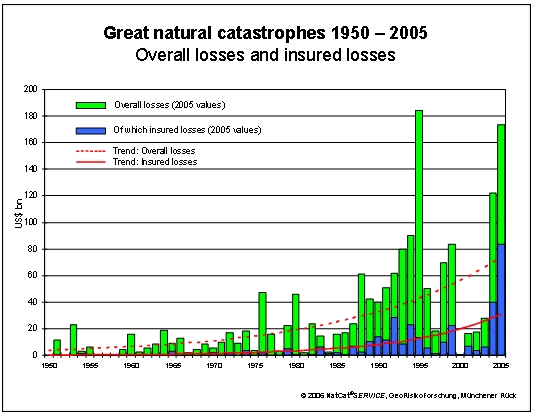
It turned out to be quite a lively day. The morning kicked off with a presentation on risk by Edward Borodzicz for Portsmouth University, followed by one on Flooding in the UK by Tim Randall of the Oxford Disaster Management Group. The latter included some references to an interesting document from Munich Re-Insurance looking at catastrophes over the past 50 years (which seem to have increased in frequency and magnitude). Lots of references to other material, including the UK-CIP impact model for flooding and the Eurobarometer research on perceptions of climate change. There was, though, a slightly unpleasant undertone, especially in the discussion that followed, that seemed to suggest that everything was the fault of the Chinese; this seemed particularly unhelpful to me – it's equally possible to point to lots of positive developments in China, including some of the absolutely enormous wind farms that they are building.
In the afternoon we had the presentations from the practitioners. The Rear Admiral spoke about Iraq at some length, and about the impact of Katrina on New Orleans (which he made some effort to call “N'orlins”). The policeman spoke about how the state took responsibility to safeguard us all from terrorism, how climate change might make terrorism worse or more frequent, and how the bad guys might incorporate responsibility for climate change and resource conflict into their 'single narrative' of conflict with the West which they used for recruitment.
Not all of the liberal academics in the audience liked this very much, and one argued that the two presentations together were more like propaganda – at which the Rear Admiral very theatrically flounced out, claiming that he hadn't come there to be insulted. (Interestingly, he responded rather menacingly to the critic, who happened to be a black woman, that he could say things that would be just as offensive to her, which would cause her to walk out of the room – a new mode of racist insult, in which it's enough to insinuate that you know the appropriate epithet and don't need to use it, perhaps?). And one can't help thinking that if the senior ranks in the Navy can't cope with really quite mild questioning of their perspective, who do they conduct discussions internally?
Funnily enough the policeman, whose presentation was actually much more propagandistic, didn't take offence at all, and happily carried on chatting through the coffee break and the rest of the day. And the Rear Admiral's presentation (apart from a marketing pitch for navies as agencies of emergency relief) actually contained some very acute observations – notably that the agencies which are supposed to prepare for disasters make a very poor job of it because they plan for not-worst cases, and that gangsters almost always seem to make a very good job of responding. One can't help thinking that this deserves some further analysis; what is about these kinds of informal economic organisations that makes them such flexible organisations? After all, they tend to be hierarchical just like formal organisations – perhaps it's just the absence of paperwork...
The seminar ended with some much more acutely academic presentations on urban planning, which were less interesting for me, and a panel session, which was very stimulating.
Key take-aways for me were: a better understanding of how likely extreme events are; a sobering realisation that communities are more likely to collapse than rally round under this kind of pressure (though there are creditable exceptions); and a reluctant acceptance that the state probably doesn't care that much about maintaining my security, but is nevertheless may represent a better bet than organised crime.
Wednesday, September 30, 2009
Why are we in Afghanistan?
It's the drugs. "We" are there to ensure that the flow is uninterrupted. I realise that this sounds like weird conspiracy stuff, but the evidence is there once you start to look. Have a look at this piece by Indian analysts on the link between Pakistan's ISI, the Taliban, the CIA and the heroin business. Sadly there is plenty more where this came from.
Thursday, July 02, 2009
Interesting piece about virtual worlds, gaming...with implications for enterprise UC

Even though the author doesn't say so, I think this article in The Guardian leads to some interesting thoughts about enterprise IT and UC in particular. Watching my teenagers play games and interact with their (sometimes very distant) friends I am aware that they will bring very different expectations to the working environment; I'm surprised that no-one working in enterprise communications seems to have even heard of Ventrilo, for example
Subscribe to:
Posts (Atom)