Sunday, May 15, 2011

On the Green Party and its political strategy (or lack of one)


All political parties have political strategies. For the major political parties, the ones with the hope and prospect of forming a government, the strategy in an electoral democracy is relatively straightforward; campaign to win enough votes to form a government then implement policies.

There is a degree of complexity about the relationship between principles, philosophy, policies and the campaign strategy, because the major parties have to simultaneously enthuse their core supporters while appealing to floating voters. Thus for most of its existence the Labour Party maintained a formal commitment to socialism while making it clear that this would have no influence on how it would behave in government. Similarly, for at least the 1950s and 1960s, the Conservative Party maintained a formal commitment to the idea of free market economics while making it clear that it had no intention of dismantling the welfare state or abandoning state direction of what it called the mixed economy.

This tension notwithstanding, the basics for the major parties (usually not more than two in electoral democracies) are clear. Of course, there are endless refinements – do you emphasise the appeal to your core supporters, or to the floaters? Margaret Thatcher's success in the 1970s and 1980s was based on the understanding that Labour had lost touch with the concerns of a section of its core. The Labour right has traditionally sought to win over voters with no enthusiasm for socialism, while the Labour left has usually argued that the party would win if only it articulated a genuine socialist programme. But getting enough votes to win a majority, and then to use the power that comes with government, is what it is all about.

Minority parties face an entirely different problem. They usually don't have the problem of managing the contradictions between their principles and the policies they advocate. But they have to face the single, overwhelming fact that they are not going to win enough votes to form a government. This means that they need some other story about how why their members should give up their time to further the interests of the party, and why other supporters should vote for them at elections.

Revolutionary parties, including the parties of the far right, have a story; simplifying enormously, it says that they will eventually come to power, though not through the electoral process, which is fixed against them. At some time in the not too distant future there will be a transformation (a crisis of capitalism, a race war, the collapse of the economic system), at which point they will be ready. Until then, the focus of their political activity is to achieve that state of readiness, by recruiting members, preparing a correct programme, winning support for their ideas, and perhaps helping to push along the arrival of the transformative event.

Other kinds of minority party need a more sophisticated strategy, and a story to go with it. For the last thirty years Britain's centre party, in its various incarnations, has sought to win enough seats in parliament to force one of the major parties to allow it into a coalition government. It also hoped that it could then extract a change to the electoral system to make the latter more favourable to itself, thereby ensuring that coalitions would happen more often in the future. Presenting itself as a centre party, more or less equidistant from both of the major parties, was important to this strategy because it increased the party's freedom of manoeuvre to choose its coalition partner, and thereby the price it could charge for its support. All political activity was really subordinate to this strategy. Policies were adopted which made it possible for the centre party to win votes from against both major parties. There was activity at the local level with the intention of building up an activist and voter base, to prove that the party could win elections; on the few occasions where it actually achieved power at a local level there was usually some unhappiness, because the rigorous triangulation between 'left' and 'right' was hard to maintain. Of course, it barely needs saying that the events of the last year have effectively trashed this political strategy, and the present incarnation of the centre party badly needs a new story to satisfy its members and its voters.

Most other minority parties can't play the triangulation game. They have to seek influence through putting pressure on one of the major parties. Minority parties of the right, like UKIP and some of the European anti-immigrant parties, present themselves as being truer to the principles of the major right-wing party than the party is itself. Where the electoral system allows it, they can go after voters who are to the right of the major party, and with the intention of influencing it after the election by using its MPs to support its efforts to form a government; they will demand a price for this support, which demonstrates to their voters that there is a point in voting for them. Minority parties of the left can pursue the same strategy, again providing that the electoral system allows it.

Britain's first-past-the-post electoral system makes this strategy much more difficult. There is little chance that a minority party will get enough MPs elected to play a part in a post-election coalition. The only way to influence the major party to which one is closest is to threaten to hurt that party, by attracting sufficient votes to make it lose in some seats; the minor party can thereby argue to its supporters that its existence provides a counterweight to the major party's natural tendency to trim towards the centre and abandon its principles to attract floating voters. This is pretty much UKIP's political strategy in a nutshell – to force the Tories to the right by threatening to lose it marginal seats. The problem with this strategy is that it expects people to be make very complex bets about the voting intentions of others. UKIP wants to frighten the Tories into thinking that they need to move to the right, but its supporters don't actually want to hand the election to Labour. The same would apply to a moderately successful alternative left-wing party with respect to Labour; in order to actually influence Labour, it has to be able to pose a credible threat of costing it the election, but it knows that this is not what the voters to which it appeals wants to happen. That's why it's not only the centre party that campaigns for a different electoral system. Again, it barely needs saying that the defeat of the AV campaign in the recent referendum means that barring a transformative event like an economic collapse, a new electoral system is not going to be on offer for several years.

Which brings us, finally, to the political strategy of the Green Party. The party has a lovely vision of how it would like the future to be – lots of regulation to stop economic activity from damaging the environment, a redistributive tax system and government spending to make society more equal and to ensure that the poor and weak get looked after better, encouragement for alternative kinds of production and consumption, and for alternative economic and social arrangements like mutuals and co-ops. On specific issues it has lots of great policies, which many people who don't support or vote for the party would probably like if they knew about them. It has an unrivalled analysis of what is wrong with Britain and the world, which correctly links together things that are deliberately kept separate by mainstream politicians, like the relationship between debt, financial crisis and environmental destruction, or between economic growth and increased misery.

But in the place where there ought to be a political strategy – a story about how the party actually makes a difference, there is an empty space. It's theoretically possible that the party will gradually win over enough voters to form a government, but this is unlikely to happen within my children's lifetime.

We could try to influence Labour by being a more 'honest' presence to its left; but doing that properly would require us to be honest to ourselves that was what we were trying to do. We would have to target Labour marginals, and to target our message at voters and seats that Labour could otherwise hope to win.

Alternatively, we could consciously move towards the centre party slot. Although Green Party members are these days more likely to feel comfortable with the left, its voters and its ideological heritage are a bit more diverse; and it would be possible to position the party as in some way beyond the 'old-fashioned' left-right divide. At least in the short term this would be a way of picking up more electoral support, and perhaps influencing all of the major parties' policies a bit. It would provide a sort of justification for electoral activity in the face of the fact that we are never going to win power through elections. Again, doing this properly would require us to be honest to ourselves about what we were trying to do.

In principle, we could even move over to the right, worrying at the heels of the Conservatives . There is plenty of precedent for this within the history of the environmental movement, and there is probably political space for a movement that was radically conservationist and anti-capitalist. But we are not those sort of people, or that sort of a party, and most of us would jump ship in the face of such a turn.

Finally, we could position ourselves as much more like the revolutionary parties, even if we were not advocating any sort of insurrection. We would seek to change the way people thought rather than to win power for ourselves through the ballot box. We'd throw ourselves into campaigns and social movements, and use electoral activity as an opportunity to do this, rather than as a way of getting ourselves elected. We'd use both kinds of activity to demonstrate the validity of our analysis and arguments. I think lots of us would feel comfortable with this kind of strategy, which would be compatible with our values, principles and preferred activities – marching, demonstrating and so on. The problem with it as a strategy for the Green Party is that it's a more or less superfluous role, because there is already a vigorous environmental movement engaged in non-electoral campaigning and lobbying, which is more or less successful and does not appear to need a political party. The only justification for doing this is the sort of argument offered by the SWP, that the movement needs some sort of disciplined vanguard to do the co-ordinating and provide the correct ideas. This is arrogant, and unlikely to get us very far.

So there we are. As far as I can see the party of which I am a member, and whose ideas and policies I support the most, has no credible strategy to shape its political activities, and is simply keeping itself busy in the hope that something will turn up to make our efforts worthwhile and important.

Friday, February 18, 2011

What's mine is yours

Hats off to Rachel Botsman and Roo Rogers for writing this. They've synthesized and evangelized some disparate trends to show that there is something in common underlying them – a rejection of stuff in favour of services on the one hand, and relationships on the other. They've linked this to the sustainability agenda (because the production, consumption and disposal of stuff is wrecking the planet), and to the happiness agenda (because having more stuff doesn't make you happy, any more than eating more stuff does).

They distinguish between three different kinds of collaborative consumption – Product Service Systems (buying a service – like a rental car instead of a product); Redistribution Markets (like Ebay, but also Freecycle – to move stuff between people instead of making or trashing stuff); and Collaborative Lifestyles (the exchange of intangible assets like skills and time in moneyless contexts).

The book has a long introduction on how we got to here – the genesis of advertising and the creation of wants, planned obsolescence, and so on. The downside of this is it feels a bit padded – as with a lot of books about the new economy, what could have been a tight magazine article or series of blog posts has been blown out to make a book. Although it contains some fairly contemporary stuff, it's already out of date – no mention of Cameron's “Big Society”, for example. It's very anglo-american too; does nothing like this happen in Europe? Don't they do this sort of thing all the time in the developing world?

It's also a bit boosterish. There are times when it admits that a phenomenon doesn't really fit with their argument – a lot of what is sold on Ebay now is new stuff, so that it's become primarily a distribution market rather than a redistribution market – part of the problem rather than part of the solution. But it trips over this lightly, as if it doesn't really matter. It doesn't look at the antecedents of the product service system – after all, renting is hardly new. In the 1970s most people rented their color TV's because they were expensive and tended to go wrong. And businesses of all kinds are really keen to turn their product lines into service lines, because it makes for a continuing revenue stream – look at all the rubbish warranties that they are so keen to sell us, and the pay-as-you-go models that are becoming so common for IT equipment.

It also ignores the environmental impact of services, which can be at least as damaging as stuff; consider the airline industry, or the hotel industry. Just because it doesn't fill your house doesn't mean it's not trashing the planet. Not to mention the way that so many product service systems seem to make for such rotten jobs; at least manufacturing provided some skills and some dignity. Try working in a call centre, or a materials separation facility.

And it doesn't acknowledge the consequences of its own arguments. It trumpets that it's not anti-business, or anti-capitalist. But in the absence of a philosophy that takes in production for need, not exchange and accumulation, we really do need to keep making stuff and buying it and throwing it away. Our jobs, which allow us to pay the taxes which enable the welfare state, are premised on economic activity, which is mainly the circulation of stuff. We could have another kind of economic system, but if we don't, then stopping the flow of stuff throws us all out of work.

Nevertheless, it's an enjoyable read, and I'm glad it's been written and published. I think the book will help to spread the idea and make it seem more cool and attractive – even if Botsman and her consultancy are busy helping big business to work out how to take advantage of the trend. It's down to us to make sure that collaborative consumption becomes an element in the construction of a new genuinely human economy, rather than a cosmetic layer on the old one.

I wonder if the authors would be pleased or sorry that I ordered this book from the library rather than buying it?


Tuesday, December 28, 2010

Urban magic; The idea of an arcology

What's the attraction of arcologies, sea-steading, moveable cities and the like? Why are they such a common motif in popular culture as it relates to cities? Archigram's walking cities seem to be always in fashion, with retrospective exhibitions every few years. Philip Reeves' traction cities, as depicted in the Mortal Engines series of books, have introduced the concept to a new generation. The work of Buckminster Fuller is full of this stuff, from the mile-high dome over Manhattan to early plans for floating cities; and despite Fuller's inability to build things that actually worked in the way that they were supposed to, it remains popular with techno-hippy optimists who think that this sort of thing is a vision of sustainability.

I think it's because they are like magic for grown-ups. In children's books (and increasingly, grown-ups' books, but that's another story) magic is a way of easily resolving the problems of the physical universe – restoring the world to the way it was when you were little, and could get what you wanted without effort or deferment. In grown-up fantasies about the city, hermetically sealed or free-standing urban entities deal with the real-world problems of cities by pretending they don't exist, or by proposing technological solutions to them that work best in fantasy.

In the real world, the inhabitants of cities need food to be brought in every day, and it needs to be moved to where it's needed despite all those pesky people getting in the way. Sure, there have been times when some of this food has been produced within the confines of the city itself, and it's hard not to get dewy-eyed about dig-for-victory gardens, backyard chickens, and the urban pigs that graced London and New York into the nineteenth century. Others are turned on by urban agriculture as practised in Cuba, or by dreams of giant vertical farms within cities. But agricultural surplus in the surrounding countryside, and consequent surplus of population, is what has historically made cities possible.

Cities also create huge amounts of waste, which includes but is not limited to the organic waste products of their human and animal inhabitants. Disposing of this stuff is, and always has been, one of the biggest problems with which all urban settlements struggle. Again, the surrounding countryside has historically been the solution. Relatively straightforward arrangements have ensured that the shit was taken to where it was useful, with the result that the farms and market gardens in the vicinity of cities had above-average productivity.

As transport became cheaper, the definition of 'surrounding' countryside became wider. At the heart of the Roman empire, the city of Rome imported its grain from North Africa and elsewhere. When the empire collapsed under the weight of its political, economic and energy-equation contradictions, there was a move towards re-localisation. Transport did not become so easy or so cheap again until the nineteenth century; until then cities were usually smaller and more closely linked to their immediate region.

But by the nineteenth century London, as the centre of a global empire, was obtaining its grain from one continent and its meat from another, and thereby supporting a population far greater than its region would have allowed. In terms of economics, the city only made sense as part of a global system; in terms of ecology, it didn't really make sense at all. Despite a flourishing network of market gardens on the fringes of the city, its sheer size and population meant that the night-soil economy was no longer sufficient to move all of the shit, human and animal, away from where it wasn't wanted. The immediate result was the 'great stink', and the longer-term consequence was the Bazalgette sewerage system, which collects human faeces from within our homes, transports them in a gush of potable water and then dumps them, more or less processed, somewhere downstream of us. Moving people round the city presented an analogous problem, and modern methods of transport were only possible because they relied upon energy imported from outside the city's boundaries – first fodder, then coal and coal-fired electricity for trams and metropolitan railways, then petroleum.

Cities are complex technical systems, embedded in complex social systems, with the latter both logically and historically prior. Cities can't exist outside of a web of economical and social relationships, not only within themselves but with the rest of the world. The twentieth century was rich in examples of cities that were politically separated from their surrounding regions – think Hong Kong, Singapore, West Berlin, West Jerusalem, or Nicosia. All of these have survived and sometimes thrived because of the way that they managed to plug themselves into a bigger support-system.

The idea of an arcology, or of a city that can pick itself up and move out of its supporting bio-region to find a better one, is a fantasy of denial – of pretending that with the right technology, it would be possible to do without all those messy social arrangements. Some of these fantasies are influenced by green thinking, and others by its opposite – lots of the literature on 'seasteading' seems to be driven by the attraction of leaving the rest of humanity to go to hell, and the involvement of Milton Friedman's grandson is probably not a coincidence. There are utopian and dystopian versions of this, and some of the dystopias seem to be intended as warnings rather than blueprints. As a thought experiment, and as an influence on some more serious proposals for making cities 'smarter', these visions might be a useful tool.


Ultimately, though, in so far as they are intended seriously, these proposals are a kind of survivalist response to real urban problems – I can't hole up in the woods with a gun because I'd miss my cappuccinos, but my entire city can cut itself off from the world. As in Bob Dylan's “Talking World War Three Blues”, in which everybody sees themselves walking around with no-one else; all the people can't be all right all of the time. Believing that you can make your city sustainable by preparing it to go for a stroll belongs with the fairies at the bottom of the garden.

Friday, November 12, 2010

Life After Armageddon.

Watched 'Life After Armageddon', a US dram-doc, on Channel Five the other night. It depicts a society brought to collapse by an outbreak of flu, which has such a devastating effect because the country is so interdependent; once enough people stay home because they are ill, or to avoid becoming ill, everything fails, including water, power, law and order, and food distribution.

The program was a bit crass and repetitive, despite talking head slots from some of my favourite collapse theorists, but the scenario it depicts didn't seem particularly far-fetched. It seems worthy of comment that many of the tools which we are embracing to deal with the prospect of climate change -- such as more efficient transport networks, smarter power grids, and more reliance on the internet for work, shopping, and control systems generally -- actually make our civilisation less resilient to shocks. I don't know whether the internet would really stop working, in the way it does in the movie, once the workers in the server farms stop coming in to work, but it does bear thinking about.

I suppose the upshot of this is that there is more to sustainability than reducing power consumption; it's important to think about resilience, and reversibility. Of course we need to reduce our carbon emissions, but we ought to be aiming to do it in a way that doesn't create new systemic weaknesses and threats.

Thursday, August 12, 2010

The Story of Stuff

Yesterday I watched The Story of Stuff, an Internet video/film about the wastefulness of our throwaway consumerist society. It left me feeling a bit grumpy, because while it scores some good points, it ultimately disappoints. Yes, it's crazy to build our material civilisation on the constant stimulation of wants to be satisfied, and to trash natural resources to make stuff that we don't really like, only to throw it away to replace it with more stuff. Yes, there are lots of little insanities in that too. But when George Bush (and Tony Blair, for that matter) responded to the 9/11 and 7/7 terrorist attacks with an instruction that we should go shopping, they weren't just being crass or stupid.

Actually, our material well-being in the economic system that we have constructed really does depend on people carrying on buying stuff. If they stop, the whole edifice really does crumble. Unless we keep spending (and borrowing, for that matter) we can't get paid wages to buy the things we really do need - not just stuff, but also food, shelter, and even education, health care (which in civilised countries, the government buys on our behalf using taxes that it raises on economic activity ultimately premised on people buying stuff).

So calling for more recycling, less waste, and less conspicuous consumption, is nice but misses the point. Ditto pointing out that stuff doesn't really make us happy -- the point is that without the stuff and the buying, as we are presently organised we can't have the other things that stop us being really miserable. We can't move to a material civilization not based on the production and sale of stuff without a major change in the economic system - to one based on production for need, not production for exchange. That's a really, really big deal - not a little one that can be satisfied by recycling your glass bottles, or even making stuff in a less wasteful way in the first place. So far there are no good precedents for this - the most re-distributive social democratic societies are still premised on lots of making and selling. Only the Soviet Union seems to have tried another way, and that can hardly be characterized as an unqualified success.

Capitalism really does require perpetual growth, and on a finite planet. The borrowing from the future is not an accidental misdemeanor, it's fundamental to the way the system works. Ultimately this is not going to have a happy ending. But unless we can think of a way to step off the moving treadmill without trashing the means by which we sustain our lives, we can't write a different ending.

Saturday, July 24, 2010

Aaronovitch on conspiracy theories

At the Latitude Festival last weekend, I listened to David Aaronovitch talking about conspiracy theories, to promote his book Voodoo Histories. I haven't read the book, so I'm just reviewing his talk. I didn't like it at all. He began by introducing the audience to the history of the Protocols, and about how it was shown to be a forgery; then he segued into post-9/11 conspiracy theories, and then on to the death of Diana. There was a bit of good-natured joshing at Dan Brown (particularly since half the audience admitted to having read The Da Vinci Code), and Brown's "source" Henry Lincoln.

As I said, I haven't read the book, so I don't know to what extent Aaronovitch engages with the preceding academic literature on this subject - for example, Norman Cohn's book on the Protocols, "Warrant for Genocide", or Richard Hofstadter's "The Paranoid Style in American Politics". In the talk, though, he warmed to his main themes - having a good laugh at the stupidity of people who believe the wilder conspiracy theories (like David Icke's theory that the world's elites, including the British royal family, are really giant blood-drinking lizards), and offering psychological explanations as to why people believe in conspiracies.

For me, the worst part of the talk was that Aaronovitch did not address the main reason that people believe this stuff -- because it's enough like the way the real world works. For example: Henry Lincoln's idea that the French royal family are the lineal descendants of Jesus, who escaped to the South of France and had children, and that most of the history of the Church is about how this has been covered up, does not stand up to much examination by an informed critical reader. But the Church has engaged in forgeries and cover-ups over much of its history. Consider the 'donation of Constantine', for example - a forged document which purported to show that the Roman emperor had transferred authority to the Pope. Or the forging of a paragraph in the writings of Josephus, which the Church claimed as a contemporary account of Jesus' life - subsequently shown to have been inserted by a later Christian writer. Lincoln's and even Brown's work has caught the imagination because it draws attention to something that many people suspect to be true but do not have the time or the resources to investigate for themselves - that theologians and the inner circles of the Church know that the ideas that they foist on others are not true.

The same might be said about the more contemporary and political conspiracy theories. Aaronovitch went on at some length about the (fictional) TV series Edge of Darkness, and about the widespread belief that the anti-nuclear campaigner Hilda Murrell had been murdered by the security services.

Aaronovitch laughed at the way conspiracy theorists believe both governments and corporations carry out secret medical experiments on unwilling subjects; but there are lots of well documented cases of them doing just that - experiments on British servicemen at Porton Down, mustard gas experiments on Indian soldiers at Rawalpindi, the CIA's K-ULTRA program of mind control experiments using drugs and hypnosis. The fact that this stuff has happened before, and that it was indeed widely denied and covered up, makes claims that other similar stuff is happening and is being covered up seem eminently plausible.

Similarly with the big claims about secret political arrangements, or government organisation of terrorism. Think about the way that Britain and France colluded with Israel in the Suez campaign, pretending to intervene "to separate combatants" in a war that they had themselves sponsored and arranged. Aaronovitch's claim that the real world is not as complicated at the conspiracy theorists make it out to be sits ill with the realities of the Iran-Contra affair, in which the CIA sold missiles to Iran and used the proceeds to fund the anti-Sandinista rebels in Nicaragua. The weapon sales were secret and illegal, the Israelis were involved in shipping the missiles, the Nicaraguan rebels were known to be using the weapons runs to ship drugs into the US - could you make this up?

In argument against the conspiracy theorists, Aaronovitch says that real conspiracies are less effective than the theorists would have us believe - it's not possible to cover up anything big and important for very long because too many people would have to be involved. But surely this is just the equally implausible obverse of the argument style of the conspiracy theorists, who faced with apparent evidence that their theories are wrong, say that this in fact proves that they are right. Aaronovitch is claiming that because we know that cover-ups have been exposed in the past, they must all have been exposed - there can't have been any successful cover-ups.

And this points to the real problem, both with Aaronovitch's account and with those of other meta-theorists of conspiracy theorists; they don't offer any way of distinguishing between a 'conspiracy theory' and a genuine expose of a conspiracy or a cover-up. This is made worse by the fact that, as with other kinds of 'rejected knowledge', the people who espouse are often a bit special - only people like that are prepared to carry on in the face of widespread hostility. The old joke about intellectual presumption goes: "They laughed at Galileo, they laughed at Einstein, and they laughed at Punch and Judy." Being rejected doesn't mean that you are a genius, just because some other geniuses were at some stage rejected.

But it's important to remind ourselves that science, are inherently and necessarily conservative most of the time. It's useful to hold on to an existing paradigm and continue to work out its ramifications and puzzles; we can't afford to have scientific revolutions every time a bit of contradictory evidence turns up. As with science, so with political and social discourse. On the one hand, we can't pay equal attention to every nutter who walks through the door claiming to have evidence that the moon landings were faked; on the other hand, it's equally important to realise someone's claims to have uncovered a government or corporate cover-up aren't necessarily invalid because they have an unfortunate manner or smelly beard.

What I liked least about Aaronovitch's talk, then, was that it seemed to be essentially a plug for the conventional wisdom and the establishment view. Everything is what it seems to be. People who question this are all nutters. If an idea about events or political realities seems implausible, then it is.

Aaronovitch is a good writer who also talks well. Yet he is heading towards Melanie Phillips-land as a professional ex-leftist (this week he is on Radio Four talking about how Joseph McCarthy's fears of Soviet infiltration of the US were justified). Really, he ought to pull himself together and think about whether his obvious talents should be aimed at helping the weak and poor, or whether he'd rather be a tame clown who exposes the foibles of radicals for the amusement of the rich and powerful.

Tuesday, July 20, 2010

Haringey Council's carbon emission targets

It's easy to find stuff about Haringey Council's aspirations to be the 'greenest borough', and even to find the specifics about its plans and targets to reduce its own emissions.

It's much harder to find out specific information about what the baseline is for these reduction targets. I searched for ages, to no avail. Now, a cynical person might think that baseline was being kept from us, so that the council can claim progress secure in the knowledge that no-one will be in a position to dispute this.

For once, the cynical person would be wrong. After some courteous correspondence with Councillor Joe Goldberg, I was provided with the specific data that I wanted. In fact, the baseline and the progress against it show the Council in rather a good light. In 2006-7, which is the baseline year, Haringey Council's NI 185 emissions - that is emissions from its own operations - were 44,790 tonnes. For real emissions anoraks, this is a 'weather corrected' figure. In 2007-8 they were 44,616 tonnes, a fall of 0.39%, but in 2008-9 they were 42,631 tonnes - a reduction of 4.82%. The comparable figure for 2009-10 is 41,894 - 6.47% below the baseline.

It would be nice to get some more detail about where the emissions are coming from, and where the gains were being made - but at least there are real reductions being delivered.

So why doesn't Haringey make more fuss about its genuine progress? In the 1980s the GLC had a big signboard outside County Hall, showing the number of people unemployed in London. Why doesn't Haringey have an emissions board outside the Civic Centre?

Thursday, July 08, 2010

Nokia takes irony to new heights

Nokia's publicity about "Conspiracy for Good", what appears to be some sort of immersive game around the theme of anti-globalisation protests, surely takes irony to a new level. The website seems to encourage people to play at being protesters, inviting them to take part in disrupting the activities of a fictional multinational corporation, and even to hack into its IT systems. Videos on the site deliberately blur the boundary between reality and game, implying that the game activity itself might actually become part of a 'conspiracy for good'. But Nokia really is a multinational corporation...is this so ironic that I don't get it? Or is Nokia making a corporate idiot of itself? I wish I knew.

Thursday, June 24, 2010

My first fab idea for the Spending Challenge

Let's start by turning the armed forces from a cost centre to a profit centre. That way we won't have to spend anything on them at all, or at least spend a lot less. We should learn from our country's proud traditions, and sell commissions to posh boys who don't know what to do with themselves.

We should also allow people and organisations (especially corporations) to sponsor units in the armed forces. There is a lot of space for logos to go on.

Sunday, June 20, 2010

Bloody Sunday memory from a London school

I turned on the radio on Saturday morning to hear an Irish woman talking about the reaction to the Saville Inquiry and its conclusion. She talked about the reaction to the massacre at the time, and it brought back a personal memory that I hadn't thought about for a long time. In 1972 I was a young 14-year old, at a grammar school in North East London. I was beginning to take an interest in politics, but it didn't run very deep. I hadn't much thought about Ireland at all; the only time I remember having had a thought about it previously was as an 11-year old, reading the front page of the Daily Mirror about the Army storming into the 'no-go' areas in Londonderry. It must have been August 1969, and I recall thinking that this was probably a good thing, since the Army were the good guys and there shouldn't be any areas where they couldn't go.

In 1972 though, we had a new form master - Mr Sloan - who was also our Spanish teacher and French teacher. I've always been crap at learning languages, but for a short time that year I felt like I actually might be able to learn Spanish. Mr Sloan had that odd mixture of humour and menace that sometimes works in male teachers, which managed to convey that he was hard but fair. I really liked him and wanted to please him, so I made more effort with languages than ever before or since.

Mr Sloan's hardness was the more plausible because he was an Irish catholic from Glasgow. I didn't even know about the Glasgow Irish connection, but we learned a lot about it that year, along with stuff about how Franco's regime suppressed the Catalan language. We learned about gerrymandering, about the civil rights movement in Northern Ireland, and sectarianism. This was all at a boy's grammar school, where the headmaster had something of a reputation as a right-wing bigot. Somehow I connected Mr Sloan's Irish nationalism with my own emerging Jewish identity - part of no longer identifying as British or English, which up until then I had done. I didn't become any sort of Republican, but I no longer thought of either the Unionists or the Army as the good guys.

They day after Bloody Sunday Mr Sloan came into the classroom and wrote on the blackboard, in the space where he would sometimes write the names of those he wanted to intimidate. He wrote the number thirteen, and crossed it through and wrote the number twelve underneath. The point was that he was keeping score. One British soldier had been killed, so the deaths of the thirteen Bloody Sunday victims were on their way to being avenged.

It's kind of amazing to think that this could happen in a British school at that time. I think it would be on the front page of the Daily Mail now, and the teacher would be sacked and never work again.

I don't remember there being any consequences for Mr Sloan, though I also don't remember him continuing his scoreboard; funnily enough, I remember that he was pleased at the introduction of direct rule and the abolition of Stormont in 1973. Later that year he went off sick. He never came back as our teacher. We organised a collection for him, for a card and a present. I ended up buying the present, and chose a book about the IRA in the Civil War. He came back once to make a little speech of thanks. He looked really ill - thin, hairless and yellow. He died of cancer a few months later.

Friday, April 16, 2010

The debate

Watching the ‘Prime Ministerial Candidates’ debate, it was impossible not to be struck by how little difference there was between all three candidates. Clegg played the outside role dictated to him by his party’s position, but pretty much all the candidates had more or less the same sort. of answers to the carefully vetted questions.

This was only the first of three debates, but what was perhaps most revealing was the questions that weren’t asked. The debate was very much conducted on safe territory for the neo-liberal consensus to which all three candidates subscribe. No questions on climate change or peak oil, where the combination of market and moralising that they all like so much offers little or nothing. No questions on why Britain is involved in two wars in Muslim countries where it has little direct interest – just an easy ball on whether ‘our troops’ have enough kit. Clegg at least had the decency to raise the cost of replacing Trident, but all the candidates seemed to agree that the one thing we can afford was continued participation in whatever wars the Americans need us for.

And not even a question on the banking crisis. There was some verbal joshing on the precise mechanics by which the candidates propose to cut public spending, but nothing about how we got into this mess (bailing out the incompetently-run banks) and why it is so important to cut the deficit (er, to make sure that those same banks will carry on lending to the state at interest rates it can afford). Even this limited engagement with the question of who is going to pay the bill clearly went down like a bucket of cold sick with the minutely-analysed studio panel; so that’s probably the last we’ll hear about that. Until after the election, when you can bet that whoever wins will “discover” that the problems of the public finances were worse than they’d previously thought.

Monday, April 12, 2010

Inequality and New Labour

The Government's own National Equality Panel produced a report called Anatomy of Economic Inequality in the UK.

It shows:

  • The households in the top tenth of the UK wealth distribution have total wealth 100 times those in the bottom tenth

  • The share of wealth of the top 0.05% of the population declined from 1937 until the 1970s – but by 2000 this was higher than it had been in 1937

  • In the 1990s the top tenth increased its share of national wealth – but all of this was due to the increased wealth of the top 0.1%

This is not an inevitable consequence of globalisation or the market economy, or any other such bullshit. In other European countries the share of the top 1% did not increase, as it did in the UK (it declined from 1937 to the 1970s there just the same).

Britain is a more unequal society than our European counterparts. It has become more so during the thirteen years of 'New Labour' government. All the drivel about 'fairness' or 'an aspirational society' cannot hide this. If I needed reminding why I wasn't going to vote Labour, now I don't.

Peter Mandelson's famous dictum that New Labour was "intensely relaxed about people getting filthy rich" is the real face of New Labour; what we are seeing at the moment is the one that they dust off every few years for elections.

Monday, April 05, 2010

Cross-Pynchoning

>“I don't understand! Why can't you help me?” wails the caller. “You're the fourth person I've spoken to. Everyone just puts me through to someone else.”

“It's OK lady,” says the policeman, in tones usually reserved for a disconsolate child. “This stuff is always upsetting – not just for you, for everyone it happens to. We're sort of the experts in these cases.”

He sighs, and leans back from the vidscreen. “I'll try to make is as simple as I can, and don't worry if you need me to explain anything twice. Just ask.”

“Th-thanks,” sobs the young woman. “Tell me again about the pensioning thing.”

“Not pensioning, pynchoning,” corrects the policeman. “Or in your case, cross-pynchoning.”

“It's like this. Imagine a rich guy, or a rich lady. They pay to live in a gated community. They pay to drive on the priority roads, so they don't have to sit in traffic jams behind the likes of you and me. They eat in Old Dollar restaurants, not the Carbon Dollar places we go to. So they don't want to rub shoulders with us on the interwebs either.”

“What has this got to do with my pictures?” asks the woman.

“See, the rich people, they have this thing called Pry Vuh Sea...” The woman looks at him blankly.

The policeman tries again. “You know, like in the old days – when some things about people were sort of secret. Well, not exactly secret, just things you didn't tell everyone.”

“Yeah, I know it's kind of hard to take in. You and all your friends are posting pics and vids of yourself twenty-four seven, and telling each other and everyone else what you are doing and thinking and what you had for breakfast.” He pauses for effect. “And these folk are doing the opposite.”

“Thing is, everybody leaves traces on the interwebs, even if they don't mean to. But the very rich, they don't like this. They don't want to be in the same space as you, even a virtual space. It makes them feel dirty, like you touched them.”

“So they pay for a pynchoning service. Back in the twentieth, there was this writer – sort of a blogger, but on paper things called books – called Pynchon. He went to a lot of trouble to make himself disappear – found all the old paper records of himself and tore them up, stuff like that. So now they call a bot that trawls through the webs, cleaning up those traces – the billing records, the address databases, and the CCTV footage -- they call that a pynchoning service, after the writer guy. The bot just erases everything on the web that's a trace of the rich people.”

“But I'm not rich, and I haven't paid for any service,” whines the caller.

“That's what I've been trying to explain for the last half an hour. You haven't, but you look or sound like someone else who has paid for pynchoning. Enough like them for the bot to be erasing the traces of you. Maybe you've got the same name as a rich lady, or there's something similar about your behavioural footprint – the shape of the traces that you leave. Anyway, the bot has a fix on you now, and any trace you make gets rubbed out. We call it cross-pynchoning because it's like cross-fire. Nobody wanted to wipe you out, you just got caught in the cross-fire.”

“And it won't just be the pictures, I'm afraid. It's going to get worse.”

“Worse? What do you mean, worse?” asks the woman.

“It's going to be everything, I'm afraid. Your high school records. Your medical records. Your accounts. If it's still there now, it'll be gone soon. The bots have a very high level of access on all the major public servers.”

“This must be against the law! Why can't you do something?” She is gasping now, and her voice is shrill and loud.

The policeman looks embarrassed. “It's...it's a very grey area. The identity laws are mainly about theft. Somebody steals your identity to get stuff they aren't supposed to have, it's against the law. You try to use someone else's identity, it's a crime. But the law is about the deception and the thing you use it for. Identity wipe? Did anything get stolen? Did anyone lose any money that was coming to them? Nah...so no crime.”

“So what am I supposed to do?”

The policeman shrugs helplessly. “Live with it. Change your name and start over. I can recommend a counsellor that helps with cases like this. Unless you are really, really rich – then you could try a counter-pynchoner; but you aren't really rich, are you? Because if you were, you wouldn't be calling me, would you?”

For a while the woman caller stares at the image of the policeman on her vidscreen. After a long minute she hangs up, and his screen goes dark. The policeman goes back to his keyboard. He knows that she will call back for the name of the counsellor in a few hours. They usually did.


Wednesday, December 16, 2009

Shut that door!


Muswell Hill has lots of 'health shops' - we have a Planet Organic, a Holland and Barrett, and two vitamin shops. Last week I went in to one of them -- the delightfully named 'Panacea' -- to ask the staff there to shut the door. It was a cold day, and they had the heat full on with the door open.

I politely (really politely) pointed out that wasting heat and energy like that wasn't good for the planet, and that their customers might just possibly be the sort of people who cared about that sort of thing. The staff agreed, and said that they'd like to shut the door if only to keep out the traffic noise, but that the manager insisted that they keep it open so as to signal to customers that the shop wasn't closed.

So I asked for the manager's contact details, and phoned her and had another very polite conversation. She said she understood my view and hoped that I understood hers, but that she'd talk to the owner about it.

Yesterday I went past again. The door is now shut, the staff are even happier and more helpful, and there didn't seem to be fewer people in there. Hats off to Panacea for listening to customers!

And now I feel a campaign coming on...the nice manager in Rymans tells me that he'd like to close the shop door, but it's head office policy to keep it open.

Monday, December 14, 2009

The Invention of the Jewish People by Shlomo Sand

Most of what you think you know about Jewish history is a myth, from the kingdoms of David and Solomon, through the Romans’ exile of the Jews from Palestine, to the emergence of the Yiddish-speaking milieu of Eastern Europe by German Jews migrating eastwards to escape persecution.

That’s the claim of Shlomo Sand’s book, provocatively titled “The Invention of the Jewish People”. By choosing the word ‘invention’, Sand begins to stake his claim that the account of Jewish history with which we are familiar is not reliable – so ‘invention’ in the sense of inventing the facts – and has been consciously created.

This is a fascinating, dense but patchy work, and one that requires careful reading.
Some of the patchiness comes from the fact that this is really three quite different books locked inside a single cover.

The first book is a scholarly account of developments in the writing of Jewish history – a history of historians and histories. Here we are introduced to pioneers like Isaak Marcus Jost, to Heinrich Graetz, and to the arrival of Zionism in the making of Jewish history (and History Departments). This part of the book is based on a very strong theoretical approach to the relationship between nationalism and emergent national intelligentsias; Sand argues that though we tend to think of nationalism as premised on a pre-existing entity called the nation, in real history nationalism often comes before the nation – with nationalist movements bringing into being the entity that they claim to represent. This is particularly the case in the multi-national empires of Central and Eastern Europe, where intellectuals who couldn’t get their share of state patrimony created their own small ponds in which they could be the big fish. Sand recognises that all nations are to some extent “invented” – not only the later arrivals of Eastern Europe but also the major players like the English and the French.

The second book is a popular account of some key episodes in Jewish history. Sands debunks the widely held belief that the Bible can be relied on as a historical source, marshalling arguments from Biblical criticism and archaeology. (This shouldn’t really be necessary at all in the twenty first century, but a surprising number of intelligent people think that the stories in the Bible of the Exodus, or the United Monarchy of David and Solomon, are grounded in history rather than in myth).

More important, he examines the historical evidence for the Romans’ exile of the Jews from their land, and finds it wanting. And he shows the importance of conversions in the creation of large Jewish populations, both in the ancient world and in the middle ages – there are long treatments of the Jews of Southern Arabia, North Africa and Spain, and of course the Khazars.

The third book is the most polemical, focusing on the way that the specifically Zionist account of Jewish history has been used to construct a sense of Jewish identity that serves particular political ends. It looks at the impact of this process on Palestinian Arabs, Jews in Israel, and Jews elsewhere. It’s hard to find fault with much of this analysis, or with Sand’s conclusion that Israel is a ‘liberal ethnocracy’ – with the word ‘liberal’ used in a technical sense rather than as a term of approbation. One almost wishes that Sand had also taken aim at diasporic constructions of Jewish identity – the recent rows over the admissibility of converts to faith schools in the UK would have been an interesting addition to the story.

However, while this section will certainly be the part that is most interesting to readers of Jewish Socialist, but the latter should be aware that Sand is throwing a lot of secular Jewish identity baby out with the Zionist bathwater. He quotes with approval Rabbi Yeshaiahu Karelitz’s dictum that “the [secular-Jewish] cart is empty”, to bolter his argument that “There has never been secular Jewish culture common to all the Jews in the world”. He puts the boot in Simon Dubnow as a proto-Zionist, even though Dubnow’s thinking on Jewish nationality inspired alternative strands of Jewish nationalism and Dubnow himself was an inconstant Zionist and more often association with Diaspora autonomism.

Sand seems to be a very nice, thoughtful person. Some of the hatchet-job reviews on his book are unfair, if not unsurprising. Although he’s been accused of lack of sensitivity to the Jewish predicament, a prologue to the book full of quite moving personal anecdotes shows the very opposite. On the issue of how Israelis and Palestinians might be reconciled he is a pragmatic post-Zionist rather than an ‘Arab Nationalist of the Jewish Persuasion’, with lots of useful insights – and some wonderful stories about the early Zionist settlers hoped to recruit the Palestinian fellahin to an ethnically-based secular Jewish identity.

But he’s not been too well served by his editors. The book contains at least one howler that I spotted (in which the ‘Marxist Zionist’ Borochov changes his mind as a result of an episode twelve years after his death), and there may be more. There’s a long digression on recent research into Jewish genetics that doesn’t seem particularly well informed or useful. There are some odd omissions in the sources that Sand acknowledges – no mention of Ilan Halevi’s ‘History of the Jews’ which covers much of the same ground, no mention of Abram Leon (though a longish account of Kautsky’s views on the Jewish Question), not even a mention of Hobsbawm on ‘the invention of tradition’. The discussion of Khazar history says much about how it has been ignored by Zionist historians, but nothing about how it has been appropriated by anti-semites (including Henry Ford’s “Dearborn Independent”).

Ultimately, Sand’s book is an important one. It deserves reading, and Sand deserves some support for writing it – though of course, in the great tradition of the left, such support should be critical if unconditional.

Friday, November 20, 2009

Greenwash

I spoke yesterday at the FT World Telecoms Conference. There was a panel on 'Green Issues'. I did the "Bad Fairy" thing - everyone else congratulating themselves on how green they were, and what good business sense it all made. I pointed out that if it made good business sense there would be no need for climate treaties, and that this wouldn't be in Corporate Social Responsibility departments - it would be the CFO's job. Actually, it's talking about it that makes good business sense.

Afterwards, HP sponsored the cocktails. To stay with the green theme, what did they do? Make cocktails from locally sourced, sustainably produced ingredients? No, they dyed them green with food dye. 'Nuff said?

Friday, November 13, 2009

Ministry of Defence Bonuses


Seems very unfair to victimise the civil servants who get bonuses at the MoD. It's an absolute item of management dogma that everyone has to have targets, so that their performance can be measured. And of course to give their managers something to talk about at their annual appraisal, and even more important, to give the HR department something to do - making up a new appraisal system every year or so.

The only way that office workers can be persuaded to participate in the targets game is if there is some incentive, however pitiful, for achieving your targets. So that means that part of their salary is paid as a 'bonus' dependent on performance. We are not talking wheelbarrows of share options here - most of the time we are talking a few hundred quid.

The real enemy here isn't the bonus recipients but the parasitical culture of HR and 'SMART' objectives.

Sunday, October 25, 2009

The public are fed up with calls to cut their carbon emissions

Already. Before they actually did anything about it. At least according to this research from the Institute of Public Policy Research.

I suspect the research is probably right, and demonstrates the hopelessness of trying to stop climate change one energy-saving light bulb at a time. The main effort has to be focused at policy and technical standards, and at changing the supply-side. Trying to change attitudes and behaviour will deliver too little, too late.

Monday, October 19, 2009

Dogs lost and found


Always wondered whether those 'Lost Dog' notes posted on trees ever resulted in any dogs (or cats, or parrots) being found. Why should the routes taken by the lost dog correspond to those taken by the note-posters? The latter must put them up in what they consider to be their own locale but they probably don't ask the dog if it has a similar mental map. Or they didn't, before it got lost.

Delighted to see that a note posted on the gates of my local park has now been updated with 'Found - Thanks!' written across it. So they must work, at least some of the time.

Sunday, October 11, 2009

Seminar on Climate Change and Violence - 9th October 2009


On Friday 9th October I attended a workshop on Climate Change and Violence organised by Crisis Forum, and held at Senate House in central London. This was the third in the series and was entitled 'Securing the State: Domestic Agendas”. I was attracted by the combination of academic and what can only be described as “practitioner” speakers – a retired Real Admiral speaking on 'what happens to societies and countries after catastrophic shock' and a policeman from the Centre for the Protection of National Infrastructure (who'd heard of that?) speaking on 'Nodes and Networks: The Evolution of Security and Terrorism'.

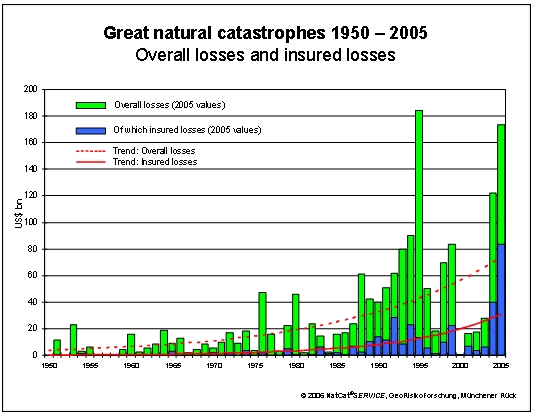
It turned out to be quite a lively day. The morning kicked off with a presentation on risk by Edward Borodzicz for Portsmouth University, followed by one on Flooding in the UK by Tim Randall of the Oxford Disaster Management Group. The latter included some references to an interesting document from Munich Re-Insurance looking at catastrophes over the past 50 years (which seem to have increased in frequency and magnitude). Lots of references to other material, including the UK-CIP impact model for flooding and the Eurobarometer research on perceptions of climate change. There was, though, a slightly unpleasant undertone, especially in the discussion that followed, that seemed to suggest that everything was the fault of the Chinese; this seemed particularly unhelpful to me – it's equally possible to point to lots of positive developments in China, including some of the absolutely enormous wind farms that they are building.

In the afternoon we had the presentations from the practitioners. The Rear Admiral spoke about Iraq at some length, and about the impact of Katrina on New Orleans (which he made some effort to call “N'orlins”). The policeman spoke about how the state took responsibility to safeguard us all from terrorism, how climate change might make terrorism worse or more frequent, and how the bad guys might incorporate responsibility for climate change and resource conflict into their 'single narrative' of conflict with the West which they used for recruitment.

Not all of the liberal academics in the audience liked this very much, and one argued that the two presentations together were more like propaganda – at which the Rear Admiral very theatrically flounced out, claiming that he hadn't come there to be insulted. (Interestingly, he responded rather menacingly to the critic, who happened to be a black woman, that he could say things that would be just as offensive to her, which would cause her to walk out of the room – a new mode of racist insult, in which it's enough to insinuate that you know the appropriate epithet and don't need to use it, perhaps?). And one can't help thinking that if the senior ranks in the Navy can't cope with really quite mild questioning of their perspective, who do they conduct discussions internally?

Funnily enough the policeman, whose presentation was actually much more propagandistic, didn't take offence at all, and happily carried on chatting through the coffee break and the rest of the day. And the Rear Admiral's presentation (apart from a marketing pitch for navies as agencies of emergency relief) actually contained some very acute observations – notably that the agencies which are supposed to prepare for disasters make a very poor job of it because they plan for not-worst cases, and that gangsters almost always seem to make a very good job of responding. One can't help thinking that this deserves some further analysis; what is about these kinds of informal economic organisations that makes them such flexible organisations? After all, they tend to be hierarchical just like formal organisations – perhaps it's just the absence of paperwork...

The seminar ended with some much more acutely academic presentations on urban planning, which were less interesting for me, and a panel session, which was very stimulating.

Key take-aways for me were: a better understanding of how likely extreme events are; a sobering realisation that communities are more likely to collapse than rally round under this kind of pressure (though there are creditable exceptions); and a reluctant acceptance that the state probably doesn't care that much about maintaining my security, but is nevertheless may represent a better bet than organised crime.


Wednesday, September 30, 2009

Why are we in Afghanistan?

It's the drugs. "We" are there to ensure that the flow is uninterrupted. I realise that this sounds like weird conspiracy stuff, but the evidence is there once you start to look. Have a look at this piece by Indian analysts on the link between Pakistan's ISI, the Taliban, the CIA and the heroin business. Sadly there is plenty more where this came from.

Thursday, July 02, 2009

Interesting piece about virtual worlds, gaming...with implications for enterprise UC


Even though the author doesn't say so, I think this article in The Guardian leads to some interesting thoughts about enterprise IT and UC in particular. Watching my teenagers play games and interact with their (sometimes very distant) friends I am aware that they will bring very different expectations to the working environment; I'm surprised that no-one working in enterprise communications seems to have even heard of Ventrilo, for example

Monday, June 29, 2009

Loose and Tight models of Sustainability


For some sustainability optimists, the simultaneous crises of climate change and peak oil (to which we must now add the economic slump and debt crisis) is also a great opportunity. The need to reduce our dependence on fossil fuels and to live within our planet's needs is, they hope, a wake-up call for our civilisation, and the chance to move towards a different way of living.

This new way would be based on a deliberate, conscious decision to reduce the complexity and inter-dependence of our civilisation. It would involve re-localisation, a reduction in consumption of many unnecessary goods and services, a degree of de-industrialisation and re-engagement with more fundamental aspects of life such as food growing. We'd have less stuff, and our 'standard of living' as measured by conventional indices like GDP would reduce, but our quality of life would improve.

This kind of vision is sometimes accompanied with an evocation of the wartime spirit, with fond memories of digging for victory. The Slow Food movement, and even more the Transition Towns movement, are good examples of this kind of thinking. In essence, this view says Loose rather than Tight is the key to resilience, which in turn is the key to sustainability.

But there is another vision of a low-carbon, more sustainable society, which is more or less the polar opposite – even though it is also a plan for sustainability. It argues that we need less Loose – that Tight, and efficiency, are the only route to a sustainable society.

Here, sustainability depends on more technology and more centralisation to deliver efficiency gains; it's these that make it possible to reduce energy consumption and emissions without reducing the quality of life. So energy efficiency based on “smart grids” that link generation more closely to consumption – real-time monitoring of your electricity meter is a must. High-tech communications equipment in our homes substituting for travel – both for work and for leisure. We'd be less likely to have our cars, and we'd be more urbanised and densely packed, not less – especially since high-energy modes of transport would be less affordable.

This second vision is the one implicit in some of the plans for a sustainable future drawn up by business, by the big consulting firms and the technology industries, like the “SMART 2020: Enabling the Low Carbon Economy in the Information Age” drawn up by the “Global e-sustainability Initiative”and The Climate Group.

Most of the time there is little contact between the two different visions. For the most part, the Green movement simply pretends that the high-technology model of sustainability doesn't exist; there are a few exceptions. Simon Fairlie at least confronts the issue head-on in his revisit to 'Can Britian Feed Itself?', in which he attributed to James Lovelock a plan whereby “a third of the land is given over to wilderness, and a third to agribusiness, while the majority of the population is crammed into the remaining third and fed on junk food”.

Mainly, though, Greens prefer to think that when business talks about the transition to a low-carbon economy as an opportunity, they are only interested in a bit of greenwash and marketing spin, and to sell us more stuff with a green label on it. And of course, business doesn't think much about the Loose model either – except to caricature anyone who has doubts about the possibility of growth without end as a know-nothing who wants to return us to the Middle Ages if not to the Stone Age.

As a Green, my heart, and my sympathies, are with the proponents of Loose, but increasingly my head is with a version of Tight. A more sustainable society will de-centralise some things, but it almost certainly will need to centralise others. It's fun to play around with local currencies, but funding social services and health requires a proper tax system. The Transition Town vision of re-localisation is great for Totnes and Lewes, but we need a different vision for the great urban conurbations that have arisen because of the existence of a global economy and don't make sense without it – this is true not only of the City of London, but also for Haringey and Brixton.

Those who invoke the wartime spirit tend to forget that 'dig for victory' was part of a bigger picture that included rationing and the massive bureaucracy that went with it. Running an integrated transport system will need lots of real-time information processing about the whereabouts of vehicles and passengers.

Personal carbon quotas will require massive databases and data collection systems; Enforcing rationing and preventing 'off-ration' carbon consumption will require an extension of state surveillance and powers; anyone who tells you otherwise hasn't thought much about the huge infrastructure that organised crime has built up around the transhipment of narcotic drugs, a commodity with much more minority appeal than energy.

It seems unlikely that carbon rationing will be based on little paper books and cardboard coupons; I am not at all sure that we can simultaneously oppose ID cards on civil liberties grounds while calling for the introduction of any kind of carbon rationing or quotas, and perhaps it's time to stop automatically resisting any initiative like this. Otherwise, we end up sounding like the nutters who oppose speed cameras on civil liberties grounds.

And the later we leave preparing for transition, the bigger the shock is going to be. When the lights start to go out and the food stops arriving in the supermarkets, many people will be grateful for the smack of firm government, and not too fussed about who gets hurt or what gets taken away in the process.

What's important, then, is not to reject Tight versions of sustainability out of hand, but to start a proper political engagement with them. Who is going to be in control? What safeguards will there be on surveillance? Who decides what the ration allocations are going to be? It's fun to brew our own beer and grow our own vegetables, and it helps to rebuild communities and help think about priorities. But it's no substitute for a proper plan to save civilisation that starts from where we are now, not where we'd like to be.


Saturday, June 27, 2009

The sad death of Michael Jackson

The only comment I've found worth reading was this one by Hadley Freeman in The Guardian - about the false dream of celebrity.

My first reaction on hearing of the death of MJ was one of sadness - yet another case of someone who seemed to have it all but found no happiness as a result. One day on and I'm already fed up with all the coverage.

Monday, June 22, 2009

Is this what they really meant?

From the website of the Edwardian Radisson Hotel at Heathrow:

"We believe in doing business with a clear conscience, so we're careful not to waste either your time or our resources in planning an environmentally responsible conference, meeting or event."

Delightfully honest.

Friday, June 12, 2009

Kastner on TV


A couple of weeks ago I watched the Storyville programme about Kastner (entitled “The Jew who talked to the Nazis”), and it stirred me up a lot. Few people who read the broadsheet newspapers (or the Jewish Chronicle) can have missed the row over Joe Allen’s play “Perdition” a few years ago; so the suggestion that some Zionists were involved in some dealings with the Nazis is not exactly news. And though everyone who writes about this feels compelled to act as if they are personally revealing something that has long been hidden, in fact there is a long and detailed account of Kastner and others’ roles in Hannah Arendt’s book on the Eichmann trial.

For years the subject was also used as a stick by the Zionist right to beat Labour Zionists – as represented, for example, in Ben Hecht’s book “Perfidy”; more recently Lenni Brenner has written several books which meticulously document the involvements of the Zionist Right (especially Lehi) with attempts to do a deal with the Nazis. Proper historians, including Jewish and Zionists ones, know all about what happened, and the indignation of the Jewish community about the Allen play was either fake or ignorant. There is a debate to be had about how we should interpret and even judge these episodes, and what we can learn from the; but it shouldn’t be based on denial of the facts.

Nevertheless, the Storyville film not only told the story rather well, but did manage to tell me a lot that I didn’t know. I knew that Kastner had been assassinated after a Pyrhrric victory in his libel action, but had always assumed it was the work of crazed individual. The film not only show that the assassin had been part of an underground rightwing group (which had also attempted to blow up the Soviet embassy in Israel) but also that the group had been penetrated by the Shin Bet, and that there seems good reason to suspect that the Israeli authorities knew about the planned assassination but chose not to prevent it.

Why? Perhaps because Kastner had been giving witness statements on behalf of Nazis at their trials after the war – and that he had been doing this so that they would reveal the whereabouts of money looted from holocaust victims. The money was then transferred to the Israeli state, though not to descendants of the victims or other survivors. Evidence of Kastner’s statements for the various Nazis had emerged at the libel trial and had very much influenced the judge’s attitude towards him, yet Kastner had not given an explanation as to why he appeared to be helping these odious men when there were no longer any Jews to save. The film suggests that the assassins were allowed to go ahead with their plans because Kastner knew too much; it also shows that the murderers served relatively short sentences. Curiously, the actual assassin, who is still alive and was interviewed for the film, is one of the most sympathetic characters in it.

Also interesting in the film is the close collaboration between Uri Avnery and the right-wing lawyer (a Herut leader) for the defendant in the libel trial. We’re used to seeing Avnery as a peacenik, but his political career is much more chequered than that. He started out on the right, and obviously maintained links there in the muck-raking days of Haolam Hazeh.

The film also shows the way that the Jews rescued by Kastner were made to feel like they were the wrong sort of survivor. I suspect many survivors in Israel felt like that. The fact that the Kastner episode happened in Hungary, and that at least some Zionists seem to have had scant regard for the assimilated Hungarian Jews, may also have played a part.

Friday, April 24, 2009

Zionism and the holocaust again

I've written before about the moral sadism implicit in the accusation that Zionists (or Israelis) are the new Nazis. The flip side of this must also be acknowledged; there are lots of Jews and Israelis who really do say that because of the holocaust no-one can criticise Israel, or that Israelis don't need to listen to anyone that does.

Writing in the latest issue of Standpoint, a magazine produced by the right wing Social Affairs Unit, Howard Jacobson says "...those who want to speak in those terms accuse the Jews of employing the Holocaust for pity. I don't know a single Jew who does that..."

Funnily enough, the day before I received an email from a nice Israeli friend, who seems to have civilised opinions, with a link to what she described as a 'terrific video'. I clicked through to the video, and it turns out to be series of images of anti-semitism with a backing track of someone reading a diatribe by "Rabbi" Meir Kahane. The message is that we don't have to care what anyone thinks about us, because they've always hated us anyway.

The vileness of this argument takes some beating; it is precisely a claim that anti-semitism gives Jews a 'get out of jail free' card that means they can do whatever they like to anyone and everyone. This is the most flagrant exploitation of the holocaust for political purposes. How can Howard Jacobson (or anyone else) get all huffy when accusations are leveled against Israel but look the other way when this sort of thing goes on?

More to the point, how can apparently nice Israelis think that this sort of thing is acceptable to send out as a contribution to understanding? Or complain about how cruel Hamas was, to force them to such terrible things in Gaza against their own better judgement? It's hard to avoid the conclusion that there is a different moral universe here.

Powerline ethernet...

...is wonderful! It just works! Why have I waited so long? Why have I spent hours sodding about with WiFi?

Sunday, April 05, 2009

Museum of Agriculture and Food

Yesterday I went to the Science Museum - in the first place to see the 'Japan Car' exhibition and then since I was there, to take in the 'Wallace and Gromit' exhibition. I like Nick Park's animations and was hoping that there would be some mock-ups of Wallace's daft inventions. In fact the exhibition was terrible - not much in it at all, apart from a few of the little rooms from the films. The 'Japan Car' exhibition was not much better; considering it was subtitled "Design for the Crowded Planet" it didn't have much by way of interesting innovation about sustainable transport - just some cars, really, which I suppose should not have been a surprise. Apart from the fact that some of them were small, one was fuel cell and one was electric, not much to detain me.

So having schlepped across London, I thought I'd at least take in the Agriculture gallery. I am reading the Fontana Economic History of Europe, and am in the middle of the brilliant chapter about technology. Although it's very well written it has no diagrams, so I don't really appreciate some of the points it makes about ploughshares, mouldboards, and whipple shafts. I rather hoped that the Science Museum gallery would help.

But it was a real disappointment. None of the exhibits look like they have been touched since the 1950s. There are some shabby dioramas of tractors and harrows, with yellowing caption boards. There are a few little models of tractors and 'native' ploughs, though not much by way of explanation. And the overall story, in so far as there is one, is about the 'agricultural revolution' of the eighteenth century in England, and then the advent of diesel and petrol tractors in the twentieth century. Nothing about the neolithic revolution, irrigation and hydraulic civilisations, or medieval agriculture.

So why isn't there a decent museum of agriculture and food? There's enough to put in it, and it's clear that people are interested in that sort of thing right now - look at the food programmes on telly, the Victorian Farm programme, the interest in home growing. And until there is one, perhaps it would be worth starting a virtual museum of agriculture?

Friday, February 27, 2009

Grump about the Cardinal

The radio news kept repeating the 'story' that Cardinal Cormac McWhatshisface is going to give a lecture in which he will warn about the increasing hostility faced by 'the church' -- though he's kinda vague on what church, or what hostility. He is apparently going to talk about the threat this poses to freedom of religion. Forgive me, but when did the Catholic Church start supporting the freedom of religion? When did it become a Good Thing for them? When it did, was their any acknowledgment that this was a change in the official position, and any apology for previous endorsement of the opposite view.

I must have missed that bit...obviously it's happened after they stopped burning heretics and making non-attendance in church a crime. Or maybe it's only a good thing in certain places, where catholicism is not the established religion. I think we should be told.

Tuesday, February 24, 2009

Oyfn Pripitchik and Lark Rise to CandlefordP

No-one seems to have noticed that the theme music for the BBC series "Lark Rise to Candleford" bears an uncanny similarity to the Yiddish song "Oyfn Pripitchik". Is this just a co-incidence? I think we should be told. Without meaning to cast aspersions, is there scope for composers to plunder the storehouse of klezmer tunes -- as long as no-one recognises them?

It's made more amusing by the fact that "Lark Rise" is so very English.

Monday, February 09, 2009

Gollywogs and Jewish dolls


As the Carol Thatcher row got started, and the predictable right-wing response about how this was yet another case of "political correctness gone mad" began to gather steam, I reflected on how the mainstream commentariat would react to anti-semitic caricatures turned into dolls. After all, post-holocaust, anti-semitism is supposed to be even more taboo than anti-black racism. I remembered hearing someone - (Howard Jacobson, in the "Roots Schmoots", maybe?) mention that such dolls actually did exist and were sold in Poland. So I thought I'd look for a picture of them, post it, and see if it shamed any defenders of the Gollywog. (I found these Jewish dolls, delightfully depicted with their money bags and boxes).

My mistake was to search for "Jewish Puppet" rather than "Jewish Doll". I was unprepared for the volume and rancour of the images and words that this search uncovered. There's a little bit of me that thinks that we Jews sometimes make too much fuss about contemporary anti-semitism, because in my liberal professional life I rarely encounter it. But my "Jewish Puppet" search revealed to me the extent to which the Jewish conspiracy theory is alive and well on the web. Try it yourself.

It also made me think about the limits of liberal anti-racism, which focuses on terms like discrimination and prejudice. Gollywogs physically embody a racist caricature. The toy and the depiction mean that white people don't meet real black people in an unmediated way -- they bring to the meeting all sorts of ideas and reactions derived from the caricature.

But the stereotype of the Jew is not for the most part about 'prejudice'. The content of anti-semitism is not about beards or long noses, it's about the idea that Jews are clever, powerful and greedy for more power. That's why 'discrimination' seems like an appropriate response to the 'gollywog-like' black people, but genocide is the appropriate response to conspiratorial world-dominating Jews.

Tuesday, December 16, 2008

Can CIOs count carbon?

No, they can't. This piece by Fujitsu says that they don't realise they shouldn't count emissions by organisations to which they have outsourced their operation. It says that they are 'erring on the side of caution...rather than risk understating the environmental impact.'

I'm more worried that they just simply don't get it at all.

Sunday, December 14, 2008

Eco-Team

Had the very first meeting of our neighborhood Eco-Team group - part of an initiative by the charity Global Action Plan, in conjunction with the Sustainable Haringey Network. Actually was a pre-meeting, because it was just to arrange dates. Was quick but pleasant - hope all the subsequent meetings are as easy and nice as this!

Monday, October 06, 2008

More climate change scenarios

A Guardian article from Vicky Pope, head of climate change at the Hadley Centre. Technically much more proficient than my humble effort - but primarily about how bad the climate change itself turns out to be, with not much consideration about impact on economy and society. But very good, of course.

Friday, May 02, 2008

What does not kill me makes me stronger


Everyone has a worst nightmare - not something they worry about, but a real nightmare that they have from time to time. Mine used to be the exam dream - you know, you have to retake all your old exams again, and you can't find a pen, and...

A few years ago I stopped having that one, and started having the conference presentation nightmare. You are at a conference and suddenly you are called on to speak, and you have done no preparation at all. I probably have this one because no matter how much I prepare for presentations, I always feel like I haven't done enough.

Last week, at the Sustain IT conference, this actually happened to me. The organisers had contacted me after hearing me in an analysts' round table, and asked me to speak. I'd refused - I followed the subject more as an enthusiastic amateur than as part of my professional analyst responsibilities. They prevailed on me to speak on a panel, and I agreed.

When the agenda arrived I was still down for a forty minute presentation, which by now was on a specific subject -- green procurement principles -- that I definitely knew nothing about. I complained, they apologised and said it would be fixed.

Three days before the conference they were chasing me for 'my slides'. I explained what we'd agreed, and it seemed to go away.

Perhaps foolishly, I turned up at the conference. My name was still on the agenda against the 'green procurement' topic. I spoke to the organiser, who yet again said that this was a mistake that would be explained, and that I would just be on a panel. Fortunately I no longer believed him, and started making a few notes on a scrap of paper. Fortunately, because at 2.40pm, exactly to time as presented on the agenda, the chairman called me to the lectern.

I was no longer utterly unprepared, but as near as made almost no difference. I had no slides, and my notes consisted of a single piece of A5 with four bullet points on it. Considering this, it didn't go to badly. I spoke for twenty minutes, got a few laughs in the right places, and got a decent round of applause at the end. A couple of people from the audience later congratulated me on how crisp and succinct the presentation was.

Perhaps I won't have the nightmare any more. As Nietzsche says (I think), "What does not kill me makes me stronger."

Horrible or what?

A giant rubbish dump of 100 million tons of crap in the Pacific. What have we done?

And more horror here.