Thought this would be mystery story, and it turned out to be a brutal confusing splatter-fest, with multiple pointless brutal murders. I had to read the Wikipedia article to understand the plot, and even then what I learned was that there are bits of the story that just don't make sense - or that you can't understand from what's presented on the screen. Also over-long, though some of the nature scenes are beautiful to look at.
Watched on Netflix.
Wednesday, October 10, 2018
Sunday, September 30, 2018
Review of 'Casablanca'
Still wonderful, even on a third watching. When I wasn't concentrating so much on the plot (or on deciphering the Hebrew subtitles, because the first time I saw it was on Kibbutz Hasolelim in Israel) I could appreciate how sharp the script is, and the shooting, and how great the close-up shots are.
Watched in the Middle Floor at Springhill via informal distribution, laptop and projector.
Review of 'Meet Joe Black'
Pretty awful...Death comes for a powerful, successful media magnate, but then he does a deal whereby the magnate can have some extra time on earth if he introduces Death to the pleasures of real life. Why Death has waited so long for this (pleasures include trying peanut butter, and falling in love with the magnate's daughter) is unexplained. Death incarnates in the form of a beautiful young man who'd just met the daughter and then died in a stupid road accident, and this leads to some mystery, and some laughs, and lots of inexplicable and nonsensical plot lines.
It all ends sort of happily and stupidly. I was struck by how utterly rubbish the plot was, and how ugly the American version of opulence looks - the magnate is very rich, and all of his stuff is really repulsive (though it's not supposed to be). The film is very long; although the script is terrible the acting isn't too bad, and the cinematography is occasionally OK.
Watched in the Middle Floor at Springhill on a DVD.
It all ends sort of happily and stupidly. I was struck by how utterly rubbish the plot was, and how ugly the American version of opulence looks - the magnate is very rich, and all of his stuff is really repulsive (though it's not supposed to be). The film is very long; although the script is terrible the acting isn't too bad, and the cinematography is occasionally OK.
Watched in the Middle Floor at Springhill on a DVD.
Saturday, September 29, 2018
Review of 'Paris and London in the 18th Century'
I'd forgotten what it's like to read a book written by academics for academics. This is 'studies in popular protests,, but it's definitely not for a popular audience. It's proper academic history, from primary sources, and it assumes that everyone knows the main outline of the events covered. I remembered some of that from A level history - who the Hebertists were, and so on - but I'd forgotten lots, which meant that it was only possible to read this with Wikipedia at hand.
And it's more than a bit repetitive, partly because it's actually a collection of essays once published separately, so it makes the same point again and again - mainly that 'the crowd' and 'the mob' consisted of respectable members of the 'lower orders' (artisans, craftsment, small shopkeepers) rather than either proletarians-in-formation or criminals and vagabonds. It also makes it clear that popular protest often wasn't about what we'd think of as progressive politics - in England there was always a strong element of chauvinism and Protestant supremacy.
Not a fun read though - I think I'd rather have re-read Mark Steel's Vive La Revolution again.
And it's more than a bit repetitive, partly because it's actually a collection of essays once published separately, so it makes the same point again and again - mainly that 'the crowd' and 'the mob' consisted of respectable members of the 'lower orders' (artisans, craftsment, small shopkeepers) rather than either proletarians-in-formation or criminals and vagabonds. It also makes it clear that popular protest often wasn't about what we'd think of as progressive politics - in England there was always a strong element of chauvinism and Protestant supremacy.
Not a fun read though - I think I'd rather have re-read Mark Steel's Vive La Revolution again.
Friday, September 21, 2018
Review of 'My Cat Yugoslavia'
Strange and not entirely satisfying. A young Kosovan man who is a refugee in Finland, and is gay but not entirely comfortable about it, lives on his own, but has a pet boa constrictor for company. And then he meets a talking cat at a gay bar (the cat is sort of homophobic, but the young man and the cat seem to have sex, though it's hard to be sure), and the cat moves in with him.
There is a parallel narrative about his mother as a young girl in Kosovo, in a very traditional patriarchal and conservative community. The Kosovans all love Tito but socialism doesn't seem to have had much impact on their way of life or material well-being. It all goes horribly wrong, first for the young girl and then for Yugoslavia and Kosovo. The family flee to Finland, where her horrible husband is even more bitter and unpleasant to his wife and children, who eventually run away from home...so that one of them can become the young man of the other narrative.
The cat becomes progressively more unpleasant as a lover and house guest, and the young man becomes pitifully and slavishly devoted to him, echoing the way his mother was like a slave to his brutal and nasty father. And then, on a trip to Kosovo to visit his grandparents, the cat just vanishes, and doesn't reappear in the story, or even the young man's thoughts. And then he has to kill his snake, which he sometimes loves.
What does it all mean? I haven't the faintest idea. It might be allegorical, but I didn't get the allegory. It's well written, but disturbing and sort of empty at the same time.
There is a parallel narrative about his mother as a young girl in Kosovo, in a very traditional patriarchal and conservative community. The Kosovans all love Tito but socialism doesn't seem to have had much impact on their way of life or material well-being. It all goes horribly wrong, first for the young girl and then for Yugoslavia and Kosovo. The family flee to Finland, where her horrible husband is even more bitter and unpleasant to his wife and children, who eventually run away from home...so that one of them can become the young man of the other narrative.
The cat becomes progressively more unpleasant as a lover and house guest, and the young man becomes pitifully and slavishly devoted to him, echoing the way his mother was like a slave to his brutal and nasty father. And then, on a trip to Kosovo to visit his grandparents, the cat just vanishes, and doesn't reappear in the story, or even the young man's thoughts. And then he has to kill his snake, which he sometimes loves.
What does it all mean? I haven't the faintest idea. It might be allegorical, but I didn't get the allegory. It's well written, but disturbing and sort of empty at the same time.
Monday, September 17, 2018
Review of 'Three Summers'
Enjoyable Australian rom-com set at a folk festival over a three year period; anyone who has ever been to a festival will find something to enjoy. Including a Theremin moment...
Some of the plot developments, and the anti-racist denoument - feel a bit contrived, but it's still good fun. Nice to see John Waters (Darcy from Offspring) and Deborah Mailman (Cherie from Offspring) in other roles.
Review of 'Distrust that particular flavour'
A collection of previously published non-fiction writings by William Gibson - articles from newspapers and magazines, introductions and forewords to other books, and so on - suplemented by Gibson's responses to the pieces with the benefit of hindsight.
It's pretty good - well written, enjoyable - and Gibson's afterthoughts are both modest and perceptive. One of the pieces really stands out - The Road to Oceania, published in the New York Times in 2003. It seems to presage all of the Facebook/Cambridge Analytica scandal.
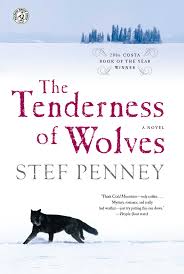
Review of 'The Tenderness of Wolves'
Historical novel set in rural northern Canada, that seems to have been on the point of being really good, but somehow wasn't. There's a good plot with some false leads, lots of the characters are interesting and have complex back stories, there's lots of great descriptions of the frozen north...and still, it's not quite there. There was a long period in the middle that seemed to have too much plot and not enough direction, and I must admit that I got a bit confused as to who all the characters were - some of them were not well differentiated from each other.
I stuck with it and ended up enjoying it, but it wasn't an entirely satisfying experience.
Also, there are almost no wolves in it, and those that are don't show any tenderness at all. So why the title? And the characters all seemed to bump into each other all the time, like they do in Game of Thrones. Is that really plausible in the tractless wastes of the frozen north?
I stuck with it and ended up enjoying it, but it wasn't an entirely satisfying experience.
Also, there are almost no wolves in it, and those that are don't show any tenderness at all. So why the title? And the characters all seemed to bump into each other all the time, like they do in Game of Thrones. Is that really plausible in the tractless wastes of the frozen north?
Saturday, September 08, 2018
Review of 'Only the Brave'
A film about US firefighters - not the ones in towns, but the ones who fight forest fires. The film seems to assume we either know or care a lot about the administrative structure of fire-fighting in the US - our heroes are a municipal fire fighting team but everyone else is a Federal government team, and there is some sort of status that results in them being called 'hotshots' that somehow means that they earn more money for the town when they fight fires in forests...from who? Not sure.
Anyway, it's a tale of heroism and male bonding among blue collar workers, and it's nice that for once this isn't about war or at anyone else's expense - not even the liberal elite or pointy-headed bureaucrats. There is nothing in the film about the debates around whether to 'fight' forest fires at all, let alone about climate change...fires just are, and they have to be fought. But its heart is in the right place, and I found myself gripped by what happened to the men of the unit.
And it's a true story, pretty much.
Watched on Netflix.
Anyway, it's a tale of heroism and male bonding among blue collar workers, and it's nice that for once this isn't about war or at anyone else's expense - not even the liberal elite or pointy-headed bureaucrats. There is nothing in the film about the debates around whether to 'fight' forest fires at all, let alone about climate change...fires just are, and they have to be fought. But its heart is in the right place, and I found myself gripped by what happened to the men of the unit.
And it's a true story, pretty much.
Watched on Netflix.
Wednesday, September 05, 2018
Review of Paper Moon
I saw this film in 1974 when it first came out. I'm pretty sure I watched it with my parents, who had been enthusiasts for the Peter Bogdanovitch's other black and white period movie 'The Last Picture Show'. I loved the film even then, though it's odd how little of it I remember...mainly just the bibles scam and Addie's intuitive grasp on the con game.
I don't think I appreciated, at the time, just how much it was a film of its time. Although the tone is generally quite light what's going on in the background is the Depression...every so often we see groups of ragged travelers in the background, with their meager possessions in suitcases or on handcarts. The look of the film recalls Walker Evans's photos for Let Us Now Praise Famous Men, and perhaps also The Grapes of Wrath - especially in the way Addie's face is lit.
And I couldn't help wondering whether, in 1974, it felt like this was a world that was now coming back - 1974 being the time of the first oil shock and the year that the post-war boom finally ran out of steam.
Watched in the Middle Floor at Springhill, on a big screen and (I think) via an old-fashioned DVD.
Saturday, September 01, 2018
Review of 'How Far Can You Go?' by David Lodge
I think an apology is in order, to all my Catholic friends. I'm sorry, I didn't realise how miserable it has been. We joke about how there's Catholic guilt and Jewish guilt, and it means we have something in common in this C of E country...but nothing in my Jewish upbringing was remotely like the misery the young Catholics in this novel experience.
It's a story about a cohort of Catholic students and a few others around them (like the junior chaplain at their London college) and the way that the developments in Catholicism and the church play out in their lives. It's fascinating, and a bit frightening, because I had no idea that anyone in the modern world took any of this stuff seriously - I mean, I'd heard about indulgences and so on, but I had no idea that they were still a thing in my lifetime.
The book is - probably rightly - focused on sex, and occasionally love - so it's also an account of the 'sexual revolution' of the 1960s and 1970s, at least as experienced by a group of mainly middle-class educated Catholics. The reviews and the blurb indicate that it's supposed to be a comic novel, but though I enjoyed it there weren't many laughs, or even smiles.
It's a story about a cohort of Catholic students and a few others around them (like the junior chaplain at their London college) and the way that the developments in Catholicism and the church play out in their lives. It's fascinating, and a bit frightening, because I had no idea that anyone in the modern world took any of this stuff seriously - I mean, I'd heard about indulgences and so on, but I had no idea that they were still a thing in my lifetime.
The book is - probably rightly - focused on sex, and occasionally love - so it's also an account of the 'sexual revolution' of the 1960s and 1970s, at least as experienced by a group of mainly middle-class educated Catholics. The reviews and the blurb indicate that it's supposed to be a comic novel, but though I enjoyed it there weren't many laughs, or even smiles.
Wednesday, August 29, 2018
Review of 'Black Klansman'
A really good tense thriller, with quite a lot of humour, a great soundtrack and a visual delight - with absolutely no doubt as to where its poltical sympathies lie.
There are some plot holes and gaps that don't entirely make sense. The newly-appointed first black cop in Colorado Springs somehow manages to launch his own inflitration investigation into the local KKK, and though the police chief is a racist he still gets enough support and resources to make the investigation work. Although our black cop does the phone calls to the KKK his Jewish colleague does the actual in-person infiltrating...I'm not at all sure why that should be necessary as it makes the whole thing more risky for no obvious gain. Why can't the Jewish cop do the phone calls too? But it does provide some scope for some humour as KKK Imperial Wizard David Duke tells our hero that he can always tell a black person (not the word he uses) from his accent.
There is some real edge of seat stuff when we fear that the Jewish infiltrator is going to be fingered as a cop, and some parallel stuff with our black hero's infiltration of the local Black Students' Union, which includes several gorgeous leather-clad women militants with big Angela Davis afros. The KKK are really frightening - not the funny sheet-wearing buffoons that sometimes appear in films. Harry Belafonte has a cameo role as speaker to the black students.
There's a sort of coda to ensure that we understand that the monsters of the far right haven't gone away - something that it's easy to forget in films about say the Civil Rights movement, where the racists often look old and ridiculous and the narrative seems to say "isn't it uplifting that no-one thinks like that any more?"
Lots of cinematic references, to blaxploitation films among others (surely not everyone in a small-town Black Students Union would have looked that fantastic?), and some others that I could recognise were references but nevertheless didn't quite get.
A small personal note: in 1976 the same David Duke depicted in the film (set in 1972) came to Brighton, and to the University of Sussex campus at the invitation of the local Federation of Conservative Students.
Watched at the Everyman Cinema in Muswell Hill
There are some plot holes and gaps that don't entirely make sense. The newly-appointed first black cop in Colorado Springs somehow manages to launch his own inflitration investigation into the local KKK, and though the police chief is a racist he still gets enough support and resources to make the investigation work. Although our black cop does the phone calls to the KKK his Jewish colleague does the actual in-person infiltrating...I'm not at all sure why that should be necessary as it makes the whole thing more risky for no obvious gain. Why can't the Jewish cop do the phone calls too? But it does provide some scope for some humour as KKK Imperial Wizard David Duke tells our hero that he can always tell a black person (not the word he uses) from his accent.
There is some real edge of seat stuff when we fear that the Jewish infiltrator is going to be fingered as a cop, and some parallel stuff with our black hero's infiltration of the local Black Students' Union, which includes several gorgeous leather-clad women militants with big Angela Davis afros. The KKK are really frightening - not the funny sheet-wearing buffoons that sometimes appear in films. Harry Belafonte has a cameo role as speaker to the black students.
There's a sort of coda to ensure that we understand that the monsters of the far right haven't gone away - something that it's easy to forget in films about say the Civil Rights movement, where the racists often look old and ridiculous and the narrative seems to say "isn't it uplifting that no-one thinks like that any more?"
Lots of cinematic references, to blaxploitation films among others (surely not everyone in a small-town Black Students Union would have looked that fantastic?), and some others that I could recognise were references but nevertheless didn't quite get.
A small personal note: in 1976 the same David Duke depicted in the film (set in 1972) came to Brighton, and to the University of Sussex campus at the invitation of the local Federation of Conservative Students.
Watched at the Everyman Cinema in Muswell Hill
Friday, August 24, 2018
Review of Barkskins by Annie Proulx
A rather wonderful huge novel (does Annie Proulx write any other kind?) about the timber industry in North America over four centuries. It's told as a tale of two families, both descended from two indentured French migrants to Canada, though the lines intertwine and some of the 'descendants' are actually descended from adoptees. It's about the fate of the forests, of indigenous people, and the hard life of the men (and sometimes women) in the process of logging, and lots more. It's more about other forms of ecological devastation than climate change, though that gets an appropriate level of discussion towards the end too.
The last fifty pages or so felt a bit slack, like she was tidying up a bit, but the very ending was worth waiting for.
Review of 'The Illusionist'
A fictionalized version of the Mayerling incident (for my money Private Vices, Public Pleasures was a better film account of this), in which the Crown Prince of the Austro-Hungarian empire committed suicide in a hunting lodge, with ramifications for the succession and thus the future of the empire. One of a spate of magician-inspired period dramas, like The Prestiege.
This one is quite good, with nice acting (Rufus Sewell always good as a Teutonic villain) and a nicely-achieved period look (though I wasn't sure about some of the sepia-toning - I mean, the past wasn't actually sepia, was it?). Shot in various locations in the Czech Republic rather than in Vienna where it's set - presumably cheaper and more authentic-looking. Odd to make some of the characters speak English with slight German accents...either they are speaking English, or German; either way the accent thing is silly.
Because it's a film about a magic trick, the plot turns on how this is achieved - though it's only revealed in a sort of montage sequence at the end, and I can't say I followed all of that. But it didn't detract from the enjoyment.
This one is quite good, with nice acting (Rufus Sewell always good as a Teutonic villain) and a nicely-achieved period look (though I wasn't sure about some of the sepia-toning - I mean, the past wasn't actually sepia, was it?). Shot in various locations in the Czech Republic rather than in Vienna where it's set - presumably cheaper and more authentic-looking. Odd to make some of the characters speak English with slight German accents...either they are speaking English, or German; either way the accent thing is silly.
Because it's a film about a magic trick, the plot turns on how this is achieved - though it's only revealed in a sort of montage sequence at the end, and I can't say I followed all of that. But it didn't detract from the enjoyment.
Tuesday, July 31, 2018
Great Bands at Womad 2018
Things we liked:
Jazzanova
Hanggai (Mongolian rockers)
Ladama (Latin American feminist band)
La Dame Blanche (Cuban singer)
Leftfield (live house music - we missed out on that whole thing the first time round)
KermesZ a L'Est (mad Belgian brass punks playing mainly Balkan music, with lots of street theatre and comedy)
Bollywood Brass Band with Jyotsna Srikanth
Dobet Gnahore
Mr Jukes
The Undercover Hippy (sort of reggae/ska, politically engaged lyrics)
Tuuletar (amazing Finnish acapella women)
Jiggy (Irish folk-rock)
Meklit (Ethiopian)
Too Many Zooz (live electronic music played on baritone sax, trumpet and drums/percussion)
The Dirty Bourbon River Show
Thievery Corporation
Jazzanova
Hanggai (Mongolian rockers)
Ladama (Latin American feminist band)
La Dame Blanche (Cuban singer)
Leftfield (live house music - we missed out on that whole thing the first time round)
KermesZ a L'Est (mad Belgian brass punks playing mainly Balkan music, with lots of street theatre and comedy)
Bollywood Brass Band with Jyotsna Srikanth
Dobet Gnahore
Mr Jukes
The Undercover Hippy (sort of reggae/ska, politically engaged lyrics)
Tuuletar (amazing Finnish acapella women)
Jiggy (Irish folk-rock)
Meklit (Ethiopian)
Too Many Zooz (live electronic music played on baritone sax, trumpet and drums/percussion)
The Dirty Bourbon River Show
Thievery Corporation
Monday, July 09, 2018
Review of 'Flight Behaviour' by Barbara Kingsolver
Really loved this - a clever, thoughtful and often funny book about climate change, poverty, education, science, community, relationships...it's just great. Particularly good on insights into what it's like to be a poor person (especially a working poor person) in a rural part of the US, and why such people aren't interested in any kind of environmental activism. There are great portraits of educated urban activists, and it's made me look at my tribe through different eyes.
Friday, June 29, 2018
RSA report on Cohousing
So I read the RSA report on cohousing - see here - and my main take-away is that it wasn't really about cohousing. There's lots about what is broken in the UK housing market - in particular, the lack of actually affordable (as opposed to "affordable", now a term with special meaning that specifies a discount from overblown market rents rather than a relationship to disposable income), and the poor terms and conditions that apply to renters but not so much to mortgage buyers. There is quite a lot discussion about forms of tenure, with particular emphasis on mutual ownership, rental co-ops, a community land trusts.
That's all very interesting (really, it is) but most of the report misses the point about cohousing, which is that it is form of occupancy, not a form of tenure. The cohousing community where I live, and most of the others in the UK and the US, is primarily based on owner-occupancy, though there are some private renters (living in homes owned by individuals, not the community or any other institution) and some lodgers. The tenure is more or less bog-standard leasehold that you'd find in many blocks of flats. In Northern Europe there are lot more rental-based cohousing communities, with the community (or a housing association) acting as the landlord.
The distinguishing feature of the occupancy is really the self-management. Other developments have shared facilities. It's a common feature of high-end developments (pool, gym etc.). Old-style US condominiums have residents' association rooms and facilities, and shared laundries seem to be common in US apartment blocks (though not in British ones). The new commercial 'co-living' set-ups like The Collective have them too.
The difference is that in co-housing these are managed and maintained, and cleaned, (for the most part) by the residents themselves, and it's the organisation of this that means that people are necessarily entangled and involved with each other. Not everyone is equally involved, but it seems to be true that the more you put in, the more you get out - at least in terms of loneliness reduction.
Our community has frequent (thrice-weekly) communal meals, prepared and cooked by community members through a rota, to a rolling meal schedule, in a communal kitchen and dining room that is beautifully maintained. The eating together is important (though not every cohousing community does it), but it's the self-management - the rotas and the inevitable shift swaps, the menus, the food buying - that keeps people entangled with each other. The upside of cohousing, the connection with other people, is exactly the same as the downside - that you are inextricably bound up with other people.
When my partner and I tell our friends about it, they often react that they wouldn't like to have all of those obligations...and they might be right. In one sense, the people in cohousing are just like everyone else. There isn't a common ideology or philosophy. Not everyone is particularly generous or self-less. Some people are involved with wider communities, some aren't. What distinguishes them is their ability to tolerate these obligations, and that level of entanglement with other people and need to take the views and preferences of others into account. I suspect that this is a not such a common characteristic, especially in Britain, especially now. If I'm right, then cohousing won't be a cure for loneliness, at least for many people - though it is a good vehicle for those who are that way inclined. It's probably worth noting that even in those Scandinavian countries where it's well established and relatively easy to establish the proportion of the population that lives in cohousing remains below 5%.
That's all very interesting (really, it is) but most of the report misses the point about cohousing, which is that it is form of occupancy, not a form of tenure. The cohousing community where I live, and most of the others in the UK and the US, is primarily based on owner-occupancy, though there are some private renters (living in homes owned by individuals, not the community or any other institution) and some lodgers. The tenure is more or less bog-standard leasehold that you'd find in many blocks of flats. In Northern Europe there are lot more rental-based cohousing communities, with the community (or a housing association) acting as the landlord.
The distinguishing feature of the occupancy is really the self-management. Other developments have shared facilities. It's a common feature of high-end developments (pool, gym etc.). Old-style US condominiums have residents' association rooms and facilities, and shared laundries seem to be common in US apartment blocks (though not in British ones). The new commercial 'co-living' set-ups like The Collective have them too.
The difference is that in co-housing these are managed and maintained, and cleaned, (for the most part) by the residents themselves, and it's the organisation of this that means that people are necessarily entangled and involved with each other. Not everyone is equally involved, but it seems to be true that the more you put in, the more you get out - at least in terms of loneliness reduction.
Our community has frequent (thrice-weekly) communal meals, prepared and cooked by community members through a rota, to a rolling meal schedule, in a communal kitchen and dining room that is beautifully maintained. The eating together is important (though not every cohousing community does it), but it's the self-management - the rotas and the inevitable shift swaps, the menus, the food buying - that keeps people entangled with each other. The upside of cohousing, the connection with other people, is exactly the same as the downside - that you are inextricably bound up with other people.
When my partner and I tell our friends about it, they often react that they wouldn't like to have all of those obligations...and they might be right. In one sense, the people in cohousing are just like everyone else. There isn't a common ideology or philosophy. Not everyone is particularly generous or self-less. Some people are involved with wider communities, some aren't. What distinguishes them is their ability to tolerate these obligations, and that level of entanglement with other people and need to take the views and preferences of others into account. I suspect that this is a not such a common characteristic, especially in Britain, especially now. If I'm right, then cohousing won't be a cure for loneliness, at least for many people - though it is a good vehicle for those who are that way inclined. It's probably worth noting that even in those Scandinavian countries where it's well established and relatively easy to establish the proportion of the population that lives in cohousing remains below 5%.
Wednesday, June 20, 2018
Review of 'Regarding Henry'
Harrison Ford is a nasty, rapacious lawyer who defends corporate bad guys against little people that they have wronged, even if he knows they are wrong. He works in a Manhattan law firm where his father ('the old bastard') used to work, and he's good at his job and everyone there thinks he's great. He lives in a big, soul-less apartment in a not-too-happy marriage with his attractive wife who works in real estate and his very-retiring daughter, with whom he has a relationship based on teaching her to be tough but obedient.
But then he gets shot in a corner shop when he goes out for cigarettes, and as he recovers he has little memory of who he was or what value he saw in his former life. This is a good role for Harrison Ford, because it lets him use his one expression, a sort of intelligent-but-confused look. When he's the newer, nice Henry he has a different, softer hairstyle - the one on the poster.
Eventually he and his wife rediscover their relationship, he quits his horrible law firm (and passes some inside information to one of the plaintiffs that the firm and its client wronged), the couple take their daughter out of the strict posh boarding school where they have sent her against her will, and walk off into the sunset. It's a paean to family values over corporate values, at least for those wealthy and secure enough to choose between them.
Watched on Neflix.
But then he gets shot in a corner shop when he goes out for cigarettes, and as he recovers he has little memory of who he was or what value he saw in his former life. This is a good role for Harrison Ford, because it lets him use his one expression, a sort of intelligent-but-confused look. When he's the newer, nice Henry he has a different, softer hairstyle - the one on the poster.
Eventually he and his wife rediscover their relationship, he quits his horrible law firm (and passes some inside information to one of the plaintiffs that the firm and its client wronged), the couple take their daughter out of the strict posh boarding school where they have sent her against her will, and walk off into the sunset. It's a paean to family values over corporate values, at least for those wealthy and secure enough to choose between them.
Watched on Neflix.
Tuesday, June 12, 2018
Review of 'Sweet Caress'
I'm going off William Boyd a bit. He used to be a reliable mid-range story-teller, not too literary but solid and worth reading. Recently though his stuff is beginning to feel like it's written out of contractual obligation. This one is OK, though for a while in the middle I was using it to fall asleep at night, because it was reliably boring. It's a biography, and shapeless in the same way that real life is. For the most part things just happen to the main character. Every so often she makes impetuous decisions that have consequences, but there doesn't seem to be much of a relationship between the decisions and the consequences, at least in the head of the protagonist. There's lots of big stuff about the horrors of war, the secret state and so on, but it doesn't really seem to go anywhere. Oh well, it probably won't be the last Boyd I read...
Monday, June 04, 2018
Review of 'Dispossession: The Great Social Housing Swindle'
This is a really good film about the failure of the housing market in the UK to provide housing for rent at prices compatible with the levels of wages provided by the labour market. There are lots of individual stories about how the structure of that market, and the political choices taken by successive governments, have afflicted people's lives. The decisions - notably but not only the introduction of 'right to buy' which hollowed out the stock owned by local authorities - are set out and the effects illustrated.
It's mainly a tale of misery. There is some coverage of struggles by tenants to prevent their estates being demolished or sold off, but not much sign of any of these being successful. The general air is one of inevitability in the face of overwhelming power and the 'naturalness' of the market; the film is mainly asking for more social housing to be built and offered at below-market rents to offset the 'natural' working of the market.
A few things occurred to me as a I watched.
Firstly, language - the battle is half lost when those in power can define words to mean what they want them to. "Affordable" housing is a category that doesn't actually mean people on low incomes - or even middling incomes - can afford it. "Regeneration" means clearing out the present residents, demolishing the housing stock, replacing it with something denser and worse (though not suffering from years of under-mainenance) and then bringing in new tenants or owners at much higher prices. "Consultation" is a name given to a process that includes some mechanism for soliciting the opinions of others without any obligation to take any notice of those opinions. Oh, and "luxury" flats - not actually anything to do with luxury, just private and owned instead of public and rented. The space standards in these "luxury" flats, and sometimes even the construction, is worse than what they replace.
Secondly, it's very much a bottom up view - there wasn't much analysis of the mechanisms by which this is so profitable for some companies, or how the subsidies and tax breaks given to the rich and even not-so-rich (people like me) stack the market against the people in the film. Real estate is a capital asset on which many kinds of privileges are heaped - if some of those were taken away then it wouldn't be such a fabulous place to stash money, and then prices would at least slow if not decline to more affordable levels. The shortage of property is a function of the demand side of the market, because the attractiveness of the asset class and the banks' freedom to create money means that demand will always outstrip supply. Building more homes ultimately doesn't make any difference. The utter idiocy of the 'help to buy' program illustrates this.
It would have been nice if the film had talked a bit about other 'global cities' - it focuses a lot on London. In some exactly the same process has happened. Central Paris and New York are only for very rich people now; so-called 'Yuppies' gentrify Brooklyn, which used to be for poorer people, and the latter get pushed further out. I think this started in the early 1980s as the wealthy began to move back into city centres, and they did that partly because of transport. Once car ownership reached a certain level then commuting in from the suburbs became a misery, and then it was better to live in the city centres. That's why the 'inner-cities' (an expression we don't hear so much any more) became so desirable, when they had recently been a by-word for poverty. A few cities (notably Berlin and Barcelona) have had some success in standing against this and maintaining social diversity in their centres - and rent control has been central to this. Rent control also helps to make the ownership of property less attractive, so it's a good thing on that score too.
The current property market acts as a mechanism for the distribution of wealth from poor to rich. Even if the clock were wound back to the 1970s and the state started funding the construction of social housing for rent at truly affordable levels, there would still be a transfer of wealth from renters to owners in every generation. It's worth noting that in some places (Singapore comes to mind) the state builds homes for sale on a low-interest mortgage. Perhaps we need to think about a mechanism - better than right to buy - that ensures that the transfer is stopped and perhaps even reversed.
Finally, it's probably worth saying that there's a relationship with the labour market and wage levels, and precarity, that doesn't get addressed much. The big social rented estates served a population that was mainly in work, in secure jobs. People in precarious jobs - zero-hours contracts and the like - can't afford a deposit either for rent or for buying, and won't be taken on by either landlords or lenders.
Watched at a showing organised by Stroud Against the Cuts at Lansdown Hall in Hall. Thanks for that - look how much it's set me thinking.
It's mainly a tale of misery. There is some coverage of struggles by tenants to prevent their estates being demolished or sold off, but not much sign of any of these being successful. The general air is one of inevitability in the face of overwhelming power and the 'naturalness' of the market; the film is mainly asking for more social housing to be built and offered at below-market rents to offset the 'natural' working of the market.
A few things occurred to me as a I watched.
Firstly, language - the battle is half lost when those in power can define words to mean what they want them to. "Affordable" housing is a category that doesn't actually mean people on low incomes - or even middling incomes - can afford it. "Regeneration" means clearing out the present residents, demolishing the housing stock, replacing it with something denser and worse (though not suffering from years of under-mainenance) and then bringing in new tenants or owners at much higher prices. "Consultation" is a name given to a process that includes some mechanism for soliciting the opinions of others without any obligation to take any notice of those opinions. Oh, and "luxury" flats - not actually anything to do with luxury, just private and owned instead of public and rented. The space standards in these "luxury" flats, and sometimes even the construction, is worse than what they replace.
Secondly, it's very much a bottom up view - there wasn't much analysis of the mechanisms by which this is so profitable for some companies, or how the subsidies and tax breaks given to the rich and even not-so-rich (people like me) stack the market against the people in the film. Real estate is a capital asset on which many kinds of privileges are heaped - if some of those were taken away then it wouldn't be such a fabulous place to stash money, and then prices would at least slow if not decline to more affordable levels. The shortage of property is a function of the demand side of the market, because the attractiveness of the asset class and the banks' freedom to create money means that demand will always outstrip supply. Building more homes ultimately doesn't make any difference. The utter idiocy of the 'help to buy' program illustrates this.
It would have been nice if the film had talked a bit about other 'global cities' - it focuses a lot on London. In some exactly the same process has happened. Central Paris and New York are only for very rich people now; so-called 'Yuppies' gentrify Brooklyn, which used to be for poorer people, and the latter get pushed further out. I think this started in the early 1980s as the wealthy began to move back into city centres, and they did that partly because of transport. Once car ownership reached a certain level then commuting in from the suburbs became a misery, and then it was better to live in the city centres. That's why the 'inner-cities' (an expression we don't hear so much any more) became so desirable, when they had recently been a by-word for poverty. A few cities (notably Berlin and Barcelona) have had some success in standing against this and maintaining social diversity in their centres - and rent control has been central to this. Rent control also helps to make the ownership of property less attractive, so it's a good thing on that score too.
The current property market acts as a mechanism for the distribution of wealth from poor to rich. Even if the clock were wound back to the 1970s and the state started funding the construction of social housing for rent at truly affordable levels, there would still be a transfer of wealth from renters to owners in every generation. It's worth noting that in some places (Singapore comes to mind) the state builds homes for sale on a low-interest mortgage. Perhaps we need to think about a mechanism - better than right to buy - that ensures that the transfer is stopped and perhaps even reversed.
Finally, it's probably worth saying that there's a relationship with the labour market and wage levels, and precarity, that doesn't get addressed much. The big social rented estates served a population that was mainly in work, in secure jobs. People in precarious jobs - zero-hours contracts and the like - can't afford a deposit either for rent or for buying, and won't be taken on by either landlords or lenders.
Watched at a showing organised by Stroud Against the Cuts at Lansdown Hall in Hall. Thanks for that - look how much it's set me thinking.
Subscribe to:
Posts (Atom)