Wednesday, April 23, 2014

Review of "Free Men/Les Hommes Libres"

A good, serious film about a subject that I'd never heard about - the way that the Muslim community of Paris helped Jews escape from Vichy and Nazi round--ups by supplying them with false certification "proving" that they were Muslims. It's a true story; some of the characters in the film are historical people, others (including the main character) are composites of several people.

Moving, tense, well shot - though some of the dialogue seems a bit clunky; perhaps it's the subtitles rather than the original script. Interesting that the relationship between Younes and Salim, which is so central to the plot, is  so little explored. Salim is gay, and Younes is clearly surprised and upset to discover this, yet there seems to be a dimension to their mutual attraction that goes beyond friendship.

Sunday, April 20, 2014

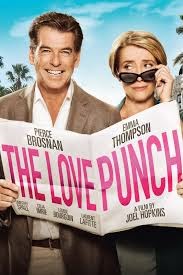
Review of The Love Punch: Worst film I've seen in many a long year

I can handle the odd romcom, and this one sounded like it might be tolerable. It wasn't. A trip to the dentist would be more enjoyable. Avoid at all costs. Stay in, wash your hair, whatever.

Wednesday, April 16, 2014

IOT 14 in Cambridge

I went to this. I can't remember the last time I found a public event of this kind so interesting and so much fun. Fantastic speakers, great venue (who wants to spend a day in the dreary subterranean basement of another corporate hotel?), superb organisation, and a really nice bouncy spirit in the way the sessions were organised and chaired. Just brilliant. Other conference event organizers should watch, and probably watch out.

I hope to post another piece about what was most interesting, but didn't want to leave it another day.

Thursday, April 03, 2014

Another day, another low power wireless company

Six months ago I didn't know any companies pursuing this opportunity, even though some of them have been at it for a while and have successful implementations to point at. Now I fall over them all the time, and suddenly the industry mainstream, including proper grown-equipment vendors and even network operators want to talk about this.

The company du jour is Senaptic, which has just come out of stealth mode, having been incubated within equipment vendor Plextek. The latter is precisely one of those companies that has been ploughing the low-power IoT furrow for years - 25, to be precise. Its technology is deployed in the LoJack vehicle tracking system, in a smart parking system in Moscow, and is also used by Telensa in supporting smarter street lights in British cities.

Unlike fellow low-power wireless provider Sigfox Senaptic aims to be a technology provider, not a network operator. It plans to sell systems to organisations (mainly enterprises, but also local authorities) to use for their own purposes - tracking, monitoring, controlling, whatever. So there is no need for the kind of OSS that a public network would require, to provision devices, manage their subscriptions, bill for usage etc.
But it's not 'merely' a connectivity play - it also offers a platform that does include an OSS, applications, and of course devices.

At the moment Senaptic has only six employees, though the system is still supported by staff within Plextek. In the slightly longer run it aims to have about 100 people.

Sunday, March 30, 2014

Review of The Past

Not what you'd call a feelgood film but no less perfect for that. The dynamics of interlocking families in what looks to be a working-class outer suburb of Paris; an Iranian man who has left his wife to return to Iran, but is now returning to France to complete their divorce so that she can marry another immigrant man, even though his wife is still alive, albeit in a coma. The impacts of all of this on the children of the woman (not the Iranian man's, but he clearly loves them and is loved by them) and the second man's son.

Like real life - just as tragic and muddled, only even sadder.

Tuesday, March 25, 2014

Review of Sunshine on Leith

A feel-good film that didn't actually make me feel all that good - wooden two dimensional characters, leaden dialogue, contrived script. It aims to do for The Proclaimers' songs what Mamma Mia did for the oeuvre of Abba, but it didn't do it for me. Maybe I don't know the songs enough; the only one that I really do know and like, 'Letter from America', is thrown away. The song is about the sadness and loss of emigration, and it's turned into a family's farewell to a young woman going to work as a nurse in a fancy hospital in Florida as part of her yearning for adventure and career development.  That says it all, I think.

BTW I watched this immediately after Rio, a cartoon film about birds. The cartoon birds were more fully developed characters than the ones in Sunshine on Leith.

Wednesday, March 19, 2014

Review of The Zero Theorem

Another disappointment from Terry Gilliam. Visually arresting, disappointing in terms of plot, characters, emotional engagement...pretty much everything. I know that a film is bad when I find myself checking my watch to see how long it's got left.

A shame, because it's not as if he lacks imagination. The situation - an 'analyst' in some vast incomprehensible corporation gets put on to a special project to do with the meaning of life - is not uninteresting. There are lots of nice visual gags - I particularly liked the interactive billboards that greet male characters with "Hello Madam", surely a joke on the interactive signage in Minority Report. It's always better when sophisticated technology screws up in movies, though it rarely does - film-makers obviously don't use the same stuff as the rest of us.

Other stuff is a bit derivative, though. The workstations where employees have to cycle - weren't they in an episode of Charlie Brooker's Black Mirror? The interactive sex site and the virtual reality suits, the mainframe that looks like a Victorian pumping station...even the music was cheesy.

Maybe Gilliam should find some more interesting collaborators.


Sunday, March 16, 2014

Review of Copenhagen performed by students at Kings College London

I really enjoyed this, even though I'd recently seen the TV production. It's a brilliant play and the students really did it justice. Especially hard for Freddie Fullerton, who is young but has to play an older, avuncular character but I think he pulled it off rather well. The script is great, of course, but so was the acting - the actors' mannerisms really conveyed the characters they were playing.

Who would have thought you could do so much with such a minimal set (though a rather good room for it with appropriate fittings and fixtures) and three actors?

And why isn't Michael Frayn as recognised as he ought to be? The way that this play addresses both the scientific and the moral issues is little short of genius. The fact that the answers to the latter aren't cut and dried, as they would be in Howard Brenton or David Hare, just adds to the brilliance.

It is still on for one more night - tonight (16th March). Go and see it if you can.

Wednesday, March 12, 2014

Review of "The Grand Budapest Hotel"

A really enjoyable romp of a film, with great sets and scenery, super cast, lots of good verbal and visual
jokes...what's not to like?

There is a somewhat complex nested narrative structure. It starts with a girl by the grave of a fictional famous writer. She is reading his book. Most of the story is then the story of the book, told by a younger version of the writer; but it's told to him by a now-old man who is himself, as a boy, one of the main characters of the story. From time to time we drop back to the old man telling the story to the young writer, but mainly it stays in the entirely fictional 1930s, in two entirely fictional central European countries. Neither of them are Germany or Poland, oh no, definitely not. Lots of brilliant visual details, in prison scenes, bakery scenes, etc. I loved the decor of the hotel and the writer's apartment in what must be the Communist era - just the right combination of artless cheer and drab.

Curiously the closing credits say it's based on the stories of Stephan Zweig, but if like me you are not a big Zweig fan don't let that put you off - it's much funnier than anything he wrote.

Friday, March 07, 2014

Review of "Dog Hell: Pitbull in Ramraid Horror!"

I enjoyed this book, but I'm not sure who I would want to know that I had (apart from GCHQ, of course, who know all about what I am reading).

I was uncomfortable with the dog-human sex, though. And now that I've read it, I see that people who viewed this also viewed...some really ghastly bestiality porn. Who knew that was even on Amazon?
It's a parody of those 'Skinhead' books from the 1970s that were read by boys at school who didn't read much. Lots of violence, some sex, homophobia, racism - you know the sort of thing. And it's a very good parody too, lots of witty dog/human crossover stuff. Sometimes it doesn't quite work, often it does.

I was uncomfortable with the dog-human sex, though. And now that I've read it, I see that people who viewed this also viewed...some really ghastly bestiality porn. Who knew that was even on Amazon? 

Tuesday, March 04, 2014

Barcelona February 2014

I went to Barcelona for Mobile World Congress 2014. Instead of rushing back at the end I stayed for the weekend and had a great time. I went to the Barcelona History Museum, and really enjoyed a special exhibition about the World of 1714 - the year in which Catalonia found itself abandoned at the tail end of the War of Spanish Succession and its independence came to an end.

I went with Ruth to the Sagrada Familia (only the outside - couldn't face the queue) and then on to the even more wonderful Modernista Hospital de la Santa Creu I Sant Pau.

We did Nick Lloyd's brilliant Civil War walking tour, which brought Orwell's Homage to Catalonia to life and almost moved me to tears. 

We walked all over Montjuic (yes, Jew Mountain) and visited the Catalan National Art Museum. I particularly liked this picture by Antoni Arissa.

And I met up with Phil Shepherd, and with Jamilla Evans-Evans, neither of whom I have seen for at least fifteen years.

Review of 'Cloud Atlas'

I loved the book, and this film is only tolerable. The structural complexities were always going to be hard to film. Watching it on a tablet as I did meant that I was going to miss out on the more impressive visual aspects - especially the scenes in Neo-Seoul.

Even taking that into account this is still a disappointment. The complex structure of the book is replaced with a more conventional set of inter-weaving narratives. Using the same actors to play different characters in these might have helped with the budget and the logistics but did nothing for the experience. And the characters make several laboured references to recurrence, and to the other 'themes', which I don't remember from the book.

At nearly three hours this is a long film but it felt longer.

Review of "A Field in England"

A muddle without form, point or aesthetic value. Five men (I think it's five - it's a bit hard to tell) blunder in to each other in a field while escaping from an unnamed battle in the English Civil War. It is in black and white, so we know that it's arty. There is a sort of narrative. One of the men seems to be a weedy fearful scholar, implausibly sent by his master to apprehend a tough and frightening Irish man who has stolen a manuscript from the master's library.

The manuscript apparently describes how to find treasure in this very field. The Irish man, who turns out to be an alchemist, makes the others his prisoners and forces them to dig for the treasure. At various times some of the men seem to kill each other, but they don't stay dead. Those who are killed re-appear in the film to no particular surprise. Is there a magical or supernatural explanation, or is it all a hallucination brought on by the mushrooms we see them eating. It's hard to know and ever harder to care.

Review of "Her"

A surprisingly moving film. From the descriptions and synopses doing the rounds I didn't expect to like this - I imagined a film about a geeky, tech-obsessed man taking refuge from real human relationships by falling in love with his computer. I might not even have gone, but Ruth and I were in Barcelona, exhausted from walking all over the city, and this was one of the few original-language films available at a cinema we could imagine walking to.

I couldn't have been more wrong. The main character, Theodore, suffers from a surfeit of empathy - his job involves working for beautifulhandwrittenletters.com, which does what it says on the tin; writes beautiful personal letters for people who are unable or unwilling to write their own. Theodore's letters are warm and charming, full of sympathy and wisdom.

And the disembodied operating system with which he falls in love is also a complex, developing character, learning what it feels like to feel, and managing the disjuncture between human emotions, the absence of a body with which to feel them, and the consequences of having non-human enormous processing power and multi-tasking capability for relationships with humans. The film works through all these complications with considerable sensitivity. Some of the time I felt a little lump in my throat. It made me think about the way that I mediate some personal relationships through technology - the Facebook friends I never meet with in real life, and so on.

The film is also visually stunning, with contemporary Shanghai standing in for a future LA - sometimes sumptuous, sometimes bleakly sterile. I rather liked the Arcade Fire soundtrack too.

Very glad I saw this.

Thursday, February 13, 2014

Prologue: Mohács, August 1526


A field somewhere in Central Europe. It is early afternoon. The day has been hot, but Summer thunderstorms have been raging for the last two hours. The sky is dark with clouds, and heavy rain is falling. The ground is sodden and marshy.

Two men sit on horseback. Their uniforms are drenched. Water has pooled in the brims of their hats and is trickling thickly down their necks and faces. One of the men is agitated. He shifts in his seat, walks his horse this way and that, peers into the murk. The other is calm, unmoving, almost...bored.

“I can't see a thing,” says the agitated man. “Can you see anything? How can we make a report if we can't see anything?”

The second man says nothing, sits very still. It is as if he is sniffing the rain like a dog.

“Most important battle of our lives – maybe of the whole history of the kingdom. And we're here, and we don't know what's going on. So useless, I feel so useless...”

“S'what it's always like,” says the calm man. “Battles. They look all neat and purposeful on the maps, and in the military manuals. When you're there, in the middle of it, you never know what's going on. And don't tell me it's different for the generals. They know less than anyone.”

The two men sit on their mounts in silence for a few minutes. At last the calm one says: “There. Hear that?”

The agitated one grimaces, cups a hand behind his ear. “Marching feet? Drums?”

“Drums. And war trumpets,” says the other. “The Ottomans are bringing up their reserves. The Janissaries. They're going to attack our line right in the centre.”

“And where are ours? Our reserves? What are we doing?” says the agitated one, now more agitated than ever.

“Still waiting,” says the calm man. “Waiting for the Turks to slog their way through this damned bog. They make it through and on to the firm ground, our cavalry'll have them. What you don't hear is as important as what you do hear.”

“What's that? What do you mean? What are you talking about? What should I hear, or not hear?”

“The Turkish cannons,” says the calm man. “You don't hear any artillery. So the Turks didn't manage to get theirs here on to the battlefield. Probably stuck in the mud somewhere on account of all of this wonderful, marvellous rain. And no artillery means that our cavalry are safe. The flower of Magyar chivalry -” he paused to spit; “Safe to do the thing that they do best. A head-on charge straight into the enemy ranks. And for once, just this time, because of the rain, it's going to work.”

He stops talking, as if he is embarrassed at speaking for so long. The two men sit in silence for a while longer. The agitated one walks his horse some more. He cocks his head on one side. “More thunder?”

The other shakes his head. “The heavy cavalry. The Turks must have made it across the marsh. Their drums are louder now.”

“I wish I could see!” says the agitated man. “This is the moment that saves the kingdom from the Ottomans! And we – we are here, and yet we're missing it...”

“I won't tell anyone if you don't,” says the calm one. “It's all over now, bar the slaughter. The Turks are wedged between the bog and our knights. Infantry against cavalry, on an open field, without any cannons to back them up. I don't suppose there'll be many going home.”

He lifts his hat, tips water out onto the ground. “Come on, let's go and make that report. And get out of the rain.”

The agitated man casts one more desperate glance towards the sound of battle, then both wheel their horses around.

Friday, February 07, 2014

Smart cities partnership between Cisco and AGT

It sometimes seems that smart city alliances and consortia are even more common than smart city projects. The proliferation of these isn’t entirely surprising. Cities are  complex entities, with lots of handles, systems, components and management layers. So there are lots of opportunities, but serving them is inevitably something that needs to involve more than one supplier – and these suppliers need to bring their specific kinds of expertise but work closely together.

This latest smart city strategic alliance, announced here, and involving Cisco and AGT, has a strong focus on video solutions for urban safety.  Cisco has been involved in urban video monitoring projects with a safety and security focus before (notably in the French city of Drancy) but these have been on something of a piecemeal basis. And yet the ability to handle the huge volumes of data required by multiple video endpoints is something of a USP for Cisco.


Surveillance is a sensitive subject, especially at the moment. There are questions about whether it really does make citizens safer, and even whether it makes them feel safer – or has the opposite effect. But there can be little doubt that the technology offers capabilities that will be used, often. So the tie-up between Cisco and AGT looks like it could be really significant.

Sunday, February 02, 2014

Review of "Inside Llewyn Davis"

Llewyn Davis is a not very successful folk singer in New York in the early 1960s. That's it really. He is not a terribly bad singer - not comically bad, though the songs he chooses are unremittingly miserable. If the film wanted, it could portray him as a good singer without him actually having to sing any better. He's shot sympathetically when he's singing - it's only the reactions of others (lukewarm applause, mildly negative responses by agents and promoters) that tell us that he's supposed to be not terribly good.

In fact, he's not much good at anything. He doesn't relate well to other people, and he treats them badly. But unlike say Sammy Glick in 'What Makes Sammy Run' he doesn't climb upwards on the backs of the people he has treated badly. He slides down on their backs. Even the really bad dulcimer-playing woman at the folk club who he barracks from the small audience turns out to have a tough and violent husband who beats him up Llewyn in an alleyway.

He can't look out of a window without bumping his head on the frame, he can't have sex with a woman without making her pregnant, he can't throw out a box of old stuff from his parents' house without throwing out important identity documents with it.

I could go on but it would only be recapitulating the misery of the film. It's supposed to be warm and funny, but it's not. It's about failure and the tragedy of caring about something that you're don't do very well. It reminded me of Amadeus in that respect. Not a bad film at all, and beautiful to look at, but not what you could call enjoyable.

Small side note: almost everyone in the film is white. Maybe that just reflects how separate the worlds of black and white people were in the early 1960s.

Thursday, January 30, 2014

One Shoe Tale

I've written a novella. I've self-published on Kindle. It is the first piece of fiction that I am prepared to own up to. It's a straightforward Marxist hard-boiled noire fairy-tale pastiche in an alternative-history context – you know the sort of thing. Imagine “Cinderella" written by a Hungarian Dashiel Hammett in a parallel universe. 

You can find it here.

The paperback version is here.

I'd be really happy if you would download or buy a copy, read it, and leave a nice review. Anyone can publish on the new platforms, but everything there disappears without trace unless it gets reviews and recommendations. If you like it, please recommend.

I wrote it as a bit of fun with my tongue firmly in my cheek. There is some “adult” material in there, so don't read it if that sort of thing offends you.

Friday, January 17, 2014

All the things that went wrong when I flashed my Android phone to Cyanogenmod (and how it turned out all right in the end).

Yesterday I finally got round to changing the operating system of my smartphone (Samsung Galaxy Note GT7000, since you ask) from the Samsung-customized version of Android that it came with – to a more open, less bloated, and more user-controlled version. I opted for Cyanogenmod as a relatively user-friendly option; there are other versions that are more ‘outlaw’ but the instructions for installing seemed to include a lot of command line stuff. I’m not a real geek, only a wannabee, so Cyanogenmod seemed like a sensible half-way house. Cyanogenmod used to be a community-maintained project, though it has now become a start-up with a hardware partner.

The first thing I had to do was ‘root’ my phone. I had lived long enough in Australia to be slightly worried by the sound of that, but it means taking over user control. In Linux-speaker, Root is the equivalent of ‘Administrator’, so rooting your device means taking over privileges to control it that you don’t automatically have. Iphone users talking about ‘jailbreaking’.

Rooting turned out to be quite easy. The only scary bit was booting my phone into recovery mode – by powering it on while holding the Home and Volume Up buttons, and holding down the Power button until the recovery screen appeared. A funny unfamiliar picture of the Android android appeared, with a little blue matrix of stuff coming out of its tummy.

A scroll bar also appeared, which got about a quarter of the way and then stopped. There are lots of warnings about ‘bricking’ your phone in all of the instruction sets online, so I waited and waited. Nothing happened, so in the end I took the battery out and replaced it. That turned out to be what it had been waiting for, because a new screen appeared, the scroll bar shot across the screen and a system message in a funny courier-like font told me that the install had finished. It was so quick that I didn’t believe it had actually happened, so I did it a few more times. Eventually though I decided to believe. I rebooted. Of course, you can't tell if your phone has been rooted; you need an app for that. I found one, installed it, and got a lovely message of congratulations, telling me that I did indeed now have Access.


I basked in my technological prowess for a few days. It turned out that having Root Access didn’t give me much more control over the phone at all. It allowed me to install some apps that require it, like Root App Delete which is supposed to allow the user to get rid of pre-installed crap, but actually everything that I uninstalled just re-appeared. Samsung Music Hub, Samsung Push Service…all of it.

So yesterday I thought I would go the distance and install Cyanogenmod. I copied the .zip file to my SD card – it’s really important to find the right version for your hardware, but not as straightforward to this as you might imagine. It’s easy to find the versions for relatively new devices but harder for old ones, especially where the nomenclature is less than clear. What exactly is my version of the Note called? The GT7000? The Note International? The Note 1?

I launched the app that is supposed to install it – Clockwork Recovery. I made a backup of my existing operating system to the SD card. Then I tried to install the Cyanogenmod OS. It couldn’t find it. Although the app thought it was looking at my SD card, it was actually looking at the phone’s internal memory. Not to worry, I coped the .zip file to the internal memory and tried again. Still didn’t work. So I tried booting into Recovery Mode and running it from there. Here there are several options, including Wipe and Factory Reset. That didn’t feel like what I wanted to do – after all, wouldn’t that put it back into the Samsung version that I wanted to get rid of? So I went straight to ‘Install from .zip’, navigated to the right zip file, and watched it install – again, really quickly.

But not doing the Wipe was a mistake. It was lovely to see the spinning, flashing lights of the Cyanogenmod boot-up screen for the first time, and made me feel like my work was almost done. But after 25 minutes I was a bit bored with it, and wondered whether it could really take this long. Searching on the forums revealed that this wasn’t supposed to be happening, and was the result of not doing that wipe. But how to get back?  If I powered off now, would it brick the device? After another 15 minutes (during which the phone got quite hot) I decided that there was no alternative and rebooted.

But it turns out that there is a specific physical skill involved in doing the reboot. This time my screen displayed a different little android, a ‘Downloading in Progress’ message, the famous yellow triangle of death, and a strong warning not to power off.

But nothing else happened, for a very long time. I was now convinced that I had bricked the phone. But I rebooted again, being very careful not release the Volume Up key until the Recovery Mode screen reappeared. Eventually it did (it felt like a really long time though) and then I did the Wipe and Factory Reset, then reinstalled Cyanogen from zip again. Just in case, really. And then rebooted again.

This time it actually booted into Cyanogenmod, and asked me to create a Cyanogenmod account (why?) which I did. So now my phone runs Cyanogenmod  - but there aren’t many apps, and no apps store. If I was a real outlaw I wouldn’t want the Google Play Store – I’d want to use F-Droid or some other way to get completely ‘open’ apps. But I’m not, and one of the things I like about having an Android phone is the way that it syncs nicely with cloud apps that I can provision easily from a PC with a proper keyboard. So I had to install Google Apps. Another download, another zip file, another boot into recovery mode, another install from zip, another reboot.

Only now the phone is really, really cross. The Google Apps are all there, but I can’t work out how to sign in to them. In fact I can’t sign in to anything, because the soft keyboard has stopped working. In fact, I get a message telling me that the keyboard has stopped working every few seconds.


Another web search, with the exact words of the message; I learn that I have installed the wrong version of the Google Apps package. The one I have doesn’t agree with the version of Cyanogenmod that I have installed. I try to download the right one (finding out what that is takes a while) but actually a lot of the apparent download links lead to malware or try to install other crap on my PC. Eventually I find a good one, download it, copy it to the SD card, do the whole boot into recovery shuffle yet again, reboot – and hurrah! The keyboard works again, and I am immediately taken to a Google sign-in screen. I feel slightly daft – all this effort and I just back signing into Google anyway, but it has worked.


My phone now runs Cyanogenmod. It is clean and snappy – apps don’t hang anymore. I have a bit more control over what it does. And I do feel a bit more like a geek. But honestly, why would any normal person do this if they didn’t have to?

Sunday, January 12, 2014

Review of Heartbreaker

Stupid French sex/rom comedy about a bloke whose business is to break young women up from their unsuitable partners, under contract from family or friends, by making the women fall in love with him. But in this one last job he...well, you know.

Cheesy, corny, cliched. Some nice locations, crisply filmed (lots of tight shots and cuts in a way that seemed a bit unusual for a French film) and Vanessa Paradis as the woman (quite like her music, but isn't she weird-looking?); but not worth the time it took to watch it.