Wednesday, July 13, 2022

Review of "The Black Panther Party: A Graphic Novel History" by David F Walker and Marcus Kwame Anderson

Well, first of all, I loved this book. I don't always like graphic novels, but it seems to work well for this subject. It's a good way to convey all the different people (with little comic-style portraits) and threads and factions.

And I also have a big soft spot for the Black Panthers, not least because I have the impression that they were more socialist than Black Nationalist. This comes across really strongly in the films "Judas and The Black Messiah" and "The Black Panthers: Vanguard of the Revolution", both of which I also liked.

But this is more of a warts-and-all portrait than either of those, and there's quite a lot to not like so much about the Panthers, honestly depicted here. The factionalism, which sometimes turned murderous. The gun thing - now I know that Black people with guns has a liberatory dimension, but it's hard to feel comfortable with how comfortable the Panthers seem to have been around guns. 

And this rather does raise questions about the meaning of "armed struggle" for revolutionary organisations. Proper armed struggle requires a military wing, and military wings attract people who like military stuff. If you are fortunate they are actually good at it, but either way it's really hard to subordinate them to an overall political strategy...I think that comes over in the story of the Panthers' ultimate failure. The same things seem to have consumed the white radical left too, as the history of the Weather Underground illustrates.

There were also factional disputes about the role of "the working class" and "lumpenproletariat" and criminal elements in bringing about the revolution. Some Panthers favoured the latter, and that clearly didn't work out well. Other Marxists have generally tended to view the lumpenproletariat as usually reactionary. In the context of American Black communities where workers have been generally excluded from the better working-class jobs, appealing to a simplistic idea of working-classness is not going to work. Micro-entrepreneurship is one of the routes to a livelihood for some, both legal and otherwise...the same thing happens in the cities of the Global South, where the formal "working class" is something of a privileged stratum. So I think the Panthers who wanted to recruit from criminals were ultimately wrong, but not obviously so.

It doesn't pull its punches or hide the details of where some of the Panthers ended up - Elridge Cleaver becoming a conservative Republican, for example, and Huey P Newton consumed by drug addiction. It's also really good on Cointelpro, J Edgar Hoover's anti-radical counterintelligence and infiltration program.

The book starts with a quick survey of pre-Panther Black political figures, and it's a shame to see Marcus Garvey and Wallace Fard (both reactionaries to the core) listed alongside W E B Du Bois (not a reactionary at all) with not even a hint of a critical distinction. Still, that is just one page - much of the rest, about SNCC and SCLC and so on is great, and very informative.

Monday, July 11, 2022

Review of "Regenesis" by George Monbiot


One of those rare occasions where I came to scoff and ended up being convinced. I went to hear him speak in Stroud as part of a promo tour for the book and wasn't so impressed, but I read the book anyway, and was simply overwhelmed by the quality and detail of the analysis. I wish I could still believe in regenerative grazing and low-impact animal agriculture, but I can't. I'm not a dogmatic vegan...not really a vegan at all. I could live without meat - I did for about twenty years, but I am really fond of dairy and quite like eggs. But sadly Monbiot has convinced me that animal agriculture is an ecological and planetary disaster, so I am going to have live without them.

There's an interesting section at the end on synthetic foods. During the talk this reminded me of Soylent Green, and of Simon Fairlie's account of James Lovelock's scenario in which much of the planet is rewilded but we are all shut out of it and fed a load of factory-produced food. In the book it's better...though I think if he's serious there should be some proper engagement with how this is going to happen without becoming the patented intellectual property of a few multinationals.

I guess that's the overall shortcoming of George...he's really great on pointing out in overwhelming detail why and how things are bad, and he's quite good at sketching out how they could be better. How to get from here to there isn't his thing.


Review of "The Woman Who Smashed Codes: A True Story of Love, Spies, and the Unlikely Heroine Who Outwitted America's Enemies" by Jason Fagone

Nice enjoyable book about Elizebeth Smith Freedman, a cryptoanalyst women with an interesting life history, largely ignored by history in favour of her more famous husband William. Her career spans both World Wars as well as Prohibition, and she seems to have been a really nice woman, with a great professional and work ethic, nice interests and values, and a charming personality. I have to admit that I skipped over some of the more technical crypto bits - I'm sure others wouldn't even have found them very tricky, but it's never been my thing.

Sunday, July 03, 2022

Review of Drumline

A film about the world of American college marching bands - specifically the bands of the Historically Black Colleges and Universities. These are wonderful and terrible at the same time - amazing to look at, but part of a culture of dedication and discipline that is utterly alien to any British sensibility, even the British brass band sensibility, which has its own different culture of dedication, discipline and competitiveness. The band members are athletes as much as they are musicians, and the training is quasi-military and very physical. In the film at least they seem to spend more time doing physical exercise than practicing either their music or their moves.

Watching this was very much part of my covid experience - when I couldn't be bothered to do much else I could watch lots of American college marching band videos, which were sort of inspiring but also very very weird.

This is as much a sport movie as a music film...will the main character make the team? How will the rivalries between competing band be resolved, and who will win the title? 

Watched via informal distribution.

Review of Drumline: A New Beat


Surely enough with the American college marching bands now. This is a sequel to Drumline, set years later, but surprisingly little has changed in the world of the A and T marching band, or in the plot. Again someone (this time a young woman) joins the band's drummers, and there's a lot of will-she/won't-she be picked for the all important P1 grade that gets her to play at public perfomances. And the rivalries within and between bands, and so on. I liked the actual perfomance scenes, the rest of it was a bit dull for me.

Watched via informal distribution.

Review of "The Donation of Constantine" by Simon LeVay

This is not great literature, but it's an enjoyable historical novel about an unfashionable and murky episode in the history of the Roman Catholic church. The Donation of Constantine was (is?) a document forged in the early Middle Ages which appeared to underwrite the temporal power of the Pope. Even at the time some people thought it was dodgy, but it became accepted as a genuine document because it was so convenient. The book is not, to my mind, absolutely clear where it stands on this - some of the characters clearly think that the end justifies the means, and I think that's pretty much church doctrine.

There is quite a lot about miracles, saints and relics, and it reminded me firstly of Gibbon, who is absolutely scathing about this; and secondly, in a weird way, of the novel "Unquenchable Fire" (recently read), which is set in a future America after the advent of a new-age pagan religion...because it was obvious to me how awful and loathsome the superstitions of that religion were, though not to the characters in the book or perhaps even to the author - and because it's only the longevity of Christianity that makes its doctrines and narrative seem less absurd. 


Wednesday, June 29, 2022

Review of Reamde by Neal Stephenson

The perfect book to read during my covid experience...engaging and exciting but not at all emotionally demanding. This is a multi-threaded action thriller, with lots of characters and fantastic settings. It's huge, and I had a hardback that I had bought years ago but never got round to reading, partly because it always seemed so daunting to put in a backpack. But it was a fantastic bedside read. 

It's set against a background of cod-medieval MMPRGs like World of Warcraft, Russian cybercriminals, Chinese game farmers, smugglers, American gun nuts, jihadis...really, lots. And it's done so deftly, so that the characters don't feel like caricatures but are easy to keep track of - there are really lots, so that's important. I particularly like the wisecracking Afro-Welsh jihadi bad guy Abdallah Jones.

No need to elaborate more. There's a lot of guns and violence, and by the end it was all getting a bit much for me, but it's a very enjoyable read. I've just discovered there's a sequel, with some of the same characters and others crossing over from his other book Cryptonomicon, and I know that it's inevitable that I'll read it.

Review of One Halal of a Story by Sam Dastryadi

My dear friend Steve Norden gave us this book on his final visit to the UK from Australia, so I want to find things about it to like. The early chapters, about his parents' lives as radicals and revolutionaries in Iran, are interesting and enjoyable, and so are some of the bits about growing up as a foreign-born kid and wanting to fit in...it's a familiar tale, but he does it nicely. 

But suddenly he emerges as a fully-formed Austalian Labor Party right-wing backroom fixer. There's no intervening story, no account of how he went from the awkward foreign kid to the machine-politics operator. He doesn't seem to have any particular political passions, other than a vague desire that things not be quite so unfair for 'the little people'. He doesn't like backwoods racists like Pauline Hanson, and he's against banks doing bad things. His apparent surprise that big corporates wield a lot of political power would be laughable were it not for the fact that so many right-wing Labor (and Labour) types have probably never given this a minutes thought.

It's also not clear what his achievements are that allow him to rise so rapidly, and so young, through the ranks of the NSW and national Labor Party. So I searched for him, and found that his political career had ended under something of a cloud, with the suspicion that he had been an agent of influence for China within Australian politics, or that there had been petitions calling for him to be charged with treason. To be scruplously fair he does mention this in the book, rather in the way one would a failure of etiquette. 

Probably to be read as a piece of evidence in political history rather than as a way of learning much about the man or the politics of the period.

Review of Only Good Things (Solo Cose Belle)

An Italian film with potential that's not realised. In a beautiful small town an old lady leaves the family mansion to a charity that fills it with a foster family who take in refugees, disabled people and an ex-criminal youth. The good-looking but mildly corrupt local mayor has other plans for the mansion, but his daughter accidentally gets involved with the foster family (while spray-painting nasty slogans on the mansion wall) and falls for the ex-criminal young man.

Some nice moments but it never really takes off, and everyone's a bit too nice, even the rascally mayor and his social-climbing wife.

Watched on Netflix.

Tuesday, June 28, 2022

Review of Love and Gelato

Not very interesting American YA romcom, in which a young nervous nerdy girl fulfills her mother's dying wish by making a trip to Rome, where she picks up the threads of her mother's life as a young woman - her fun-loving cousin-friend, her best bloke-buddy who she should have loved, the not-very-nice professor who was her lover, etc etc. And our young protagonist is wooed by two beautiful Italian young men, each eligible and ineligible in different ways.

Despite all this plot, and lovely settings, it's a bit dull.

Watched on Netflix.

Tuesday, June 14, 2022

Review of "The School Teacher of St Michel" by Sarah Steele

First, to declare an interest. Sarah Steele is a friend and fellow Red Band member, and I had a tiny bit of input into the book - Sarah asked me some questions about some of the Jewish stuff, and I was able to save her from a few errors and also provide some details for Jewish remembrance customs; and I am thanked very kindly in the afterword acknowledgements for this.

Second, to provide a context. I don't think that I am in the target market for this book, which is a historical wartime novel with more than a touch of chick-lit in it...there's too much detail on the outfits that the women wear, and though I like cooking and anything to do with food, the way that it's introduced in the book didn't work for me.

And perhaps because of this, and the split narrative structure with some of the action in the present and some in the past, it felt like it took too long to get going. But when it did I found myself drawn in, and caring about the characters and what happened to them, and utterly gripped by the last third of the book. I even had to choke back a few tears at the end.

Nerdily I spotted at least one error that I had missed the first time round - French Easter does not in any way involve rabbits, chocolate or otherwise; that's just an Anglo thing. And I wondered a little about the extent to which the Vichy regime in unoccupied France would have felt like a safe or welcoming destination for Jews smuggled from the north...Vichy had its own racial laws and managed to deport 75,000 Jews to the camps for extermination. 

But these are quibbles really. I enjoyed the book and I'm looking forward to Sarah's next one.

Review of "Darling Lili"

Quite a bad film, but sort of enjoyable nonetheless. It's a WW1 spy film, with Julie Andrews as a singer entertaining the British and French troops behind the lines and in the field hospitals, but also being a German spy. I want to say that I can't remember a film in which Julie Andrews plays a villain, but there isn't really any sense that she is a baddie in this...she is in a relationship with top flyer Major Larrabee and trying to wheedle secrets out of him to pass (over the phone, implausibly) to her German handler, but there isn't really any sense that this is villainous or that it puts soldiers' lives in jeopardy. 

Much of the time it has the feeling of a Carry On film, particularly with the two comic French army intelligence characters, who spend much of their time falling off roofs and into ponds. In fact almost all of the French characters are played for laughs, though the Germans are to be taken seriously - some of them are sinister, some are quite likeable, especially the handler, played by Jeremy Kemp. 

The plot is mainly terrible, the acting pretty awful, but I am a bit of a Julie Andrews fan, and the songs and singing scenes are enjoyable. Afterwards I read the Wikipedia article, and saw that this had a huge budget - and you can see where it went, with really big crowd scenes and some quite good dogfight footage - but made very little money, though it won one award (for a Henry Mancini song) and was nominated for others. Perhaps they should have spent some of the huge budget on the writers, though I know that's not very Hollywood.

Unusually watched as hard disc recording at my mother-in-law.

Sunday, June 05, 2022

Review of 'This Is Your Mind on Plants' by Michael Pollan

I read Michael Pollan's book on psychedelics and really liked it - this is a sort of companion volume, though rather slighter. It only covers a few psychoactive plant derivatives really - opium, caffeine and mescaline. But I enjoyed all three chapters. The one on opium mainly focuses on some of the weirdness of drug policy, which in the US resulted in the authorities deciding to ban the growing of freely available poppies (though not the seeds, because they had a culinary use) and the possession of freely available dried poppies, popular with flower arrangers - but then not to tell anyone, for fear of encouraging the use of the poppies to make opium, which is apparently quite easy. 

The chapter on caffeine has some interesting stuff, especially the personal account of an attempt at abstinence and the chemistry of how caffeine works, but it feels a bit padded with historical stuff that I knew already and I think is widely written about.

The mescaline one was shorter, less padded, and took on some interesting issues about the relationship between drug reform advocates who want to 'decriminalize plants', and Native Americans who want to preserve their own privileged and restricted access to the mescaline-bearing cacti, which is culturally and spiritually significant to them (but as part of a relatively recent made-up religion). Again, a great read, and of course he writes brilliantly about his own mescaline and peyote experiences, while acknowledging the difficulty of writing about such things.

Review of "The History of The Countryside" by Oliver Rackham

A magnificent book - I learned something on each page, and often in each sentence. Although this is an academic text rather than a 'popular' book he writes really well, and the text is full of beautiful anecdotes - some historical, some personal (like the fact that his college has a drinking vessel probably made from the horn of an auroch). It's organised thematically rather than chronologically, so there are chapters on woodlands, grasslands, heaths, and so on. 

I probably need to read it again to collect my thoughts on the main themes...but I certainly got that not much of the woodland in the UK is anything to do with the wildwood that once covered more of the island/s, and that there are other types of landscape of historical value worth preserving as well as woodland - not all forestation is a good thing. I'm going to look to see if there are any videos of him speaking - I'd vote for a TV series based on this any day!

Review of The Hustle

This makes me aware of the risks involved in my decision to only review films that I finish watching. This is pretty bloody awful, and I was sure I'd seen it before, but I checked my reviews database and it seemed I hadn't. Well, that was because last time I gave it up half way through, which was still a good decision, but an unrecorded one. At least that won't happen again.

This is a con-game film, which can be good, but this one really isn't. What were Anne Hathaway and Rebel Wilson doing in this pile of shit? Making a lot of money, I suppose - oddly the film seems to have been a commercial success.

Watched on Netflix, and that's two hours I will never get back.

Review of The Decoy Bride

Surprisingly decent romcom set on a remote Scottish island, with David Tennant as the romantic lead, and some good jokes. The ending is visible from early on, but it's still nice nevertheless.

Watched on BBC iPlayer/

Friday, June 03, 2022

Review of 'The Good Lord Bird' by James McBride

I quite liked this - I started watching the TV series around the beginning of the first lockdown, and gave up - mainly because Ruth didn't like how violent it was. I might go back to it. It's interesting in treating John Brown as a bit of a nutter rather - or perhaps as well as - an abolitionist hero. The narrator is a young Black man (well, boy really) who is swept against his will into the guerrila war against slavery in Kansas that preceded the Civil War proper, and for various accidental reasons ends up passing as a girl for most of the book. Some of that it funny, though there are serious aspects to it, about the relationship between race and gender.

I'd never heard of James McBride before but I'll look out for more of him.

Thursday, June 02, 2022

Review of The Photographer of Mauthausen


A not entirely satisfactory film about Spanish Republican Francisco Boix, who escaped the fall of Spain to France where he was interned, joined the French Foreign Legion and ended up in a Nazi concentration camp (Mauthausen) along with thousands of other Spanish Republicans - the Francoist regime cancelled their citizenship so that they were officially stateless.

I first heard about Boix during a Civil War walking tour of Barcelona given by Nick Lloyd (do it if you get a chance) and was very moved by the story, so I was keen to see the film even though I generally avoid Holocaust movies. This film reminded me why - it's very hard to get the tone right, and this had lots of touches that I didn't like...slushy music, thriller-type tropes, and a sometimes confusing plot. What was the trick by which Communists in the camp were switching already-dead prisoners for resistance fighters marked for execution? I didn't understand it from the film. The real Boix hid photographic evidence from the camp...in the film he just seems to shove it behind cupboards in the hope that it won't be found.

I note in passing that the character of Paul Ricken, one of the SS officers in the camp, is made more sympathetic than history suggests...

The moment in which the camp is liberated can't but be effective, and the Spanish prisoners produce a Republican flag to greet their liberators. This is all the more effective because we know that their hopes that the fight against Franco will be recognised as part of the greater anti-Fascist war are about to be dashed. Right at the end we see that many of the shots in the film are reconstructions of the actual photos.

Watched on Netflix via Chromecast and (Ruth's) smartphone.

Tuesday, May 31, 2022

Review of The Human Voice

A one-woman film, based on a Jean Cocteau play, "freely adapted" by Almodovar, and wonderful to watch. The one woman is Tilda Swinton, and I'd probably watch her read from the phone directory, if such things still existed. It's a short film (28 minutes), with a set representing an apartment that is created within what appears to be a big studio or warehouse. Menacing, suspensful, clever, beautiful.

Watched on BBC iPlayer.

Tuesday, May 24, 2022

Review of Crazy Rich Asians

Watched this on BBC iPlayer, and my finger was rarely far from my throat. A really nauseating film, affecting to satirise the lifestyle of the absurdly rich, but actually celebrating it. A sort of romance, with clever Chinese-American in a relationship with absurdly handsome Singaporean Nick, but not knowing that his family are super-rich...as are his friends, so that when he brings her to meet them all they go on shopping sprees and parties on private islands in private helicopters and specially chartered party container ships.

No sign at all that Singapore is a repressive one-party state, or that it's the third most unequal country in the world...there are only hideously rich people in the film (apart from the odd servant or street food hawker). 

Reading about the critical reception of the film, it seems like the only "controversy" about the racial casting - was the guy who played Nick the right or the wrong kind of Asian? Nothing at all about the planet-killing lifestyles that are held up for us all to aspire to. 

Thursday, May 19, 2022

Review of "Smiley's People" by John Le Carre


So I read another Le Carre, and I liked that too - was taken by the way in which his characters  - or at least Smiley - are in the Cold War, but not entirely engaged to its ideology. They are playing a game, with sides, but they know that they are not entirely different from their adversaries. It does spend a lot of time in the world of emigre societies, and probably doesn't dwell enough on how nasty some of those groups were - former fascists and collaborators, not just freedom-loving nationalists. On the other hand, the locations and the physical details are great.

Review of "The Spy Who Came In From The Cold" by John Le Carre

I've missed out on John Le Carre. I read The Honourable Schoolboy years ago, and didn't like it - not the plot, the characters or the writing. And I thought, he's writing about the world he knows, and that means he's a bit like that - posh, a former spook, what is there to like?

But now I want some familiarity with spy novels, so I thought I'd give some of his earlier work a go, and I realise I have indeed been missing out.

This is so good - all the things I didn't like about the schoolboy, I love here. The characters, especially the central character, is great, conflicted and complex. It's told in the third person, but mainly from his POV, so it's artful in keeping up all the deceptions that make the plot work - Leamis doesn't tell us all that he knows about what is going on, and sometimes seems to not even tell himself. 

One of the things that really struck me was the close attention to physical detail, which really evokes the world of the 1960s, a world before computers and smartphones (before any mobile phones, of course). I can just about remember this world myself in all its grittiness...and realise that while it was much poorer in lots of ways, it was also more abundant in others.  For example, the Liz character has her own bedsit...now she'd have to share a house or flat with others, and perhaps a room too. And Leamis just bounces into a job in a library via the Labour Exchange, even though he has no job history at all.

I won't try to summarise the plot for fear of spoilers, but it's just great.

Review of The Good Liar

Sort of disappointing film about a nasty conman getting his come-uppance. Ian McKellen is the conman, and he's so nasty that it's impossible to feel any identification with him at all. Helen Mirren is his chosen victim, a recently bereaved woman that he meets through a dating site, and she plays it a bit better. 

I'd have thought that anything with those two in it would have to be good - why would they agreed to be in a turkey?  Also Russel Tovey and Jim Carter, usually in good things.

But this comes quite close to being one a turkey. The last quarter, where the twist occurs, feels rushed and not related to the rest of the film at all...is it the same in the book on which it's based?

Watched on Netflix.

Wednesday, May 18, 2022

Review of "Golden Hill" by Francis Spufford

Ruth introduced me to Francis Spufford - she read "Light Perpetual" first, and then I followed her and thought it was great. And then she did this one, and recommended it, and it's also great - even better than Light Perpetual. It's a historical novel, set in New York in the 1740s, and has something of the flavour of a pastiche C18th style, brilliantly done with some nods in the direction of historically accurate spelling and grammar, but not so much as to make it hard going. The plot is always engaging, the writing beautiful, and I'm really jealous of his ability to describe action as well as inner life. And the politics, about race and sexuality, are spot on.

It reminded me a bit of the Neal Stephenson's Baroque Cycle, which I loved, though there are no conscious anachronism here as there are there...and also of John Barth's The Sot-Weed Factor, which I haven't read for many years but also did something similar with period and style.

I note in passing that there is a description of a plot to burn the great houses of the city, which has been foiled and the perpetrators executed and tortured to death...and that this was a real historical episode, described in some detail in The Many Headed Hydra.

Monday, May 16, 2022

Review of 12 Angry Men

Somehow I'd never got round to seeing this, even though it's a classic...but our local film club was showing it. We couldn't go, so I obtained it and we watched it a few days later.

It's really good, with Henry Fonda as the liberal juror who gradually wins over the other members of a jury in a murder case, worrying away at the details to convince them, one by one, that there are after all grounds for reasonable doubt in what at first seemed like an open-and-shut case. All character actors, a claustrophobic theatre-like setting in one room, and lots of close-ups of the jurors' faces. For me Lee J Cobb as the last to be convinced steals the show.

Chromecast, VLC, informal distribution.

Saturday, April 30, 2022

Review of "Babylon Berlin" by Voler Kutscher

Weimar-set police procedural/detective thriller...well, the central character is a detective in the Berlin police but he's a lone wolf a lot of the time, and the procedures are mainly there to be subverted. 

Nicely written/translated, and atomspheric, with some decent characters and setting descriptions. I must admit I got a bit confused about exactly who some of the characters were, especially the cops. Is that the German names, or the fact that the non-stereotype ones are not actually that differentiated?

Better than the TV series - no deliberate anachronism or lazy history inaccuracy. I could imagine reading more from what the cover establishes as a series.


Thursday, April 21, 2022

Review of Nightmare Alley

Tense, atmospheric and stylish film in depression-era America, with sleazy circus folk, geeks (the original kind, a horrible circus act in which a man is kept in a cage and bites the heads off live chickens), mind-reading acts and fake spiritualists. Very dark, both in substance and appearance, but some great acting, fab cast, and painterly shots by director Guillermo de Torro. Amazing interiors too!

Watched via informal distribution.

Tuesday, April 19, 2022

Review of 'The Making of the British Landscape' by Nicholas Crane

A bit of a disappointment. Lots of things that I would have expected to be in there weren't...no mention of the Forestry Commission, for example, or the creation of the New Forest, or the Charter of the Forests, or game laws. Something of an over-concentration on towns once they get going, and on the built forms therein, rather at the expense of the landscape itself - even though he acknowledges that towns even today don't make up the greater part of the landscape in this country. 

And within the towns no examination of come all the good bits came to be owned by a few aristocrats, nor how they managed to keep them - and why they so much want to. Nothing about the various attempts at a different politics of land - the Chartists land projects, the Henry George socialists, ideas about land tax. Not even the National Trust rates a mention.

Not much examination even of the idea that there is a 'British' landscape - even from the book it's clear that England, Wales and Scotland have very different landscapes, and that these were shaped by different geological, economic and cultural forces. That's just his default unit of examination, but it's not one that he reflects on very much.

Still, I did learn lots of things, particularly about the draining of the Fens and the end of Whittelsey Mere. I felt sad reading about the demise of the big wild animals in Britain, and I went to look up the various attempts to 'de-extinct' the aurochs. They've all failed - extinction really is forever.

Sunday, April 17, 2022

Review of The Goldfinch

Really good, complex, film, with lots of good characters, plot and acting. I've not read the book, and I understand that even at nearly three hours long the film leaves a lot of complexity out, but it's still very good. Split narrative going backwards and forwards between time-periods, with different actors playing the younger and older versions of some of the characters - though not Nicole Kidman, who manages to play both versions of her character.

I won't try to summarize the plot, but it's well worth watching. I understand it was a box office flop, which says more about audiences than about the film.

Watched on Netfix.


Wednesday, April 13, 2022

Review of CODA

Surprisingly good film about a young teen woman who is the only hearing member of a family in which everyone else is profoundly deaf, and she has a talent for singing. Normally I hate films in which American kids pursue their dream of becoming a...dancer, singer, whatever...but this one really touched me. Maybe it was the genuine deaf cast, or naunced way that it dealt with the issues around sacrificing your own dreams for the sake of your family's needs. I found out afterwards that it's a remake of a French film, The Bellier Family, and I quite want to watch that too.

Watched via informal distribution.

Review of 'Rebellion'

More thoughtful documentary than I was expecting, and more nuanced. Shows some of the failures and inadequacies of the movement as well as the glorious successes, and the internal tensions. In particular, it shows up just how toxic and destructive Roger Hallam is/was - how unprepared for participation in anything like a democratic organisation. The movement's ad hoc nature was part of its strength at the beginning, but the same thing was what prevented it from succeeding - just like all the other unstructured movements that we've seen in the last ten year, from Occupy to the Arab Spring. No structure means never having to take decisions about tactics or strategy, so that everything and nothing gets done. The Canning Town tube train issue wasn't an irredeemable failure in itself, but it seems like no-one learnt anything from the episode. It doesn't feel to me like XR has the faintest idea what to do now, when its "demands" have apparently all been met, and nothing has been done that will actually reduce emissions.

Watched on actual Netflix.

Sunday, April 03, 2022

Review of 'Behind the Scenes at the Museum' by Kate Atkinson

A friend really like Kate Atkinson, though I earlier gave up on her detective novels. But I persevered with this, and in the end it was worth it. It's a coming of age story set in and around the city of York, across the 19th and 20th centuries, with various plot devices to draw together characters across settings and generations. 

At first I didn't like the tone, which felt a bit sneery, but either it softened or I got used to it, and I engaged with the characters and the convoluted plots. 


Review of 'The New Wilderness' by Diane Cook

This book is most important for what it made me think about rather than the writing or the plotting. It's set in a near-term dystopian future where the environmental crisis has become noticeable worse, but is still not catastrophic. Life in cities goes on, but it's more horrible. Life outside the cities is mainly lived in areas of industrialised agriculture or extractive industries,  but an area is fenced over and preserved as 'wilderness'. The book centres on a small group of people who are allowed to live in this wilderness area, provided that the give up all technology and live as nomadic hunter-gathers. The terms of their existence are policed by rangers, who can order them about and fine them for non-compliance.

The book describes how hard this life is, and sometimes how beautiful too - but it's mainly hard, with existence on the margin of starvation, and the fear of death from illness, accident or predators. The principle character is a girl, Agnes, who grows up within the narrative but barely remembers life back in The City, and her mother, who moved to the Wilderness without wanting to, because her daughter was so sick from the bad air in The City. There's a lot of mother-daughter stuff, and some contrived plot elements to create tension. There's really good description of small-p politics within a small group, including a transition from consensus to authoritarian decision-making.

It rather reminded me of an idea that I think originated with James Lovelock...that it would be necessary to preserve one third of the Earth as wilderness without people, and that the rest should be...as described in the book, given over to either cities or industrialised agriculture. This describes what it would feel like to live in such a world, particularly under conditions of environmental crisis (though climate change barely gets a mention, it's in the background all the time), economic scarcity and political failure. It also made me think about how it is for people who live in areas designated as 'wilderness reserves' by conservation agencies; in this book the people are managed rather like one more species of animal in the reserve.

Well worth a read.

Saturday, April 02, 2022

Review of Lucy and Desi

Pleasant enough biopic of Lucille Ball and her husband Desi Arnaz. I remember 'I Love Lucy' from when I was a kid, though not with any particular feeling. I hadn't realised how big their business had been.

Watched on Amazon Prime (not my subscription).

Thursday, March 17, 2022

Review of "Tel Aviv on Fire"

A Palestinian-Israeli comedy about the occupation. Salam is a production assistant on the popular Palestinian soap "Tel Aviv on Fire", which features a Palestinian woman spy disguised as an Israeli, seeking to become romantically involved with the general so that she can obtain the secret plans for the Six Day War. Oh, and she's played by a visiting French actor. Salam is ostensibly there because he speaks good Hebrew and can advise her and others on the dialogue, but really he's there because his uncle is somehow senior in the production team.

But Salam keeps getting hauled in at the checkpoint between Ramallah where he works and Jerusalem where he lives, and the Israeli officer in charge wants to know about the show, because his wife watches it. In fact everyone watches it - Israelis, the staff and patients at the hospital where Salam's would-be girlfriend works...Salam lies that he is the writer, and then the officer (who is a bit of a thuggish buffoon, but also a bit comic rather than really nasty) wants to change the script. Then somehow Salam becomes the writer, and...

Well, you get the idea. It's a comedy about soaps, and TV production, but also about the occupation, and the unequal relations between Israelis and Palestinians. And it's both quite funny and quite poignant, and worth watching.

One from Netflix.

Wednesday, March 16, 2022

Review of 'Unquenchable Fire' by Rachel Pollack

Oh God, what a book! I had never heard of Rachel Pollack, and I didn't get this on recommendation or anything like that. I picked it up from one of those book swap tables, this time at Highgate Underground station. I was stuck for something to read and I got this. 

And the first few pages seemed really annoying, because I felt like I would have to engage with the details of the made-up religion...who all the Gods and Goddesses were, and so on. But I read on, and I realised that wasn't really the point. It's about the social and organisational dimensions of the religion, and the theology barely matters at all. 

And it's great - one of the best science fiction books I've read for a while. It depicts a future America - actually a future New York State, with much of the action taking place in Poughkeepsie and the rest in NYC - in which there has been a revolution, but a theocratic one, that has overthrown the Old World. Now the religion is in the process of being institutionalised, but doesn't fit very well into the structures being created - it's a polytheistic, decentralised sort of belief system, with magic, and multiple kinds of spiritual beings, and without a very strong good and evil thing going on. 

It's also more than a little mad, at least by our thinking; the stories of Christianity or Judaism seem models of rationality by comparison. It's a bit like the ancient Egyptian myths, with gods eating each other and going into the Land of The Dead, but even that sounds more rational than the mythological world depicted here.

It reminded me a bit of The Handmaiden's Tale, in that there are odd juxtapositions of theocracy and 'normal' American life - alongside the institutions of spiritual policing there are still multinational corporations, bars and restaurants and supermarkets, and processed food. But reading about Rachel Pollack, I see that she is described as an "expert on divinatory tarot [and]...a great influence on the women's spirituality movement". And then I can't help wondering whether this is not, after all, a dystopian satire, but actually something else. And I feel weird for liking it so much, but I still think it's a great book.

Monday, March 14, 2022

Review of 'The Duke'

Meh. Can't understand why everyone loves this so much. Predictable and a bit plodding, full of cliches and national treasure actors being national treasures. Was surprised to hear that it was a true story, but that was more surprising than anything in the film. I think they must all have had fun making it, especially the art director.

Informal distribution, this one.

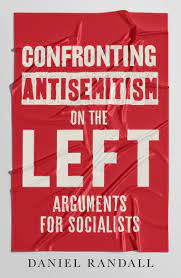
Review of "Confronting Antisemitism on the Left: Arguments for Socialists" by Daniel Randall

The first thing to say that is I really, really liked this book. I thought there wasn't much that I could learn about this subject, but I think Daniel Randall brings a sensitivity and a clarity to it that make the book really worth reading. I plan to give it to friends in the small town where I live, in the hope that they will understand something of what I would want to tell them if only we both had the time. You can open it any page and find a few sentences that deserve to go on a t-shirt. He's particularly good on the complexities and contradictions of British Jews' relationship to Israel and to Zionism...the extent to which their loyalties are far from unswerving, and are connected to a 'gag reflex' that comes from a genuinely felt sense of precariousness in and alienation from an increasingly nationalist Britain. 

He's sophisticated in the distinctions he makes between different kinds of antisemitism on the Left - the 'primitive antisemitism' of wealthy Jewish banker stereotypes and 9/11 conspiracy theorists...the sort of thing that has permeated the left from aspects of the neo-anarchist tradition best represented by the Occupy movement, vs the "anti-imperialism of fools" variant that is a descendant of Stalinist perspectives on international struggles, with nations and states and movements all sorted neatly in goodies and baddies, so that if someone is against the United States then they must ultimately be on the side of the angels. He points out how these two threads came together in the Corbyn moment in the Labour Party. I think he rather tends to play down the extent to which some of the accusations about antisemitism were made in bad faith, as part of a factional struggle by people who didn't care much about Jews but wanted to get at the Left. That goes for Corbyn's enemies within the Labour Party and for some elements of the 'leadership' within the Jewish community. 

Where I think the book disappoints is in its account of Zionism. Sure, Zionism functions as a "nationalism of the oppressed" for some diaspora Jews, and did even more so at times when Jews were a persecuted and endangered minority. And yes, Zionism is now bound up with the personal identity of many diaspora Jews who half-imagine themselves as a sort of expatriate Israeli, so that they think of  Israeli culture as their culture. But still, I don't think it's right to treat Zionism as just the Jewish flavour of Eastern European nationalism, so that we hold the left to account for not treating it in the way that we treat other nationalisms.

Zionism was always a weird kind of nationalism. Other nationalisms were engaged with the folk culture of the nation that they claimed to represent - the songs, the dances, the language. But Zionism, very unusually, was utterly uninterested in the language/s that its constituencies actually spoke, or the songs that they sang, or their literatures. Instead it favoured a language and a culture that it made up - modern Ivrit is a creole of liturgical Hebrew, and the Zionist folk songs that I grew up with have tunes that are lifted from other cultures - Russian and Rumanian, for example. There is no sentimentality about the beautiful mountains and forests of the homeland, because the territory on which the Zionists sought to create their nation was not one with which they had anything except a historical and religious connection. And quite unusually, there's quite a lot of contempt for the actual members of the constituency, who are believed to have weak, submissive, ghetto-dweller characteristics. Again, this is not absolutely unique among nationalisms; I'd say that some of the currents in Black nationalism among African-Americans are sometimes like that. 

In fact, as Randall notes elsewhere, Zionism has/had lots in common with Garveyism. The latter rightly attracted a lot of hostility from African-American socialists and communists, and it's possible to imagine another world in which hostility to Zionism as reactionary and utopian might have stayed like that, rather than shifting into the full "anti-imperialism of fools" that it did.

Perhaps in that world the Zionist settlements in Palestine might have ended up like the German Templar colonies (also in Palestine), a quirky blind alley of history with a few thousand (or perhaps tens of thousand) inhabitants, funny little communities in an independent, post-colonial multi-confessional Palestine. 

None of this really distracts from the value of the book, which is about antisemitism rather than about the politics of Israel and Palestine. I'm going to recommend it to all of my friends, especially my friends who are engaged in active or passive solidarity with the Palestinians, and see what they make of it.

Thursday, March 10, 2022

Review of "Queer; a graphic history" by Meg-John Barker and Jules Scheele

I didn't get much out of this. I was hoping to become a bit better informed than I am. I went through most of life not having to think about this area very much. I have some gay and lesbian friends, and, and I want to say that I am on their side, but other than that I've managed without having to take positions on questions of sex, and gender, and intersexuality and non-binary...it's not a luxury I can afford any longer. These questions are dividing my friends, and I think I can't be agnostic about them any more.

But this book wasn't much help. I think I must accept that I don't find graphics a great way to organise a book, and this felt very superficial...not much more than some name-checks of intellectuals who have contributed to thinking in this area, but even though I really haven't explored it very much, I don't know much more now I've read the book.

Review of 'The Phantom Tollbooth" by Norton Juster

I read this book as a child of about ten...pretty sure that I just came across it in the children's library. I loved it then, and I'm pleased to say that, having renewed my aquaintance 53 years later, I still enjoyed. It's full of wordplay, and a nice child-level introduction to magical realism, and some good moral messages about how to live. I also enjoyed the pictures by Jules Feiffer, who often did cartoons in the New Yorker...oddly they'd not made so much impression on me the first time round. Now I need a ten-year-old to give it to!

I read the Wikipedia article about Norton Juster, and was surprised to discover he'd remained a working architect all his life...and that there's an animated film of the book, which I will seek out. Juster died around a year ago, otherwise I would have tried to write to him.

Review of Parallel Mothers

Almodovar's films just keep getting better. This one is part personal drama, part political exploration about contemporary Spain. It's hard to talk about the personal bit without spoiling it...except to say that Penelope Cruz is one of the two mothers in the plot, and though she is still beautiful as ever, she presents a lot of emotional range as an actor in this too. So does Milena Smith (not seen her before) as the other, younger mother...and nice to see Rossy de Palma (she of the amazing nose) back in business.

The political part is about exhumations of anonymous mass graves from the Civil War - Cruz's character wants an excavation of a village unmarked grave where her great -grandfather is reputedly buried, and the male lead is the forensic anthropologist who carries this out. Along the way there's discussion of Spain's unexamined past and the fault lines that still run through its society.

Watched via VLC, Chromecast, and informal distribution.

Tuesday, March 08, 2022

Review of 'Pig'

That rare thing, a really good film with Nicholas Cage in the lead role. This is beautifully simple in narrative structure, but full of depth and emotion. It's about a truffle hunter whose pig is stolen, and his journey into his past life in the city (Portland, Oregon) to get it back. It feels like it's a Greek tragedy, including a remarkable, terrifying journey into a literal underworld beneath one of the city's squares in a hidden sub-basement of a demolished hotel. Lots of stuff about food and foodies, and an almost perfect example of the three-act structure. Slow but clever, and definitely worth watching.

Informal distribution, VLC and Chromecast.

Friday, March 04, 2022

Review of Winter on Fire

Watched this last night. I learned very little about Ukranian recent history...hard not to feel that I was being played to some extent. There's nothing about the divisions in Ukraine between East and West, or about the murky history of the Orange Revolution, or the background to it...just lots of footage of ghastly brutality by the riot police. 

Watched it thinking about how pitiful the XR matras about nonviolence seem...according to the Hallam/Chenoweh formula, this was a "non-violent" struggle (less than 1000 people died), but it really really wasn't, and it was only the protestors' use of physical force that kept them in place and allowed the uprising to succeed. And none of them begged to be arrested so as to clog up Ukraine's justice and prison system.

Watched on Netflix.

Wednesday, March 02, 2022

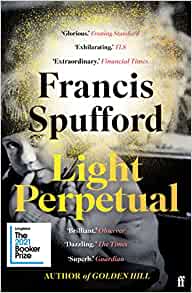
Review of 'Light Perpetual' by Francis Spufford

There's a bit of a fantasy-style conceit right at the beginning of this book - all the characters are children killed in a V2 rocket strike on south London, and the book tells the stories how their lives would have turned out if they'd lived. The first chapter dwells on the rocket strike, the physics and chemistry, and some Achilles-and-the-tortoise style paradoxes about time. After that it's a much more conventional set of interconnected stories, checking in with the same characters over the years from 1949 to 2009. Since they are all working class children, it's a sort of history-survey of what happened to working class people over this period. Some rise out of their class, some try to rise with it, some rise and then fall. One is typesetter in Fleet Street; another becomes a shyster property developer. Tragedies befall them, but in the sort of random way that they do in real life, not as a carefully contrived story arc.

It's beautifully written, and it's hard not to care about the characters, even the nastier ones. Lots about the music business, because one of the characters is an almost-successful singer in LA before she goes back to south London and becomes a music teacher.

Really enjoyable and profound at the same time, and I will read more by him.


Sunday, February 27, 2022

Review of "How to Blow Up a Pipeline" by Andreas Malm

Short essay with footnotes and links about the tactics and strategy of the climate movement, with the emphasis on a critique of the commitment to non-violence. Like everything that's clever it's better on diagnosis and analysis than it is on prescriptions. He's very good on all the things that has been wrong with XR, including the fetishisation of the rather dodgy analysis of Erica Chenoweh and Mariah Stephan (both of whom have links to the US intelligence establishment), the wrong lessons it has learned from the history of direct action movements, and so on. He's much less good on what is to be done, though he does talk interestingly about the distinction between violence against property and violence against persons, about coordinated vandalism against SUVs, and climate camps. 

It's not surprising, and this stuff is just hard. Getting off fossil fuels is more like dealing with an eating disorder than kicking a heroin habit. We can't live without energy, and fossil fuels are a fabulous convenient source of concentrated energy, which underwrite our social and technical system. There's no way out of them without changing all that, and there are very powerful forces standing against.

Not the end of a discussion, but a good start. Everyone interested in politics outside and against the system should read.

Friday, February 18, 2022

Review of "Patrick Leigh Fermor; An Adventure" by Artermis Cooper

I finished this book with a feeling profound disquiet and unhappiness. I had read PLF's two major travel books, "A Time of Gifts" and "Between the Woods and the Water", and I'd loved them, even though I could sense that he was a posh boy with a sense of entitlement who strode across Europe with a string of aristocratic connections and the hospitality that this provided for succour. The privations he endured were real, but must have been softened by the knowledge that he would always be a posh boy with posh friends to bail him out. 

And reading the biography, without the beauty of his writing or the charm of experiencing his personality directly, that becomes much much more apparent. So I'm not attracted to him as a character at all, even though Cooper clearly loves him and thinks he's wonderful. His politics are reactionary. He's not a racist, though he doesn't seem to have a really big problem with people that are. He is a charmer, and a chancer, and a serial shagger - not sure if it can be called serial adultery when he's not married to the woman that he sort of shares his life with. There are a lot of pretty young women.

There's a lot of scrounging too. For most of his life he lives off the generosity of posh friends - they give him houses to live in, in London, in Greece, in Paris. He gets commissions to write travel books and film scripts without any particular qualification, and he is published in little literary magazines by his editor friends. He does have obvious talent as a writer, but there are a lot of other people who have just as much or more talent who will never have this kind of leg-up. Or not need to support themselves.

I suppose it's a sign of Artemis Cooper's talent that I can read her book and come to different conclusions from her. But I also feel kind of dirty, and a bit stupid, that despite myself I was charmed in this way, and it retrospectively detracts from my enjoyment of his books.  

Wednesday, February 16, 2022

Review of Encanto

Nice and thoughtful Disney film, set in Colombia, with some interesting sibling rivalry themes (like Frozen) but also a character who is ADHD/Aspergers, and therefore absent and not talked about. There's some magic and light supernatural stuff, referred to in the film as a "miracle" - perhaps so as to not upset the American viewing public, which is increasingly hostile to anything that could possibly be construed as anti-Christian. 

Some of the moderate peril (collapsing buildings, jumps over ravines) felt quite tense to me, though a grandparent I spoke to said that they only place that their little ones had actually been scared was an in-song depiction of the three-headed dog that Hercules kills. 

Oh, and beautiful depictions of plant and animal life...personally I liked the donkeys best, though the rats ran them a close second. And better music than I can remember for a long time in a Disney film, I kept wanting to get up and dance.

A real pleasure to watch, and I was really pleased to hear that the Colombian side of my family had all watched it together and loved it too.

Watched in the middle floor at Springhill on a legitimate Disney Channel subscription!

Wednesday, February 09, 2022

Review of 'The Alchemical Marriage of Alastair Crompton' by Robert Sheckley

I haven't read Robert Sheckley since I was in my 20s, but I had fond memories of 'Mindswap'. I saw this in a charity shop, bought it and put it on the shelf - probably ten years ago. I just read it...and it got off to an amazing start, with lots of interesting psychological insights. I was particularly struck by this quote, which reminded me of my recent experience with Internal Family Systems therapy:

"How many identities do you have?" Crompton asked.

"Inumerable," Secuille said.

"I find all of this difficult to believe," Crompton said.

"That is only because you haven't consciously experienced for yourself the influences which your selves, past and present, have on the identity you happen to be at the moment. Crompton, every sentient creature lives simultaneously in various timebound sequences, and tries to better things for himself by influencing one or more of his selves. The voices that you hear in your head, telling you what to do and what not to do, these are the voices of your other selves at other times and places, casting their votes, trying to improve conditions for themselves."

There are lots of funny and clever bits later, and then suddenly it seems as if Sheckley got bored with it, because the end is pretty rubbish. It would have been better just to have stopped it twenty pages earlier. 

Review of 'Good Behaviour' by Molly Keane

Beautifully written book about awful gentry in the Anglo-Irish ascendancy, I think in the inter-war period. Put me in mind of the Mitfords, but also the awful aristocracy depicted in the recent BBC series about the Duke and Duchess of Argyll...partly because the people in this book, like the Argylls, are utterly disinclined to pay any bills that they owe. Nice to be reminded that being landed, and perhaps even rich, does not make you happy - it's possible to perfectly miserable despite a privileged background. 

Review of 'Never, Rarely, Sometimes, Always'

Grim, gritty film about a young woman from small-town Pennsylvania who is pregnant, can't tell her parents or get an abortion in the small town, and goes to New York with her young cousin to get that abortion. Starkly filmed, lots of hand-held cameras and unpleasant surfaces, with no detail about the process of getting or experiencing an abortion left out. Not fun to watch, but good, should be widely seen, especially by young men.