Tuesday, August 24, 2021
Review of "Caliban and The Witch" by Sylvia Federici
Monday, August 23, 2021
Review of "We''ll take Manhattan"
Weirdly this film triggered a very powerful dream about corporate life, in which - like the David Bailey character in the film - I stood up to corporate bullies and told them that the report that I had written was theirs, and they could do what they wanted with it, but if they removed or watered down my key conclusion they would have to take my name of it...braver than I was in real corporate life, of course. Even more weirdly, my bravery was undermined by a typical piece of dream anxiety, in that I was about to storm out when I realised I couldn't find my overcoat or remember where I'd put it. Everyone had these fabulous blue wool overcoats, and I had one too, only I couldn't remember which cloakroom I'd put it in. I still had the tag, but it didn't provide any clues. Huh...
Watched on Amazon Prime.
Review of Ammonite
Watched on Amazon Prime...the first film we paid for there for a long time.
Review of "Project Hail Mary" by Andy Weir
Basic plot is that an alien virus is eating the sun, and our hero is on the one last desperate effort to find a cure. And he's alone, because the other astronauts died before he awoke from his induced space-travel coma.
No spoilers here, but I felt the end made it worth ploughing through some of the earlier material, and the sentiments and even the politics are mainly good. Not top of my recommend list, but enjoyable all the same.
Monday, August 09, 2021
Review of 'Downsizing'
Soon, though, it changes tone. The wife doesn't go through with the process, leaving Paul alone in his new mansion. They divorce, and he ends up obviously lonely in a much smaller apartment. There's a lot about the emptiness of material satisfaction and consumerism, and then suddenly there's class. Not all of the small people are rich...there are poor small people who live outside the gated community, travel in on gritty buses, and do all the rotten jobs. They live in concrete sheds roughly fitted out for smalls...and there was something about the depiction that reminded me of the Torre David in Venezuela. And then - through a sort of friendship with a Vietnamese woman dissident who was shrunk against her will as punishment, and with the Balkan wheeler-dealers who live in the apartment above, Paul rediscovers people and community.
I won't do turn by turn descriptions of the plot, some of which is a bit contrived, but I thought it was an interesting film with a good message and drive-by touches on a lot more...there's climate change, class, and a postive drug experience. In fact, I've noticed that most depictions of party drugs in contemporary American films seem to be positive (unlike depictions of cocaine, heroin or alcohol)...is this because the film makers known that showing them otherwise would just not be plausible to their target audience, who have grown up with this stuff and know it's mainly OK?
Tuesday, August 03, 2021
Review of "Why the Germans Do it Better; Notes from a Grown-Up Country"
And as Jews my parents dutifully hated everything German. They particpated unevenly in the long-running and least successful economic boycott in history, the Jewish boycott of post-war Germany. They avoided buying anything German, except when they didn't. My dad bought a German Heinkel bubble car, and as kids we absolutely loved it...no seat belts, a sun roof that we looked out of (by standing on the bench seat) as he drove along.
My dad was a consistent anti-racist, except that this didn't apply to Germans, who it was OK to hate, especially older ones. Of course this didn't apply to the nice German lesbian who joined his Jewish Judo club, because even in the early 1960s she was aware and ashamed of what her parents had done. And despite his Germanophobia my dad wanted me to learn German at school because it was useful, and I disappointed him by choosing Latin because the teacher was cooler (wrong choice).
And then, in Israel, I met young German volunteers, and they were great. By then I'd grown out of being anti-German, but I sort of knew about the extent to which West Germany was still run by hastily polished-up ex-Nazis. Of course my new German friends knew this too. And they were really nice to be with, straightforward and decent in a way that English people wanted to be, but often weren't.
And then later I worked for German clients, and alongside German professionals, and they were always great too; honest, straightforward, well-organised. Meetings with Germans started on time, finished on time, and had proper notes and minutes. People stuck to the agenda and didn't have side conversations. When German clients asked for something that I explained couldn't be done in the way that they wanted it, they entered into a discussion about what could be done instead - they didn't treat it as the first stage in a negotiation about price.
So when John Kampfner subtitles his book 'notes from a grown-up country' I get it. Not all Germans are great or grown-up, but it seems to be the default.
That said, the book was a bit of a disappointment. There's lots in it about contemporary Germany, but I felt it was more about how much better the Germans are than about why they are. There are little bits about the legacy of history, and the education system, and so on, but it never seems to add up to a sustained hypothesis. Not enough about a culture of trust, and solidarity, and an attitude to authority and rules that is pretty much the opposite of that in the UK...where we are at once supine in the face of posh-boy class superiority and distrustful of authority, particularly that of experts.
Friday, July 30, 2021
Review of "The Awakening of Motti Wolkenbruch"
He rejects his community and his heritage, brings his "shiksa" (there's no engagement with just how horrible that word is) home to meet his parents, and then is thrown out by his mother. Oh and there's a dying orthodox older woman with clairvoyant tarot-reading powers...reallly, it's just rubbish. Time wasted, slightly mitigated by some nice shots of Zurich.
Wednesday, July 28, 2021
Review of 'Dancing in the Streets: AHistory of Collective Joy' by Barbara Ehrenreich
Friday, July 23, 2021
Review of "Zami: A New Spelling of My Name" by Audre Lorde
She's brilliant at depicting the latter, and in bringing the city to life as it was at a very special moment of its history, when it was still possible to live as a bohemian (bourgeois or other) in Manhattan. I wish I'd read it with a map, and it would be great to have a 'virtual walking tour' of the New York she is writing about.
I note in passing that she obviously moved in Communist Party circles, was involved in the campaign to save the Rosenbergs from execution, relishes the very end of the 1940s as a time of hope, and is excited and enthusiastic about the creation of the State of Israel as a sign of that hope.
There's a lot of material about growing up the children of immigrants that I recognise...she wasn't just Black in New York, she was West Indian, which I think makes for a very different sort of Black experience. It would be good to know more about that.
Friday, July 16, 2021
Review of "Promising Young Woman"
Informal distribution, VLC on laptop and Chromecast - working again at the moment. Sometimes there's now sound but not on this one.
Sunday, July 11, 2021
Review of Fatherhood
Watched on Netflix.
Review of 'The Overstory' by Richard Powers
Thursday, July 08, 2021
Review of 'Promised Land' (2002)
It's creepy, and violent, and a bit cliched ("You don't understand our ways, you don't belong here any more"), but not without interest. Apparently it's based on an award winning novel. A curiosity is that it features Yvonne van den Bergh, an Afrikaner actor who went on to become a big thing in South African TV before outing herself as a dominatrix and then going all out into porn. It's supposed to be the other way round, isn't it?
Whole film was available on YouTube.
Review of "The Forty Year Old Version"
Enjoyable to watch, nice acting, well observed. A rare good film from Netflix.
Wednesday, June 30, 2021
Review of "The Great Indian Kitchen"
It's about a young Indian woman who marries into a middle-class family in Kerala, and the way that they are everyone else she knows expect to her accept a life of absolute servile drudgery. Interesting on several levels - in some ways her life was not so different from my own mum's. My dad thought of himself as modern and progressive, but helping around the house (let alone doing a share of the housework) was not his thing, and was not something that my mum ever seemed to expect. My mum expected no more of me or my brother, and always seemed at least bemused by the fact that we did housework in our own homes. Still, the men in this film do take it to another level; among her duties is putting toothpaste on her father-in-law's toothbrush.
Worth noting is that this is a Hindu family - Muslims and even Orthodox Jews are often singled out as the epitome of patriarchal religion, but as the film makes clear Hinduism at least as depicted here has just as many taboos about contact with menstruating women, who are regarded as unclean and to be shunned. And these are middle-class, educated people in progressive Kerala - at one point towards the end of the film the woman walks past a mural of Che Guevara.
Made me realise the extent to which my favourite Indian foods (and most of my favourite foods are Indian) are labour-intensive, and not possible without either the unpaid labour of women or the underpaid labour of restaurant workers.
Watched on Amazon Prime.
Monday, June 28, 2021
Review of "Modern Persuasion"
Monday, June 21, 2021
Review of 'Almost Famous'
There's surprisingly little tension in the film - the hero is never really in trouble or in danger. The band's manager is supplanted by a cool dude appointed by the record company, but the old manager who has been with them since the beginning still stays on. And so on. Frances McDormand is nice as the boy's mother.
Watched on Amazon Prime.
Tuesday, June 08, 2021
Review of 'The Moneyless Man' by Mark Boyle
This one is the same. It's mainly annoying too. Sometimes it's smug - he rarely writes about his struggles and his failures, or even about the process whereby he learns to do stuff. I think that's because he's trying to be inspirational, and feels that writing about the process might be too disheartening - but it comes across as smug. Sometimes he writes dismissively about the people who criticize him, but often without much insight or understanding.
He's annoyingly inconsistent about what the point of the exercise is. Is it OK that he bought stuff in advance so that he could live without money once his challenge had started? Sometimes he implies not, but he's definitely done that...the solar panel, for example. Is it OK to receive gifts that others have paid for? Same inconsistency. Is he living off the slack and waste of industrial civilisation (like scavenging food from dumpsters behind supermarkets) or is he turning his back on industrial civilisation, and only eating what he grows or forages? Sometimes it's one and sometimes it's the other.
So while there are important points to be made about personal relationships with money, and also about consumption and happiness, and the psychological aspects of self-reliance...I don't think he more than scratches the surface. I don't think that what he performs here is scalable - we couldn't all live like that, even if there are a few things that it might be worth paying attention to. If I were a single parent trying to feed and clothe kids in a way that would help my family keep its head above water I'd want to throw this book across the room, and then maybe rip it up and burn it. There would be very little in it that would help me at all.
Monday, May 31, 2021
Review of The Sound of Metal
Really good in the way that the film manages to represent his experience of deafness.
Watched on Amazon Prime - best film there for a long time.
Friday, May 28, 2021
Review of "The Way Home: Tales from Life Without Technology" by Mark Boyle
And there's something just a tiny bit fascist in the way that he seems to celebrate traditional life - I don't buy that people in C19th rural life had happier, healthier lives at all. Yeah, there were some aspects of that life that might have been worth preserving, but maybe they couldn't even exist without the life as a whole, and that was miserable, painful, priest-ridden, abusive, poor...
Sometimes when he's talking about the practicalities it's fascinating - I love the detail. And sometimes I can't but admire either his agonising over choices, or the choices that he ends up making. But I'm not sure that he and I would end up on the same side of the barricades, were there ever to be barricades.
Thursday, May 27, 2021
Review of 'Nae Pasaran'
Watched on BBC iPlayer.
Friday, May 21, 2021
Review of "The Disconnect: a personal journey through the internet' by Roisin Kiberd
It starts out as relatively conventional - if acutely observed - journalism about the world of tech companies, by which she mainly means companies involved in the latter incarnations of the web. IBM and Microsoft get mentions every so often, but you won't hear much about say Cisco or Nokia or the telcos who build and operate the infrastructure on which the whole edifice of the internet rests. Lots about Facebook and Twitter and Google, and their surveillance/data-mining business models; she mainly reiterates the same stuff as Shoshana Zuboff (who's in the bibliography), and she doesn't engage with the rather more sceptical perspective of Cory Doctorow. Thankfully she writes much much better than Zuboff.
Then she moves on to energy drinks - which I've never used or even thought much about - and it's like a curtain has been drawn back and there's a bit of the world that I'd not known was there. And gradually she takes in the key aspects of human life - food, shelter, sleep, sex...and discusses how the internet has "disrupted" them. And she does it very well, shifting between personal experience and references to research. Some of it is very heartfelt, and some of that is hard to read; she really does lay her life bare.
I am not entirely convinced that it's the internet that has messed her up (which I think is what she might want us to conclude), but it's certainly determined the form her messed-up-ness has taken, and there's such a lot to learn from this strange and wonderful, and sad and painful, book.
Thursday, May 20, 2021
Review of 'Sword of Trust'
This is obviously nuts, but the pawnshop owner soons sees that there are lots of people who believe in this, and in a conspiracy to hide the truth about the Civil War; it helps that his shop assistant is a conspiracytheorist and flat earther, so he can easily key into this stuff. Soon believers are turning up and offering serious money for the sword, which is referred to as a 'prover' item.
This looks like it's going to be a film about a con - the storyline is a bit like the violin scam, which I think forms the basis of a short story that I can't find at the moment. But it isn't exactly - we've seen the two women receiving the sword, and if it's a con they're not in on it. There are some good scenes, and lots of odd ones that seem to full of menace but nothing happens.
Worth watching, but in a very odd way.
Watched on All4 via smartphone and Chromecast.
Monday, May 17, 2021
Review of 'Long Shot'
A really silly comedy that turned out to be quite enjoyable. Seth Rogan (and that's generally a bad sign) is an investigative journalist whose independent newspaper is taken over by a nasty media tycoon so he quits, and then gets given a job by the US Secretary of State who's just about to run for president and needs a speechwriter - and he'd fancied her years ago when she was the cool older girl next door. And she gives him the job, and then they start a romantic relationship, all of which is completely implausible but sort of works within the film. Some good drug jokes, some dodgy politics, but all better fun than it ought to have been.
Watched on BBC iPlayer via smartphone and chromecast.
Monday, May 10, 2021
Review of 'The Ministry for the Future'
Among the things I liked were the positive vision of India as an agent of change, the relaxed attitude to geoengineering, the nuanced view of China and its Communist Party, and the rich depiction of Switzerland, where KSR lived in his younger days when his wife worked there as an academic. An extra bonus is that quite a few of the initiatives and organisations that he describes are actually real - like the 2000 Watt Society, which I hadn't previously heard of.
So I'll be reading more of Kim Stanley Robinson, even though his prose is not the best and his characters are sometimes a bit wooden. His politics and his reportage more than make up.
Sunday, May 09, 2021
Review of 'Promised Land'
But a good film with insights into corporate morality, and into the morality of the people involved in corporations, who are sometimes able to convince themselves that "it's just a job", and sometimes - as in the case of Matt Damon's conflicted character - actually think they are doing something good. That makes them more useful to the corporation because they're more convincing.
This is much better than the whiny reviews suggest, and worth watching, even if Frances McDormand is not at her best here.
Watched via informal distribution, Chromecast and VLC renderer.
Saturday, May 08, 2021
Review of 'The Rider'
It's Chloe Zhan, and the young man is a non-actor playing a character with a story like his own, with supporting roles mainly played by non-actors too. Painful and beautiful at the same time. I loved the depiction of his relationships with the friend, the sister, and especially the dad.
Watched via VLC renderer and informal distribution.
Review of 'Headhunter'
Tuesday, April 20, 2021
Review of 'Collectively Yours" by David Merron
He doesn't engage all that much with the politics of Zionism, but he's a decent sort, and aware mostly that Palestinians got a raw deal...though he rather subscribes to the idea that the refugees fled under instructions from the Arab armies, with no blame at all attaching to the Israelis. When there would be peace 'some of them' could return, he writes.
On the other hand he's good on the miserable factional disputes within the left Zionist parties, and the odd sentimental attachment that so many seemed to have retained towards the USSR.
For me, living now in cohousing, the bitter little disputes about the minutiae of daily life seem more relevant that the distant struggels over whether to celebrate the October Revolution, and he's really good on those.
Monday, April 19, 2021
Review of 'Into the Beat'
One could point out that the film does depict a privileged white person coming to an aspect of urban black culture, and then doing it better than the people that it belongs to because she's had the benefit of a lifetime of dance education. That's not the sort of film it's meant to be, though.
I wondered where it was shot, and it seems that some of it was Berlin (uber-cool) and some of it was Hamburg (gritty port). And some of it was Salzburg, which I've visited and is full of horrid kitsch Mozart shops.
Watched on Netflix via smartphone and Chromecast.
Review of Children of the Snow Land
Sad, painful, beautiful film about Nepalese children from remote villages who are sent to school in the capital, where they are educated for free by a charitable foundation, but the consequence is that they leave their parents and may never see them again. Many of them are sent away from home when they're very young and barely remember the village or the parents. Some don't understand why they've been sent away - were they not wanted or not loved?
The film depicts the children making a one-off journey back to their home villages, and even though it can't be as unstaged and unscripted as it wants to appear, it's clear that this is a shocking experience for them, as they come to terms with the difficulty of the journey...that's why they don't go back for the holidays, or ever, and why no-one ever comes from the village to visit them. And they realise too the difference between the culture and the context of the village and the city; it's stunningly beautiful back in the mountains, but life is fragile and precarious and very poor. While the film is being made and the children are on their journeys there is an earthquake in Katmandu, which is very destructive and serves to underline how precarious their existence is.
Watched via a special online subscribed showing through Stroud Film Festival - alas we were too late to also subscribe to the Q+A, for which numbers were limited. At the time that didn't seem too terrible, but afterwards we were sorry not to see the children themselves taking part.
Tuesday, April 13, 2021
Review of 'Waiting for the Barbarians'
Monday, April 12, 2021
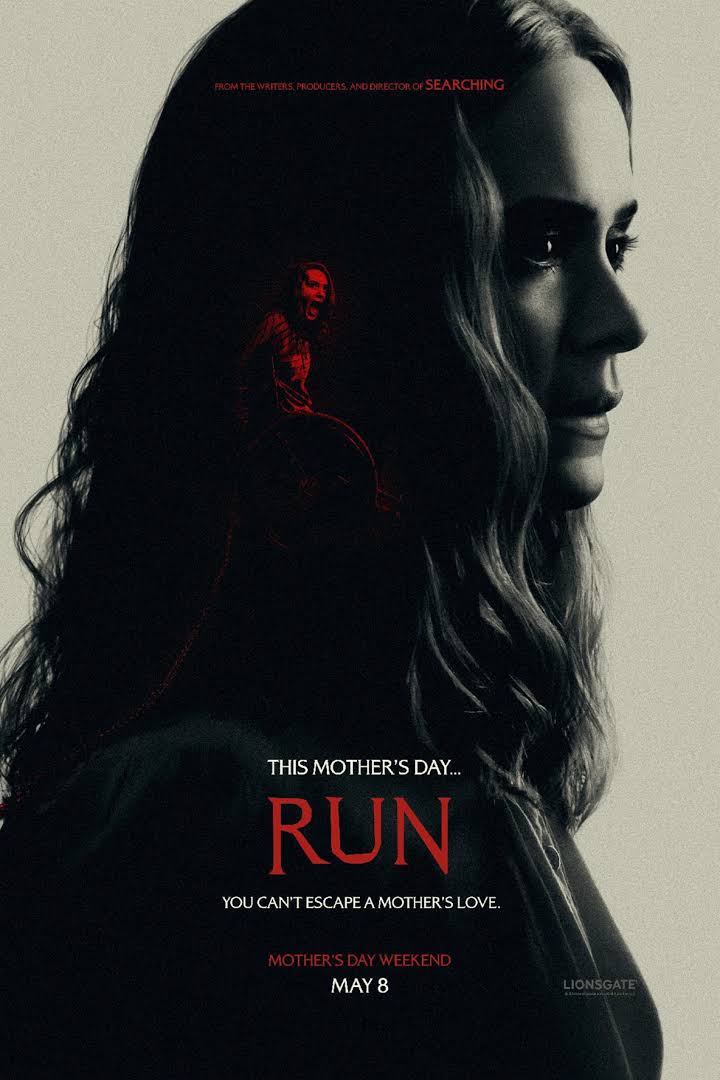
Review of Run
Watched on Netflix
Review of Concrete Cowboy
This is a film about how poor downtrodden people can recover their self-esteem through their relationship with horses - in this case it's Black Americans in North Philadelphia, and along the way we learn about how lots of the original cowboys were Black but that's been erased from history and Hollywood. The poor people and their horses are just about clinging on in the face of encroaching property development, and the authorities (including a Black cop) are trying to move them out. The young man gets back in with a bad crowd of drug dealers, but he's increasingly drawn to the horse world too, especially as there's a young woman who is beautiful and likes him and is a fantastic trick rider.
I expected that this would be a redemption/feelgood sort of film in which a young man recovers his relationship with his dad, hard work, the community and so on...and it is, but it's really not trite, though the poster and the description make it sound like it is.
The acting is good, the filming and plot are pretty good too. I was moved to think about the status of horse ownership; in America it's convincing for it to be a redemption and recovery of status for poor people. In Britain, and perhaps in most of the rest of the world, horse ownership has always been a high-caste thing, with only a few very specific groups of people who are low-status having a relationship with horses - Romanis and Travellers. The film did remind me of the tough Irish kids in some estates in Dublin who were keeping horses on their balconies.
Watched on Netflix.
Monday, April 05, 2021
Review of "House of Orphans" by Helen Dunmore
Sunday, April 04, 2021
Review of 'Military Wives'
Hard not to like the two lead characters because they are played by Kirsten Scott Thomas and Sharon Horgan, both of whom are great, even in this. But the plot is thin, and the sympathy to the army just wore me out...the military doesn't do anything wrong in the film at all, not even a bit of unsympathetic obstructive bureaucracy. There's a moment with a 'Stop the War' stall in the town where the woman go to do their first public performance, but if anyone ever considered using this as an opportunity to reflect on war, or this war, they just let it go.
Watched on Amazon Prime.
Monday, March 29, 2021
Review of 'The Electronic Elephant' by Dan Jacobson
Very mixed feelings about this book. Dan Jacobson is a very good writer, and bits of this book made me stop and put it down to reflect on the language and how beautifully it's used. I learned lots, not least about Cecil Rhodes - I'd vaguely known about him from History A Level (especially the Jameson Raid) but I hadn't been aware how big - and how nasty - a figure he had been.
But there were things I wasn't so keen on. I think it's partly the travel writing genre. It seems to me that everyone who engages in this ends up rather sneering at the people they meet, either for their ordinariness, or their quirkiness, or for any other reason. No travel writer ever seems to be impressed by the wisdom, patience or fortitude by the people they encounter on the way - perhaps it's the fact that they aren't traveling, as the writer is, that makes them seem so unimpressive. And there's a lot of that here. Jacobson doesn't think much of the Whites of Southern Africa and their self-delusions, but he doesn't seem to like the Africans (or Indians either) that he meets. He doesn't seem to have any fellow-feeling or common humanity with the impoverished ones, and he doesn't think much of those who have clawed themselves into positions of minor power or success.
He's great on the buildings, and the landscapes, though everything is suffused with a sense that it's in a state of decline...perhaps a natural consequence of returning to somewhere that you knew in your youth. There's no feeling that anything is getting better, even though he's writing at the very moment that Apartheid is coming to an end. Curiously my only visit to South Africa was at almost the same time, and I met lots of people, Blacks and Whites, who were full of hope for what they thought was to come.
Tuesday, March 23, 2021
Review of 'The Boy Who Harnessed The Wind'
In the end he makes a windmill, from tree trunks and bicycle parts, that drives a salvaged electric pump to bring water to the villagers' parched fields. I was struck firstly by how visionary this was - because he'd never seen a windmill. While wind-driven pumps are common in dry landscapes in the US and in Australia, there were none where he was - there were no windmills at all.
He might have been better building a mechanically driven water pump rather than one that generated electricity to charge batteries that would then power an electric pump, but part of his genius was that he not only understood how a dynamo worked but could work with the mechanical elements that he had - it might have turned out that the dynamo worked but the windmill flew apart or blew down. I'm humble in the face of such practical skill, which is completely foreign to me; I can't look at things and imagine them into a working system at all.
The film has a happy ending - the villagers survive the drought, and the boy gets a scholarship so that he can go first to school, and then to university in the US, and then on to give TED talks. I'm not any sort of expert on sustainable farming or hydrology, but I couldn't help wonder whether what he had invented was a system for accessing fossil water reserves, and that this was not really a sustainable solution to the farmers' cruel dilemma.
A great and compelling film, watched on BBC iPlayer.
Sunday, March 21, 2021
Review of "Three Billboards Outside Ebbing, Missouri"
On reflection it reminded me a bit of The Unforgiven, which I watched before I started writing reviews - but which was a pure tragedy, in that the characters are not all bad, but the playing out of the consequences of their actions make really bad things happen, irrespective of intentions.
The plot is simple enough - Mildred's daughter was raped and murdered seven years ago, and she's so angry with the police department's failure to catch the perpetrators that she pays to put up billboard proclaiming this failure. From this everything else follows...though strictly speaking some of what follows is the playing out of tensions that were already present rather than the direct consequences of the billboards.
The acting is great, the cinematography and the music very evocative, and it makes America look grim and awful...racist, violent, and poor.
Another one from informal distribution, via Chromecast and VLC
Friday, March 19, 2021
Review of 'Nomadland'
Nothing too bad happens to her during the film...the people depicted are underclass people, but there are none of the usual underclass tropes - they aren't depicted as trash, substance abusers, drunks, or anything like that. Instead there is profound sympathy and a depiction of their solidarity and support, even to people that they don't know and might never see again. They share food, and drink and cigarettes (and those latter are not presented as moral or health disasters). The images depict a life that is sometimes hard but also sometimes idyllic. It reminded me a bit of Cory Doctorow's book 'Walkaway', and there's a portrait of van-life guru Bob Wells that suggests he has a profound understanding of how van life fits into the current moment in American capitalism. Interesting too that it's this week that the UK government has announced its plans to criminalize this lifestyle.
And a technology point. This film is not available in the UK until 30th April, when it will be streamed on the Disney platform, and nowhere else. Not a Disney subcriber, not likely to become one. Fortunately it was available on 'informal distribution' already, and in very good quality. I'm also pleased that it's possible again to stream it from the laptop in another room to the TV via Chromecast using VLC. This stopped working for a while, and then I used something called Videostream, but then that stopped working too. For a while nothing worked. Now VLC have sorted it out, and I'm very pleased.
Thursday, March 18, 2021
Review of 'After the Party' by Cressida Connolly
And they fall among Fascists. The BUF, and then the British Union when it renames itself, is a congenial home to people like them, with a certain kind of energy and mildly nationalist and pro-Imperialist views. They might have been Tories, but it doesn't feel like a big jump for them to be Fascists instead. They're not rabid Jew-haters, though they are aware that there are such people in their movement, and that doesn't bother them much. When their daughter goes on a jape in a nearby south coast town and paints the Union Movement symbol, and the letters 'PJ' - for 'Perish Judah', a Fascist slogan - on a theatre wall, it's the social stigma attached to vandalism and damage to property that upsets them, not the slogan.
It's also a book about manners and mores, and social codes among that class and its social-class neighbours. There's a certain amount of marital infidelity, some drug-taking, and lots of awareness of class markers - social snobbery, even within the Fascist movement, is a bigger thing than racism.
I was a little worried before I read it to learn from the inside cover that Cressida Connolly has 'written for Vogue, the Telegraph, the Spectator..." but her observations and her instincts are faultless.
Wednesday, March 17, 2021
Review of 'Margot'
Surprisingly interesting and enjoyable biopic about Margot Fonteyn, someone I'd never really thought about much at all. I didn't know about her marriage to the Panamian politico scumbag whose family seem to have supplied several presidents to the country, despite there being not much evidence that they believed in or cared about any kind of politics at all.
Review of 'Agency' by William Gibson
I can't say for sure if all the stuff about branching stubs - alternative versions of the past, seen from the perspective of the future - actually makes sense or not. I suspect Gibson has it all very clear in his mind or on his storyboard, but it wasn't so to me.
Thursday, March 11, 2021
Review of 'Rocks'
Good but mainly grim film about a young Black schoolgirl of Nigerian origin, growing up on what seems to be a South London council estate, whose mother has some sort of mental health issue and disappears (not for the first time) leaving her to care for her much-younger little brother.
The poster and the description make it look as if it's a feel-good upbeat movie about friendship between girls, and there are moments like that. But it's also bleak and depressing much of the time. Rocks's life is quite grim, and she doesn't cope very well at all once her mother goes away - there are no other adults she can turn to for help, the kindly neighbour calls social services and Rocks takes her brother away to hide, fearing (rightly) that if they are taken into 'care' they'll be split up. She makes lots of bad calls, including stealing cash from the backpack of her friend who has tired (intermittently, admittedly) to help her.
I note in passing that the estate looks a lot like the one featured in Chewing Gum, and that Shola Aduwesi (who played Tracey's mum) appears in the photographs as Rocks's grandmother, who has moved back to Nigeria for her health.
Watched on Netflix.
Review of "Datsche"
This a German comedy, and I am beginning to suspect (a) that this is a real thing and (b) that I am never going to understand anything in that genre. Bits of fall into the 'screwball' category - the young people who are the characters are mainly pretty stupid and do stupid things that don't serve their own interests very well. There's a refugee character who provides the serious dimension and sometimes punctures the silliness, but he and they are all lovable. Even the neo-Nazi next door is more a figure of fun than a serious threat (described in the film's blurb as a 'nosy neighbour' rather than a right-wing psychopath who tries to burn the other characters and himself to death). There's partying, silly games, overcrowding in a tiny allotment summerhouse, and that sort of thing. One of the characters is a Bavarian, and I think there are some dialect and regionalist jokes that are completely inaccessible - one of the Prussian characters keeps substituting another word for his name, for example.
In the end I quite liked it, but Ruth had given up watching by then.
Watched on Amazon Prime via Chromecast and smartphone.
Monday, March 08, 2021
Review of 'Judas and The Black Messiah'
Rather good film about Fred Hampton, Chairman of the Illiniois (Chicago) Black Panthers, murdered at 21 with the help of a police infiltrator. The story is mainly that of the infiltrator, how he was recruited (he was a petty criminal and blackmailed by the FBI) and rose through the ranks of the Panthers to become Hampton's bodyguard and 'captain of security'.
Avoiding spoilers, it's a good depiction of the period and the struggle, and in particular is very good on how the Panthers were not Black nationalists or separatists but socialists (even if some of the Maoism is occasionaly a bit cringe-y). The FBI were most worried about them because they were making common cause with Latino groups like the Young Lords and even white racist immigrants from the south like the Young Patriots. The film is really good about this, not hiding from the fact that these people identified as racists and 'confederates', but showing the way that the Panthers actually saw struggle in terms of class not race.
Watched via laptop, informal distribution and VLC-renderer...which hasn't been working for a while but now it is!
Saturday, March 06, 2021
Review of "Under the Riccione Sun"
Watched on Netflix.
Thursday, March 04, 2021
Review of "Loco Por Ella"
But while on a bet to pick up a woman in a bar, Adrian is picked up by a different woman, and has the night of his life and then falls in love, only she doesn't want to have any kind of long term relationship. He seeks her out, finds she's an inmate in a mental institution, and then gets himself admitted so he can pursue her.
There's lots of interesting stuff going on, not least in the serious and sensible discussion of what mental illness is like and how the sufferers deserve to be treated. The psychologist who runs the place is an interesting and imperfect character but the film treats her as an intelligent and sensible professional with good expertise and insight - and treats expertise as superior to the 'knowledge' of family and friends...exactly the opposite of what a British or American film would do.
Plenty of humour and romance but also a serious and thoughtful film. And an opportunity to practice Spanish -- the people speaking on this film were much easier to understand than on some Spanish films I've tried recently.
Fun fact: as I thought, it's shot in Barcelona and Argentona, but it's entirely Spanish - no sign at all that it's Catalunya. Is that making a political point?
Watched on Netflix.
Tuesday, March 02, 2021
Review of 'Kinamand'
The title means 'Chinaman', because that's what one of the other white customers of the Chinese restaurant - another isolated and bitter older man - calls him when he discovers that the plumber eats there every night. I don't know if it has the same racist connotations in Danish as it does in English...from the character I'd say it does, but I'm not sure.
I'd say it's not quite sure what gender it belongs in, but it was quite engaging and moving.
Watched on Netflix.
Review of "Such a Small World!: My Years in Shanghai" by Georgia Noy
There's lots to enjoy here. It's partly a historical document, because she tells what it was like to be away from home, and in a very specific place, in the years just before the internet and the web made the experience of being anywhere in particular much less specific. Now she'd be able to order stuff online, consume media from her country of origin, keep in touch with friends and family back home with Zoom and Skype and social media...in some ways there's a big divide that runs through the life of our generation (well, I'm a bit older than her) - the time before all that, and now. If you moved away before, you wrote letters - maybe you typed them, perhaps even on a computer, but you still posted them afterwards.
Some of the narrative is about what it's like to be an expat, living as part of a relatively small and enclosed community that is separate from the life of the host country. She writes about the lack of curiousity of the Americans in her compound, and I can testify to the same thing in the group of Americans that I worked with in the early 1990s in Hong Kong...I learned more about the place in three weeks than they had wanted to do in three months.
But she's not just an expat, she's an expat Israeli, and she's exploring what she has in common with - and in what ways she in different from - other Jewish expats in the community. There are lots of things that she never had to think about before...do the kids take Yom Kippur off from school, even though she's not religious? Which seder to attend, the Jewish community one or the Israeli consulate one.
This is a really enjoyable read, with some bonus chapters about the quest to find tombstones from the now-destroyed Jewish cemetry in Shanghai, and her husband's reflections on how it was to set up a subsidiary of a foreign company, and work with local staff and clients, in early C21st China.