Watched on actual Netflix.
Watched on actual Netflix.
 A friend really like Kate Atkinson, though I earlier gave up on her detective novels. But I persevered with this, and in the end it was worth it. It's a coming of age story set in and around the city of York, across the 19th and 20th centuries, with various plot devices to draw together characters across settings and generations.
At first I didn't like the tone, which felt a bit sneery, but either it softened or I got used to it, and I engaged with the characters and the convoluted plots.

The book describes how hard this life is, and sometimes how beautiful too - but it's mainly hard, with existence on the margin of starvation, and the fear of death from illness, accident or predators. The principle character is a girl, Agnes, who grows up within the narrative but barely remembers life back in The City, and her mother, who moved to the Wilderness without wanting to, because her daughter was so sick from the bad air in The City. There's a lot of mother-daughter stuff, and some contrived plot elements to create tension. There's really good description of small-p politics within a small group, including a transition from consensus to authoritarian decision-making.
It rather reminded me of an idea that I think originated with James Lovelock...that it would be necessary to preserve one third of the Earth as wilderness without people, and that the rest should be...as described in the book, given over to either cities or industrialised agriculture. This describes what it would feel like to live in such a world, particularly under conditions of environmental crisis (though climate change barely gets a mention, it's in the background all the time), economic scarcity and political failure. It also made me think about how it is for people who live in areas designated as 'wilderness reserves' by conservation agencies; in this book the people are managed rather like one more species of animal in the reserve.
Well worth a read.

Watched on Amazon Prime (not my subscription).

But Salam keeps getting hauled in at the checkpoint between Ramallah where he works and Jerusalem where he lives, and the Israeli officer in charge wants to know about the show, because his wife watches it. In fact everyone watches it - Israelis, the staff and patients at the hospital where Salam's would-be girlfriend works...Salam lies that he is the writer, and then the officer (who is a bit of a thuggish buffoon, but also a bit comic rather than really nasty) wants to change the script. Then somehow Salam becomes the writer, and...
Well, you get the idea. It's a comedy about soaps, and TV production, but also about the occupation, and the unequal relations between Israelis and Palestinians. And it's both quite funny and quite poignant, and worth watching.
One from Netflix.

And the first few pages seemed really annoying, because I felt like I would have to engage with the details of the made-up religion...who all the Gods and Goddesses were, and so on. But I read on, and I realised that wasn't really the point. It's about the social and organisational dimensions of the religion, and the theology barely matters at all.
And it's great - one of the best science fiction books I've read for a while. It depicts a future America - actually a future New York State, with much of the action taking place in Poughkeepsie and the rest in NYC - in which there has been a revolution, but a theocratic one, that has overthrown the Old World. Now the religion is in the process of being institutionalised, but doesn't fit very well into the structures being created - it's a polytheistic, decentralised sort of belief system, with magic, and multiple kinds of spiritual beings, and without a very strong good and evil thing going on.
It's also more than a little mad, at least by our thinking; the stories of Christianity or Judaism seem models of rationality by comparison. It's a bit like the ancient Egyptian myths, with gods eating each other and going into the Land of The Dead, but even that sounds more rational than the mythological world depicted here.
It reminded me a bit of The Handmaiden's Tale, in that there are odd juxtapositions of theocracy and 'normal' American life - alongside the institutions of spiritual policing there are still multinational corporations, bars and restaurants and supermarkets, and processed food. But reading about Rachel Pollack, I see that she is described as an "expert on divinatory tarot [and]...a great influence on the women's spirituality movement". And then I can't help wondering whether this is not, after all, a dystopian satire, but actually something else. And I feel weird for liking it so much, but I still think it's a great book.

Informal distribution, this one.
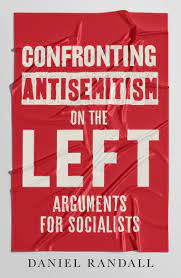
He's sophisticated in the distinctions he makes between different kinds of antisemitism on the Left - the 'primitive antisemitism' of wealthy Jewish banker stereotypes and 9/11 conspiracy theorists...the sort of thing that has permeated the left from aspects of the neo-anarchist tradition best represented by the Occupy movement, vs the "anti-imperialism of fools" variant that is a descendant of Stalinist perspectives on international struggles, with nations and states and movements all sorted neatly in goodies and baddies, so that if someone is against the United States then they must ultimately be on the side of the angels. He points out how these two threads came together in the Corbyn moment in the Labour Party. I think he rather tends to play down the extent to which some of the accusations about antisemitism were made in bad faith, as part of a factional struggle by people who didn't care much about Jews but wanted to get at the Left. That goes for Corbyn's enemies within the Labour Party and for some elements of the 'leadership' within the Jewish community.
Where I think the book disappoints is in its account of Zionism. Sure, Zionism functions as a "nationalism of the oppressed" for some diaspora Jews, and did even more so at times when Jews were a persecuted and endangered minority. And yes, Zionism is now bound up with the personal identity of many diaspora Jews who half-imagine themselves as a sort of expatriate Israeli, so that they think of Israeli culture as their culture. But still, I don't think it's right to treat Zionism as just the Jewish flavour of Eastern European nationalism, so that we hold the left to account for not treating it in the way that we treat other nationalisms.
Zionism was always a weird kind of nationalism. Other nationalisms were engaged with the folk culture of the nation that they claimed to represent - the songs, the dances, the language. But Zionism, very unusually, was utterly uninterested in the language/s that its constituencies actually spoke, or the songs that they sang, or their literatures. Instead it favoured a language and a culture that it made up - modern Ivrit is a creole of liturgical Hebrew, and the Zionist folk songs that I grew up with have tunes that are lifted from other cultures - Russian and Rumanian, for example. There is no sentimentality about the beautiful mountains and forests of the homeland, because the territory on which the Zionists sought to create their nation was not one with which they had anything except a historical and religious connection. And quite unusually, there's quite a lot of contempt for the actual members of the constituency, who are believed to have weak, submissive, ghetto-dweller characteristics. Again, this is not absolutely unique among nationalisms; I'd say that some of the currents in Black nationalism among African-Americans are sometimes like that.
In fact, as Randall notes elsewhere, Zionism has/had lots in common with Garveyism. The latter rightly attracted a lot of hostility from African-American socialists and communists, and it's possible to imagine another world in which hostility to Zionism as reactionary and utopian might have stayed like that, rather than shifting into the full "anti-imperialism of fools" that it did.
Perhaps in that world the Zionist settlements in Palestine might have ended up like the German Templar colonies (also in Palestine), a quirky blind alley of history with a few thousand (or perhaps tens of thousand) inhabitants, funny little communities in an independent, post-colonial multi-confessional Palestine.
None of this really distracts from the value of the book, which is about antisemitism rather than about the politics of Israel and Palestine. I'm going to recommend it to all of my friends, especially my friends who are engaged in active or passive solidarity with the Palestinians, and see what they make of it.

But this book wasn't much help. I think I must accept that I don't find graphics a great way to organise a book, and this felt very superficial...not much more than some name-checks of intellectuals who have contributed to thinking in this area, but even though I really haven't explored it very much, I don't know much more now I've read the book.

I read the Wikipedia article about Norton Juster, and was surprised to discover he'd remained a working architect all his life...and that there's an animated film of the book, which I will seek out. Juster died around a year ago, otherwise I would have tried to write to him.

The political part is about exhumations of anonymous mass graves from the Civil War - Cruz's character wants an excavation of a village unmarked grave where her great -grandfather is reputedly buried, and the male lead is the forensic anthropologist who carries this out. Along the way there's discussion of Spain's unexamined past and the fault lines that still run through its society.
Watched via VLC, Chromecast, and informal distribution.

Informal distribution, VLC and Chromecast.

Watched it thinking about how pitiful the XR matras about nonviolence seem...according to the Hallam/Chenoweh formula, this was a "non-violent" struggle (less than 1000 people died), but it really really wasn't, and it was only the protestors' use of physical force that kept them in place and allowed the uprising to succeed. And none of them begged to be arrested so as to clog up Ukraine's justice and prison system.
Watched on Netflix.
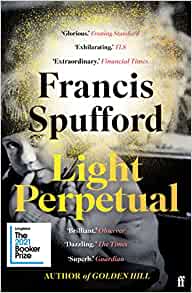
It's beautifully written, and it's hard not to care about the characters, even the nastier ones. Lots about the music business, because one of the characters is an almost-successful singer in LA before she goes back to south London and becomes a music teacher.
Really enjoyable and profound at the same time, and I will read more by him.

It's not surprising, and this stuff is just hard. Getting off fossil fuels is more like dealing with an eating disorder than kicking a heroin habit. We can't live without energy, and fossil fuels are a fabulous convenient source of concentrated energy, which underwrite our social and technical system. There's no way out of them without changing all that, and there are very powerful forces standing against.
Not the end of a discussion, but a good start. Everyone interested in politics outside and against the system should read.

And reading the biography, without the beauty of his writing or the charm of experiencing his personality directly, that becomes much much more apparent. So I'm not attracted to him as a character at all, even though Cooper clearly loves him and thinks he's wonderful. His politics are reactionary. He's not a racist, though he doesn't seem to have a really big problem with people that are. He is a charmer, and a chancer, and a serial shagger - not sure if it can be called serial adultery when he's not married to the woman that he sort of shares his life with. There are a lot of pretty young women.
There's a lot of scrounging too. For most of his life he lives off the generosity of posh friends - they give him houses to live in, in London, in Greece, in Paris. He gets commissions to write travel books and film scripts without any particular qualification, and he is published in little literary magazines by his editor friends. He does have obvious talent as a writer, but there are a lot of other people who have just as much or more talent who will never have this kind of leg-up. Or not need to support themselves.
I suppose it's a sign of Artemis Cooper's talent that I can read her book and come to different conclusions from her. But I also feel kind of dirty, and a bit stupid, that despite myself I was charmed in this way, and it retrospectively detracts from my enjoyment of his books.

Some of the moderate peril (collapsing buildings, jumps over ravines) felt quite tense to me, though a grandparent I spoke to said that they only place that their little ones had actually been scared was an in-song depiction of the three-headed dog that Hercules kills.
Oh, and beautiful depictions of plant and animal life...personally I liked the donkeys best, though the rats ran them a close second. And better music than I can remember for a long time in a Disney film, I kept wanting to get up and dance.
A real pleasure to watch, and I was really pleased to hear that the Colombian side of my family had all watched it together and loved it too.
Watched in the middle floor at Springhill on a legitimate Disney Channel subscription!

"How many identities do you have?" Crompton asked.
"Inumerable," Secuille said.
"I find all of this difficult to believe," Crompton said.
"That is only because you haven't consciously experienced for yourself the influences which your selves, past and present, have on the identity you happen to be at the moment. Crompton, every sentient creature lives simultaneously in various timebound sequences, and tries to better things for himself by influencing one or more of his selves. The voices that you hear in your head, telling you what to do and what not to do, these are the voices of your other selves at other times and places, casting their votes, trying to improve conditions for themselves."
There are lots of funny and clever bits later, and then suddenly it seems as if Sheckley got bored with it, because the end is pretty rubbish. It would have been better just to have stopped it twenty pages earlier.